

The Pretext Narrative: How the Belfast Riots Exposed Media Deference to Official Reports
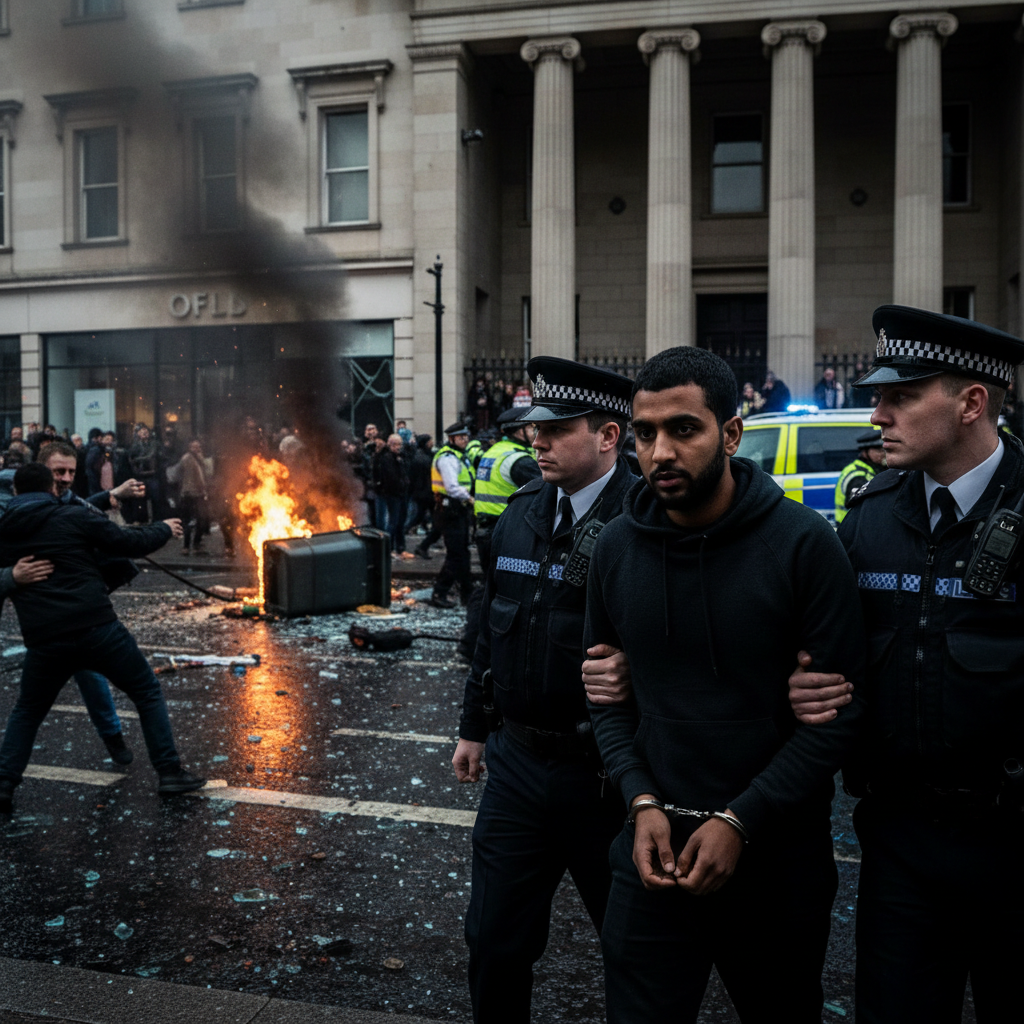
In the wake of a stabbing in Belfast, the reporting cycle has followed a predictable and flawed trajectory. Mainstream accounts, led by the Associated Press and others, have framed the subsequent street violence as a direct, almost mechanical consequence of a single criminal act. By focusing on the court appearance of a 30-year-old Sudanese national, the press has inadvertently reinforced a narrative that justifies organized violence as a spontaneous reaction to individual deviance.
What We Know
This is a classic case of prioritizing the state's calendar—the court appearance and the police report—over an investigation into the machinery of unrest. When journalism adopts the police’s framing of 'protests' sparked by a 'suspect’s identity,' it ceases to be an independent observer and becomes a megaphone for the rioters' own justifications.
What's Missing
The primary failure in recent coverage is the omission of the infrastructure required to turn a localized crime into widespread civil disorder. Riots of this scale are rarely, if ever, truly spontaneous. They require logistics, communication networks, and a pre-existing ideological framework ready to be activated. The press largely ignored the digital and physical mobilization that occurred in the hours following the incident, choosing instead to focus on the 'who' of the crime rather than the 'how' of the chaos.
"By repeating the suspect's nationality in immediate conjunction with the riots, the reporting mimics the justification used by the rioters, effectively laundering the mob's motive through official police reports."
Furthermore, the media has largely deferred to the Police Service of Northern Ireland (PSNI) to define the boundaries of the story. This deference, often called 'access journalism,' ensures that the state's version of order versus chaos remains the only lens through which the public views the event. It avoids asking why the state’s mechanisms for de-escalation failed or why specific demographic data was prioritized in public releases during a time of high tension.
What We Know
When journalists use the word 'protest' to describe the destruction of property and targeted harassment, they are engaging in a form of linguistic appeasement. This framing suggests a legitimate grievance expressed poorly, rather than a tactical use of violence to achieve political or social intimidation. This is the result of relying too heavily on official sources who are often more concerned with managing public perception than with describing the reality on the ground.
The emphasis on the judicial process—the 'man in court'—serves as a convenient distraction from the more difficult work of mapping the far-right or sectarian networks that capitalize on these moments. It allows the press to maintain a facade of objectivity while ignoring the systemic failures that allowed a single individual's actions to be weaponized against an entire demographic.
Conclusion
The story in Belfast is not merely about a crime and its aftermath. It is a case study in how a specific incident can be used as a pretext for a broader ideological agenda. The media's role should be to expose that pretext, not to validate it by repeating the logic of the mob. To understand what is happening in Northern Ireland, we must look past the defendant in the dock and toward the actors who saw a tragedy and recognized it as an opportunity. Until the press stops acting as a passive chronicler of police reports, it will continue to be a tool for those who seek to manufacture chaos.
FAQ
Q: Why do media outlets focus so heavily on official reports?
A: Media outlets often rely on official reports because they provide immediate, authoritative information that helps to quickly frame the story. However, this can lead to biased narratives if not supplemented with independent investigation.
Q: What is meant by the term 'access journalism'?
A: 'Access journalism' refers to news reporting that depends heavily on access to official sources or figures, often at the expense of critical, in-depth analysis or investigation that might upset those sources.
Q: How can media outlets better cover incidents like the Belfast riots?
A: Media should aim to investigate the broader context, including logistics and ideological motivations behind unrest, rather than solely focusing on official narratives or singular criminal acts.
Q: What are the risks of describing riots as 'protests' in media coverage?
A: Labeling riots as 'protests' can unintentionally legitimize violence and overshadow the ideological motives behind the unrest, leading to a misrepresentation of the events and their underlying causes.
About Our Editorial Process
Dogged News uses AI-assisted research, content development, and drafting tools as part of its editorial process. Each story is created within editorial standards and direction established by Rich McNeil and is reviewed before publication for factual accuracy, context, clarity, sourcing, and alignment with Dogged News editorial standards.
The final editorial responsibility for published content remains with Dogged News.
Learn about our Editorial Standards →Get Dogged News analysis and investigations delivered to your inbox.
Discussion (0)
0/2000 · Comments are reviewed before publishing.
Have an account? to comment with a verified identity.
No comments yet. Be the first to share your perspective.