

The Digital Caste System: How the Student Behavioral Risk AI Score is Destroying Teenage Futures
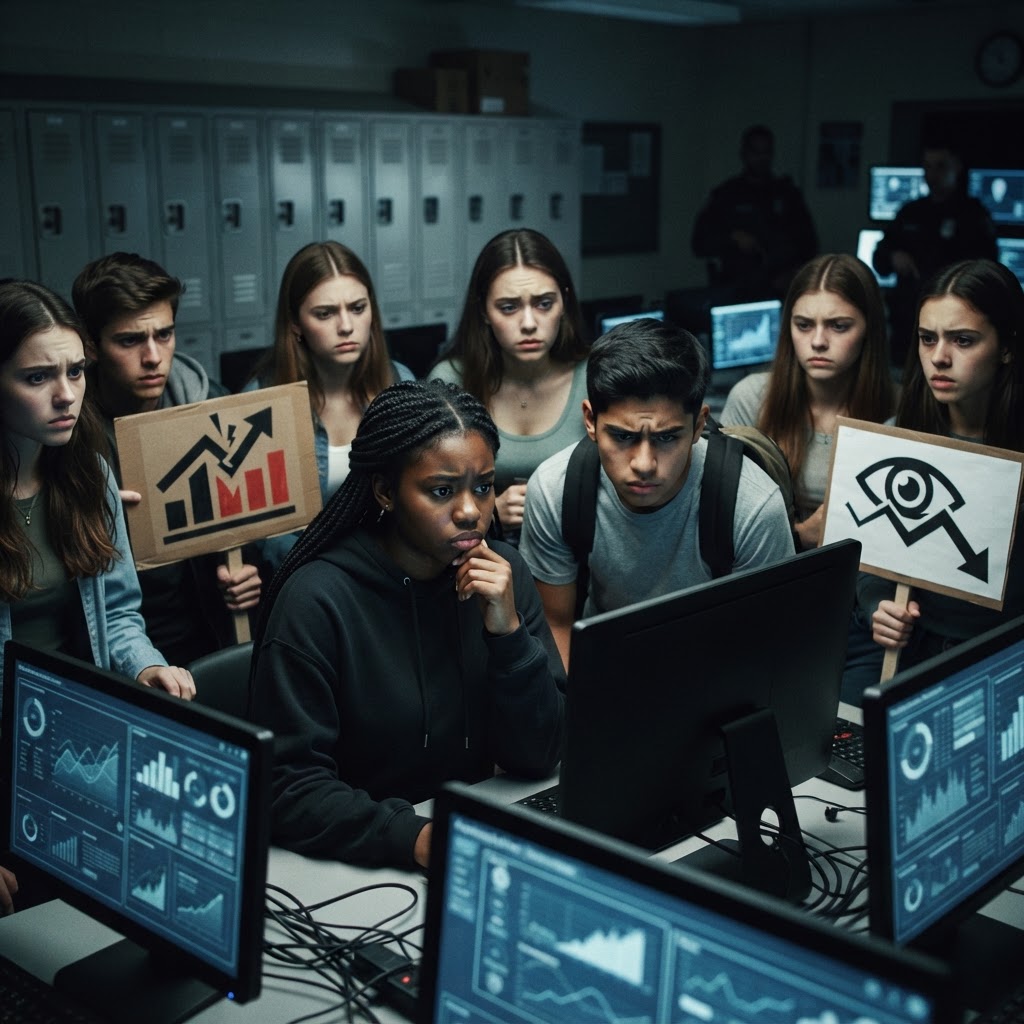
The very tools meant to empower education are now shackling it. America’s high schools are quietly feeding their most vulnerable students into a digital caste system—all orchestrated by something that sounds beguiling: the student behavioral risk AI score.
What We Know
The student behavioral risk AI score is touted as an objective method to assess teenagers' behavioral tendencies, aiming to predict and prevent at-risk outcomes. This score is deployed in a growing number of schools under the guise of creating a safer, more managed educational environment. Schools partner with corporate entities, providing extensive behavioral data that feeds into these AI systems.
Data points vary but often include attendance records, disciplinary actions, even social media activity. It's a system purportedly designed to streamline intervention strategies. However, beneath its polished surface lies a mechanism that evaluates students with little room for context or nuance.
What's Being Claimed
Proponents argue that this scoring system levels the playing field, making education fairer. They assert that it offers schools a technological way to foresee potential issues among their student body, reducing antisocial behavior and improving academic outcomes.
There's also a belief that introducing this metric will help allocate resources more effectively, particularly in schools where staff might be overstretched or undertrained to identify behavioral risks on their own.
What's Missing
But what’s conspicuously absent is the conversation about who controls this data—and to what end? The schools seem to have transitioned from places of learning to nodes in a data collection network, serving the interests of their corporate partners above the interests of their students.
Equally alarming is the distinct lack of transparency regarding these algorithms. Parents and students are left outside the room when these scores are calculated and applied, begging the question of consent, privacy, and the inherent bias coded into these black-box algorithms.
What's Actually Happening
These AI scores have not just academic consequences but social ones, effectively constructing a barrier to higher education opportunities. Neurodivergent students and those from lower-income backgrounds find themselves disproportionately flagged as risks, not because of any failing of their own but because of systemic biases that these algorithms encode and perpetuate.
Universities and employers, relying on these AI assessments to vet candidates, effectively build a moat that many cannot cross. Imagine being labeled before you’re even an adult, with a number that could cost you a scholarship or a job. This isn't a guessing game—it's a reality for many.
The algorithm doesn't ask why the numbers are as they are—just that they exist and fit the predetermined mold.
Why It Matters
There’s an insidious danger in embedding structural inequality at such a foundational level. When education systems favor corporate interests through deals with data brokers, kids pay the price. The next generation of thinkers, creators, and leaders find themselves boxed in before they've had a chance to flourish.
This digital caste system is a quietly ticking bomb ensuring entrenchment of current societal divides. If the algorithm says ‘risk,’ then options shrink and life choices evaporate.
Conclusion
Without robust checks, these AI scores will continue to cast their shadows over student futures. The rhetoric of better resource allocation only masks deeper systemic shortcomings. For real change, we must demand transparency in these technological processes and reclaim educational spaces as sanctuaries for learning, not data mining farms.
FAQ
Q: What is a student behavioral risk AI score?
A: A student behavioral risk AI score is a metric used to assess teenagers' behavioral tendencies to predict and prevent at-risk outcomes in schools.
Q: How are these scores used in schools?
A: Schools use these scores to streamline intervention strategies, aiming to improve safety and manage educational environments more effectively.
Q: Why is there concern about transparency in these AI systems?
A: Concerns arise because parents and students are not informed about how these scores are calculated, raising issues about consent, privacy, and potential algorithmic bias.
Q: How might these scores affect students' futures?
A: These scores can limit opportunities for higher education and employment, disproportionately affecting neurodivergent and low-income students due to systemic biases in the algorithms.
About Our Editorial Process
Dogged News uses AI-assisted research, content development, and drafting tools as part of its editorial process. Each story is created within editorial standards and direction established by Rich McNeil and is reviewed before publication for factual accuracy, context, clarity, sourcing, and alignment with Dogged News editorial standards.
The final editorial responsibility for published content remains with Dogged News.
Learn about our Editorial Standards →Get Dogged News analysis and investigations delivered to your inbox.
Discussion (3)
0/2000 · Comments are reviewed before publishing.
Have an account? to comment with a verified identity.
It is terrifying that we are letting algorithms decide a kid's future before they even finish high school. This is just digital redlining.
My nephew got flagged by one of these systems for 'attendance patterns' that were actually due to him helping take care of his sick mother. Now he's denied enrollment in AP classes. It's cruel.
I agree that the implementation is flawed, but aren't these systems just trying to identify students who need interventions early on? We can't ignore the warning signs.
The problem is that 'intervention' often turns into 'labeling.' Once that score hits a permanent record, teachers treat those students differently.
Has there been any pushback from school boards yet? It feels like these districts are signing contracts without looking at the fine print on these algorithms.