

The Petri Dish Cafeteria: The Corporate Lobby Behind School Lab-Grown Meat Mandates
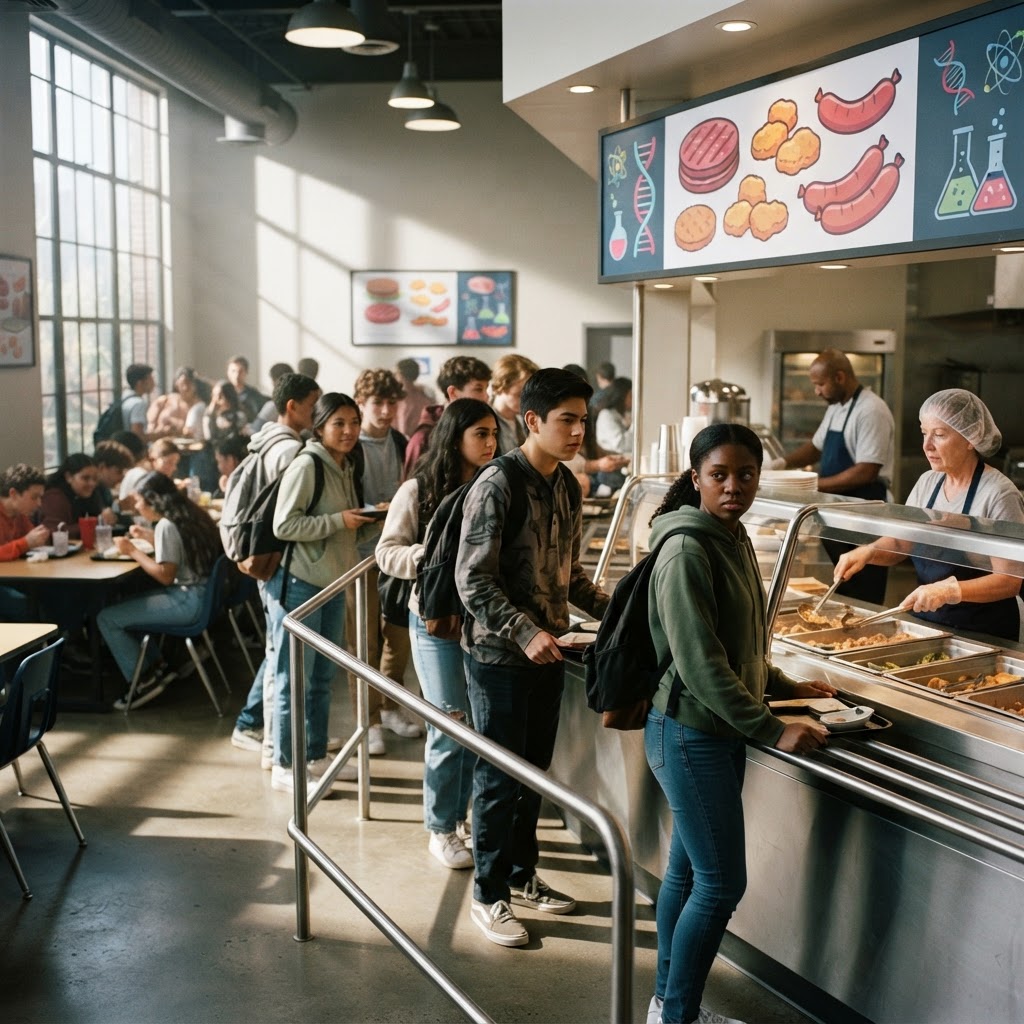
In the bustling world of school cafeterias, a new player has emerged—one birthed not from the field, but from a petri dish. Lab-grown meat has quietly made its way onto the trays of students across the nation. This culinary innovation promises sustainability and a revolution in food production. But who's really profiting, and at what cost?
What We Know
Currently, school districts across the United States have adopted policies incorporating lab-grown meat into their lunch programs. Promoted as an eco-friendly alternative, it aligns with certain climate targets that aim to cut emissions from traditional livestock. Yet, clear evidence regarding long-term health impacts on the young consumers obligingly accepting these meals remains astonishingly absent.
What's Being Claimed
Proponents claim that cultivated meat is a safer, healthier choice. It purportedly contains fewer contaminants, and advocates point to its environmental benefits as decisive. Schools adopting these products often couch their decisions in the language of sustainability and responsible innovation. Yet, these claims often resemble more a boast of eco-virtue than a substantiated benefit.
What's Missing
What lacks is any substantial research into how lab-grown meat affects children's development. Parents, understandably anxious, are presented with glitzy pitches yet little evidence. The corporate push behind these foods overlooks the nuanced understanding required before introducing novel foods to growing bodies.
What's Actually Happening
Delve deeper, and the scenery shifts. Venture capital-backed biotech firms—eager to convert innovation into financial windfall—drive these initiatives. Encounter a poor return on investment? Convert your wild concept into public policy. This scenario unfolds with vexing regularity. School mandates to serve lab-grown meat are enacted, seemingly undeterred by challenges or a lack of mainstream validation. We clothe these maneuvers as enlightened policy, but they betray a reliance on taxpayers as a lifeline for struggling enterprises.
Why It Matters
This is more than a food choice. The nexus of corporate interest and public policy blurs the visitors' entrance from the loading dock: who's nourishing our children? The lack of parental opt-out is striking, removing agency from those who, we assume, bear ultimate responsibility for their children's upbringing. Here, it's an end-run around parental discretion.
The machinery of power operates not with subtlety but with u-turn authority over personal choices—over what children eat, even if at the cost of parental decree.
Conclusion
We find ourselves navigating a landscape fraught with convenience over caution. The absence of choice shouldn't masquerade as public beneficence. Without demanding transparency, we risk confounding innovation with obligation. Schools should serve not just meals but informed, trust-engendering decisions—ones that empower rather than patronize the community they serve. In this, we see: outsourced accountability offers little beyond a half-baked promise.
FAQ
Q: What is lab-grown meat and how is it made?
A: Lab-grown meat, also known as cultured or cultivated meat, is produced by culturing animal cells in a controlled environment, eliminating the need for traditional animal farming.
Q: Why are schools incorporating lab-grown meat into their lunch programs?
A: Schools are incorporating lab-grown meat as it is promoted as an eco-friendly alternative that helps in reaching certain climate targets related to reducing emissions from traditional livestock.
Q: What are the concerns regarding lab-grown meat being served in schools?
A: Concerns include the lack of substantial research on the long-term health effects on children and the influence of corporate interests in shaping public policy without adequate parental input.
Q: How can parents address their concerns about lab-grown meat meals in schools?
A: Parents can engage with school boards, push for more transparency and substantial research on health impacts, and advocate for opt-out options to ensure informed choices about their children's nutrition.
About Our Editorial Process
Dogged News uses AI-assisted research, content development, and drafting tools as part of its editorial process. Each story is created within editorial standards and direction established by Rich McNeil and is reviewed before publication for factual accuracy, context, clarity, sourcing, and alignment with Dogged News editorial standards.
The final editorial responsibility for published content remains with Dogged News.
Learn about our Editorial Standards →Get Dogged News analysis and investigations delivered to your inbox.
Discussion (0)
0/2000 · Comments are reviewed before publishing.
Have an account? to comment with a verified identity.
No comments yet. Be the first to share your perspective.