

The Manufacture of Insecurity: Deconstructing the 'End of Peace' Narrative in Prague
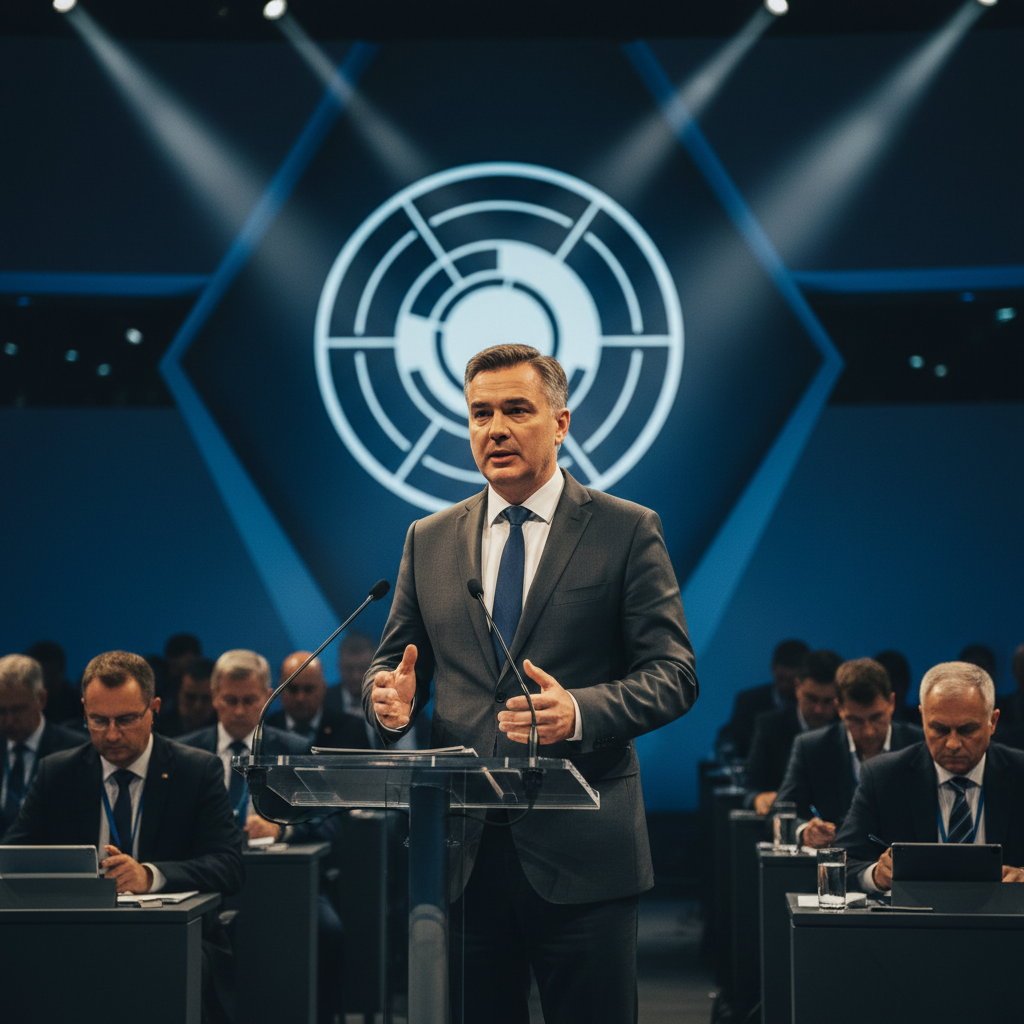
In its coverage of Czech President Petr Pavel’s keynote at the GLOBSEC security summit, the mainstream press—exemplified by The Guardian—opted for the role of the stenographer. By framing Pavel’s assertion that "peace is no longer the default situation" as a straightforward warning of an objective reality, the reporting engaged in what is known as access journalism: a deference to high-ranking officials that prioritizes their perspective while ignoring the incentives driving their rhetoric.
What We Know
What the coverage omitted was the essential context of Pavel’s career trajectory. Before becoming president, Petr Pavel served as the Chairman of the NATO Military Committee. He is not a civilian observer of geopolitical shifts; he is a career soldier and a primary architect of the very security frameworks he now claims are failing. By presenting his remarks as an organic observation rather than a calculated strategic communication, the media validates a specific policy shift—militarization—as an inevitable response to an external "meteorological" event, rather than a choice made by political actors.
"The era of stability in Europe has ended," Pavel declared. Yet, the press failed to ask: who decided the era was over, and who benefits from its conclusion?
What's Actually Happening
President Pavel offered no empirical data to define this shift. The term "default situation" is a linguistic tool, not a geopolitical measurement. By moving the goalposts of what constitutes a "normal" state of affairs, the administration can shift the burden of proof from those advocating for military expansion to those advocating for diplomatic stability. If peace is no longer the default, then diplomacy becomes an exception rather than the rule, and constant military readiness becomes the only logical posture.
Rhetoric about the "end of peace" provides the necessary political cover for painful fiscal reallocations. In 2024, the Czech Republic finally met the NATO target of spending 2% of its GDP on defense. Maintaining this level of spending—often at the expense of social services or infrastructure—requires a sustained public perception of imminent threat. Pavel’s speech at GLOBSEC functions as a high-level marketing campaign for the permanence of these expenditures.
An official's history dictates their toolkit. As a former NATO General, Pavel’s worldview is inherently threat-centric. The mainstream press frequently ignores that his "warning" is essentially a continuation of NATO’s institutional objectives. When the press fails to mention his background, they present a military-industrial perspective as a neutral, civilian presidential concern.
By framing instability as an unavoidable new global reality, Pavel’s narrative effectively closes the door on alternative diplomatic frameworks. If one accepts that the "era of stability" has ended by some natural decree, then attempts at de-escalation are framed as naive or futile. The reporting on his speech ignored the absence of any mention of mediation, treaty-building, or conflict resolution mechanisms that do not involve arms procurement.
The Czech Republic is a significant global arms exporter. The normalization of a "non-peace" default is an economic boon for the domestic defense sector. When a head of state signals that peace is no longer the status quo, they are signaling a permanent increase in demand for the products manufactured by the nation’s largest industrial players. The intersection of security policy and industrial profit was entirely absent from the original reporting.
Conclusion
The story here is not that a president "warned" of a threat, but that a specific narrative of inevitable conflict is being institutionalized to justify long-term policy shifts. When journalists adopt the metaphors of state actors—such as the "end of peace"—they stop being observers and start being participants in the manufacture of consent. The "new reality" Pavel describes is not a forecast; it is a policy preference. Understanding this distinction is the difference between being informed and being managed.
FAQ
Q: What does Petr Pavel mean by 'peace is no longer the default situation'?
A: Petr Pavel suggests that Europe has entered a period defined by instability and conflict, which is presented as an inevitable condition rather than a result of policy decisions.
Q: Why is President Pavel's background important in the context of his statements?
A: Pavel's background as former Chairman of the NATO Military Committee influences his threat-centric worldview, making his narrative align with military-industrial objectives rather than neutral assessment.
Q: How does the media's coverage of Pavel's speech reflect access journalism?
A: The media's uncritical framing of Pavel's speech echoes high-ranking officials' perspectives without questioning their motivations or providing context about the speaker's background, thus supporting their narrative.
Q: Why is the notion of 'the end of peace' economically significant for the Czech Republic?
A: This narrative supports increased defense spending, benefiting the domestic defense sector, as the Czech Republic is a significant global arms exporter and requires sustained perception of threat to justify such spending.
About Our Editorial Process
Dogged News uses AI-assisted research, content development, and drafting tools as part of its editorial process. Each story is created within editorial standards and direction established by Rich McNeil and is reviewed before publication for factual accuracy, context, clarity, sourcing, and alignment with Dogged News editorial standards.
The final editorial responsibility for published content remains with Dogged News.
Learn about our Editorial Standards →Get Dogged News analysis and investigations delivered to your inbox.
Discussion (0)
0/2000 · Comments are reviewed before publishing.
Have an account? to comment with a verified identity.
No comments yet. Be the first to share your perspective.