

Sovereignty and Semantics: The Permanent Security Belt in Southern Lebanon
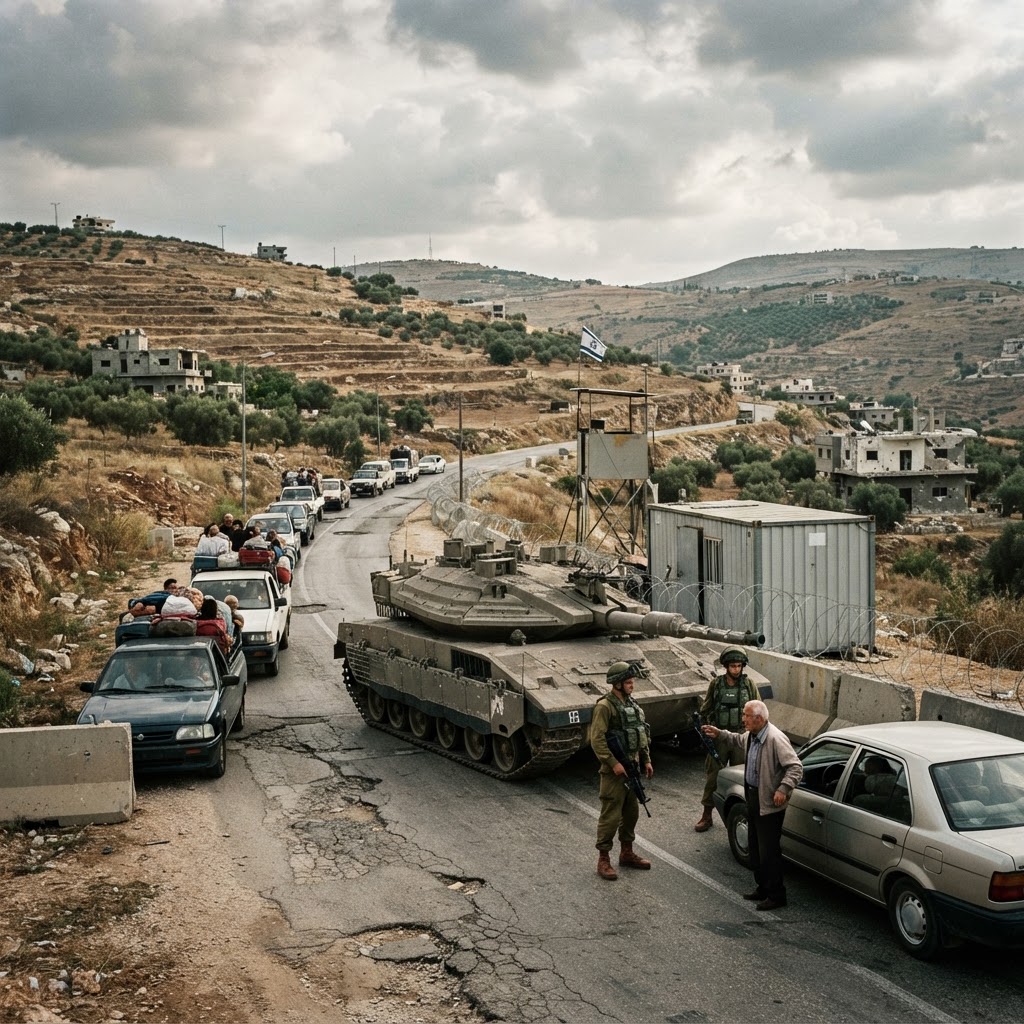
The current framing surrounding the 450 square miles of Lebanese territory currently under Israeli military control presents a textbook case of linguistic sanitization. While the headline writers focus on 'infrastructure,' the physical reality on the ground is an expanding system of checkpoints and administrative hurdles that mirror long-standing occupations elsewhere. The press pack has largely ignored the total absence of a legal mandate for a foreign power to unilaterally establish a six-mile-deep administrative zone inside a neighboring sovereign state. By accepting the term 'buffer zone' as a neutral descriptor, major outlets have effectively validated an extra-legal seizure of land as a routine security measure rather than a challenge to the established international order.
What We Know
Separately, the governing consensus has failed to reconcile the escalation of ground operations with the official diplomatic roadmap announced by the State Department. This disconnect reveals a significant breakdown in accountability: either the diplomatic 'deal' was never a functional agreement, or the military objectives on the ground have diverged entirely from the policy goals stated in Washington. What we are seeing is stenography dressed as journalism, where official claims about dismantling missile sites are reported as objective facts without independent verification of what is actually being destroyed or why civilian movement is being curtailed to achieve those ends.
What's Being Claimed
Under what specific international legal framework does Israel claim the right to establish a security perimeter on sovereign Lebanese soil?
There is no current UN Security Council resolution or bilateral treaty that authorizes the creation of a 75-mile-long military exclusion zone inside Lebanon. While Article 51 of the UN Charter allows for self-defense, it does not provide a blank check for the indefinite administrative control of foreign territory. the machinery of power has avoided this question because the answer exposes the operation as a breach of Lebanese sovereignty, regardless of the security justifications provided by the IDF.
Why has the military presence expanded since the June 2026 disarmament framework was announced?
The accepted storyline suggests that military action is a necessary precursor to diplomacy. However, the data shows that the footprint of the security belt has solidified, not shrunk, following the Rubio announcement. This indicates that the curated version of events—where diplomacy and force work in tandem—is a fiction. Instead, the military presence appears to be the primary objective, with the diplomatic deal serving as a rhetorical shield to deflect international criticism of a permanent occupation.
Is the implementation of West Bank-style protocols a precursor to long-term administrative control?
The adoption of specific security software, biometric checkpoints, and permit systems for Lebanese civilians indicates that this is not a temporary tactical maneuver. These are the tools of governance, not just combat. When an army begins managing the daily movement of non-combatant residents through a complex bureaucracy, it is no longer just fighting a militia; it is assuming the role of a local administrator. This shift suggests that the 'buffer' is intended to be a permanent feature of the regional map.
Conclusion
The dominant narrative treats the crisis in southern Lebanon as a series of isolated tactical decisions rather than a coherent strategy of territorial expansion. By focusing on the 'dismantling of infrastructure,' the curated message avoids addressing the reality of 450 square miles of territory being effectively removed from Lebanese jurisdiction. The managed message coming out of the State Department serves to pacify international observers while the ground reality is fundamentally altered. When the press fails to distinguish between a combat operation and a territorial occupation, it ceases to inform the public and instead becomes a conduit for institutional power. The story here is not just about missiles or drones; it is about the quiet re-drawing of national borders under the guise of security management.
FAQ
Q: What is the 'Permanent Security Belt' in Southern Lebanon?
A: The 'Permanent Security Belt' refers to a six-mile-deep area of Lebanese territory under Israeli military control, characterized by checkpoints and administrative controls that effectively create a buffer zone.
Q: Why is the 'buffer zone' considered controversial?
A: The 'buffer zone' is controversial because it lacks a legal mandate, and its implementation represents a challenge to Lebanese sovereignty, being portrayed as a routine security measure while actually constituting a territorial occupation.
Q: How does the international community view the situation?
A: While official narratives emphasize military necessity and diplomatic efforts, this framing is questioned in the article, suggesting that the international community's focus on diplomatic announcements may overlook the broader implications for Lebanese sovereignty.
Q: What are the long-term implications of implementing West Bank-style protocols?
A: The adoption of West Bank-style protocols, like biometric checkpoints and permit systems, points to a shift from temporary military operations to long-term administrative control, suggesting a more permanent presence and governance over the area.
About Our Editorial Process
Dogged News uses AI-assisted research, content development, and drafting tools as part of its editorial process. Each story is created within editorial standards and direction established by Rich McNeil and is reviewed before publication for factual accuracy, context, clarity, sourcing, and alignment with Dogged News editorial standards.
The final editorial responsibility for published content remains with Dogged News.
Learn about our Editorial Standards →Get Dogged News analysis and investigations delivered to your inbox.
Discussion (3)
0/2000 · Comments are reviewed before publishing.
Have an account? to comment with a verified identity.
I grew up near the northern border and remember the instability before these measures. It is easy to critique from afar, but the daily reality of rocket threats changes your perspective on the necessity of these zones.
Sarah, I understand that perspective, but at what point does the 'temporary' occupation become permanent statehood? That's the real trap we are falling into.
I appreciate the historical context on the Rubio deal, but what is the alternative? Without that buffer, the border security situation would be impossible to manage given the current climate.
Elena, even if the security argument holds water for some, can we really justify long-term military presence as a permanent solution? It feels like we are repeating history from the 80s.
It is about time someone pointed out how the term 'security belt' is just a polite euphemism for annexation. The way this is being framed in the mainstream is genuinely concerning.
I agree with Marcus. Calling it a security measure ignores the human toll on the villages currently under occupation. It's not just a belt, it's someone's home.