

The Iran Extension: Deconstructing the 'Peace Process' Narrative
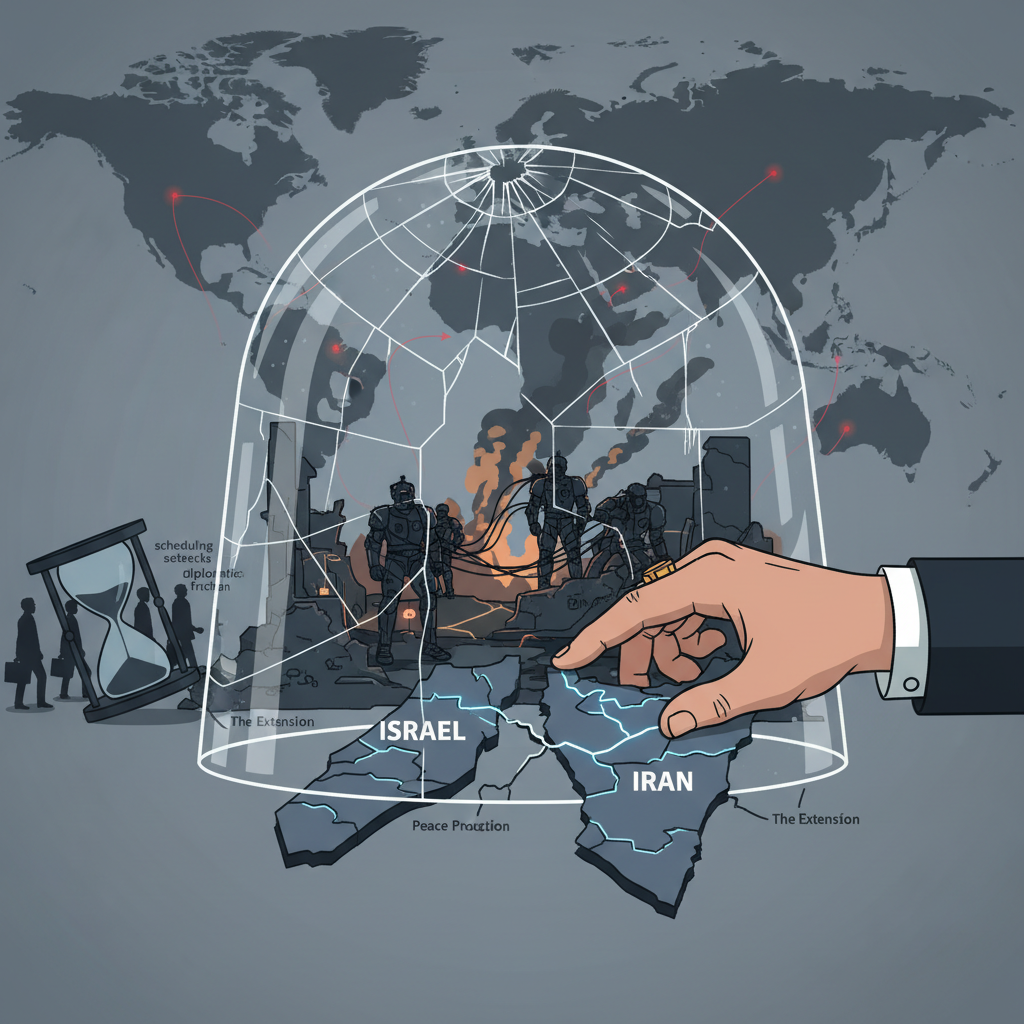
Mainstream reporting on the recent extension of the U.S.-Iran cease-fire has largely functioned as a delivery mechanism for executive branch messaging. By adopting the administration's own vocabulary—referring to a 'peace process' and 'solidifying' stability—outlets like the New York Times have engaged in a form of access journalism that prioritizes narrative over investigation. The reporting frames President Trump’s decision as a proactive preservation of peace, yet it fails to scrutinize the actual conditions under which this extension was secured or why Vice President JD Vance’s regional trip was abruptly halted.
"President Trump has moved to extend a ceasefire agreement... despite a pause in formal diplomatic negotiations." — The New York Times
To understand the reality of this development, we must look past the sanitizing language of 'scheduling setbacks' and examine the incentives driving both Washington and Tehran. What is being marketed as a diplomatic victory may, in fact, be a desperate attempt to stall a kinetic escalation that neither side can currently afford, albeit for very different reasons.
What We Know
The primary failure of recent coverage is the lack of independent verification regarding the status of the 'cease-fire' itself. While the administration uses this term to suggest a cessation of hostilities, there is no mention of the ongoing proxy engagements in Lebanon or the persistent cyber operations targeting U.S. infrastructure. By accepting the term 'cease-fire' without caveats, the press legitimizes a state-controlled reality that ignores the asymmetrical warfare currently being waged. Furthermore, the framing of Vice President Vance’s postponed trip as a mere 'pause' ignores the standard diplomatic protocol where such cancellations usually signal a significant breakdown in back-channel leverage or a direct snub from regional interlocutors.
FAQ
Q: What specific concessions were made to Iran to secure this last-minute extension?
A: Diplomatic extensions of this magnitude rarely happen in a vacuum, especially when formal talks are 'on hold.' Historically, such delays are purchased with quiet concessions—be it the further unfreezing of assets, the non-enforcement of specific energy sanctions, or the granting of 'humanitarian' waivers. By failing to ask what Iran received in exchange for this extension, the press allows the administration to present a one-sided victory when the reality is likely a transaction.
Q: Does the postponement of Vice President Vance's trip indicate a collapse of leverage?
A: The Vice President was reportedly traveling to 'solidify' the process. His absence suggests that there was nothing left to solidify. In the world of high-stakes diplomacy, a high-level official does not cancel a regional tour because of 'scheduling.' They cancel because the host nations or the primary adversary signaled that the Vice President’s presence would yield no results. This suggests that the administration’s leverage has reached a plateau, leaving the extension as the only tool left to avoid the appearance of total diplomatic failure.
Q: How do regional allies view this extension given the pause in formal negotiations?
A: There is a glaring absence of perspective from Jerusalem and Riyadh in current reporting. For regional allies, an extension without a roadmap for permanent decommissioning of Iranian proxy threats is not 'peace'—it is a strategic delay that allows Tehran to regroup. By focusing solely on the U.S. executive’s actions, the press ignores the growing friction between the White House and its partners who see these extensions as a form of appeasement that sacrifices long-term regional security for short-term domestic quiet.
Q: To what extent is 'domestic political pressure' driving the timing of this announcement?
A: With an election cycle looming, the incentive to avoid a major foreign policy crisis is at an all-time high. The 'peace process' narrative serves a domestic purpose: it paints the executive as a master negotiator. The press’s failure to connect the timing of the cease-fire extension to the political calendar is a major oversight. We are seeing a management of optics, not necessarily a management of geopolitical reality.
Conclusion
This story is not about the success of a 'peace process.' It is about the maintenance of a status quo through the use of vague terminology and tactical delays. When the press adopts the government's language—'solidify,' 'extend,' 'negotiate'—without demanding the underlying data, it ceases to be a watchdog and becomes a public relations arm. The reality is that formal diplomacy is stalled, the Vice President's mission failed to launch, and the 'cease-fire' is a fragile label applied to a volatile standoff. This extension buys time, but time is only a virtue if it is being used to build something more than a campaign talking point.
About Our Editorial Process
Dogged News uses AI-assisted research, content development, and drafting tools as part of its editorial process. Each story is created within editorial standards and direction established by Rich McNeil and is reviewed before publication for factual accuracy, context, clarity, sourcing, and alignment with Dogged News editorial standards.
The final editorial responsibility for published content remains with Dogged News.
Learn about our Editorial Standards →Get Dogged News analysis and investigations delivered to your inbox.
Discussion (0)
0/2000 · Comments are reviewed before publishing.
Have an account? to comment with a verified identity.
No comments yet. Be the first to share your perspective.