

Stagecraft Over Statecraft: The Reality Behind King Charles’s Washington Visit
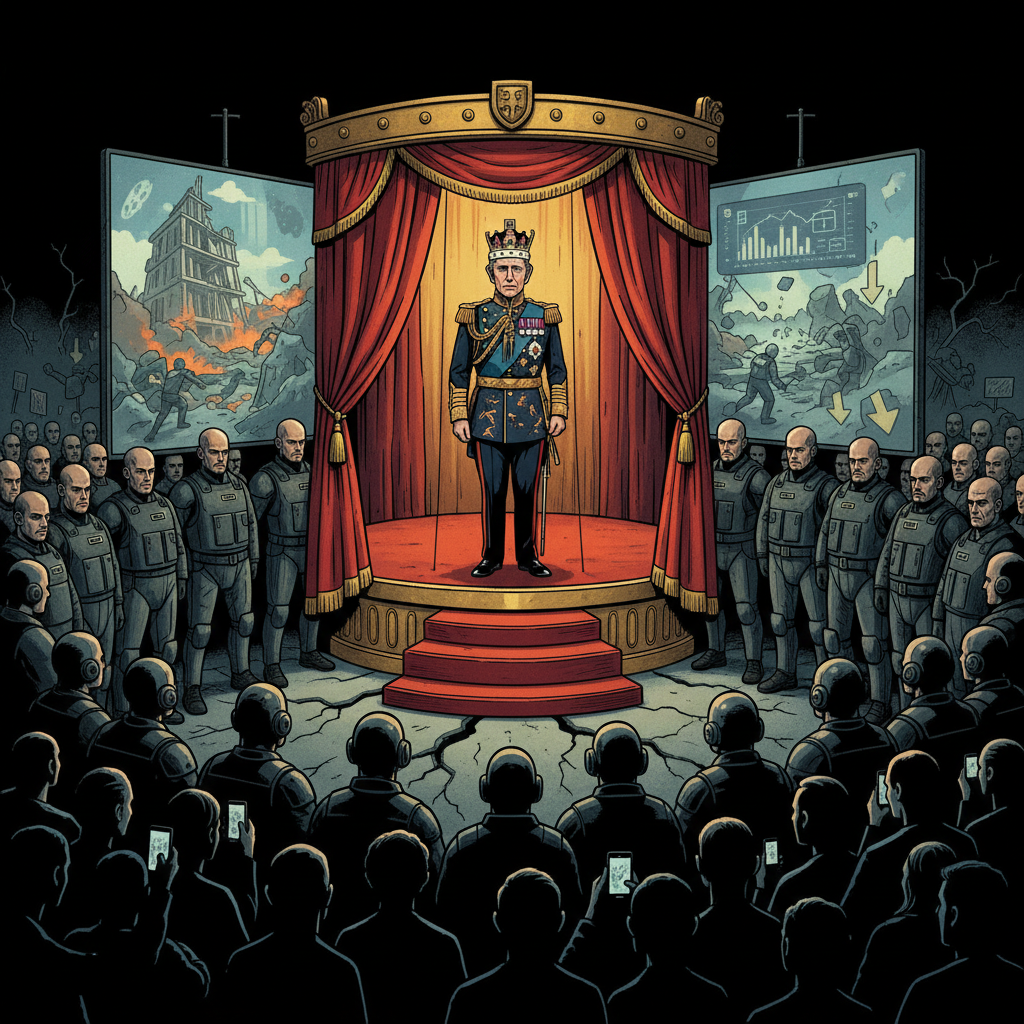
Mainstream reporting on King Charles III’s arrival in Washington reads less like investigative journalism and more like a court circular synchronized with a State Department briefing. The legacy press has framed the visit as a 'high-stakes' diplomatic intervention aimed at 'mending' the so-called Special Relationship. However, this narrative relies on a fundamental misunderstanding—or a deliberate obfuscation—of how modern power functions. By centering the story on royal pageantry and the 'heroic' mediation of a constitutional monarch, the press has effectively shielded the public from the substantive policy failures and intelligence lapses that define the current U.S.-U.K. friction.
What's Being Claimed
The Washington Post and its contemporaries have adopted the term 'Special Relationship' as an unironic, factual descriptor rather than what it actually is: a rhetorical tool of diplomacy designed to mask diverging national interests. What the press missed is the strategic vacuum at the heart of this visit. The King possesses no executive power to negotiate military protocols or treaty amendments. Therefore, framing his presence as a solution to a 'standoff' over military strategy in Iran is a category error. Furthermore, the media has allowed the administration to use the backdrop of 'security concerns' to pivot away from a necessary audit of why the White House Correspondents’ Association (WHCA) dinner security failed so catastrophically earlier this week. The narrative has shifted from 'How did a gunman get close to the elite?' to 'How will the state protect the King?'—a classic diversionary tactic.
The 'Special Relationship' is less a strategic alliance and more a rhetorical security blanket used when the actual machinery of cooperation breaks down.
What's Missing
Can a Monarch Without Executive Power Resolve a Substantive Military Dispute?
The short answer is no. Under the British constitutional system, the King acts only on the advice of his ministers. He cannot offer concessions on naval rules of engagement in the Persian Gulf, nor can he commit the U.K. to the Trump administration’s 'maximum pressure' campaign if the British Cabinet remains committed to alternative de-escalation frameworks. By suggesting Charles is 'stepping into' the standoff, the media implies a proactive role that does not exist, thereby granting the executive branches of both nations a reprieve from answering for their diplomatic gridlock.
Is the Security Narrative a Convenient Distraction from Intelligence Failures?
The emphasis on 'heightened security' following the WHCA shooting serves to prioritize institutional resilience over accountability. The press has failed to ask specific questions regarding the security lapses that allowed a gunman to target a high-profile event just days prior. Instead, the 'security concern' is presented as an ambient, unavoidable atmospheric condition that justifies the King’s ceremonial presence as a symbol of stability. This is access journalism at its most transparent: deferring to the state’s framing of 'safety' to avoid asking why the state failed to provide it in the first place.
What Are the Concrete Policy Rifts Regarding Iran?
While reports mention 'military strategy fractures,' they rarely specify the cost. Verifiable reporting indicates the U.K. continues to favor multilateral containment through remnants of the JCPOA framework, while the current U.S. administration is pushing for a more aggressive, unilateral naval blockade. These are not 'misunderstandings' that can be smoothed over with a state dinner; they are fundamental disagreements on international law and regional stability. The King’s visit provides the visual of unity without the substance of agreement.
What We Know
What this story actually reveals is the growing reliance of Western governments on 'soft power' symbols to mask the decay of 'hard power' cooperation. When two allies cannot agree on where to point their guns, they point to their history, their ceremonies, and their shared sense of threat. The 'Special Relationship' is being used here as camouflage. This visit is not about mending a rift; it is about managing the optics of a relationship that is becoming increasingly transactional and volatile. By failing to push back on the official framing, the media has allowed the state to define the terms of the engagement, prioritizing the King's 'heroic' mediation over the gritty, uncomfortable reality of a fractured alliance. For the discerning reader, the story isn't the King in Washington—it is the silence regarding what he is actually powerless to change.
FAQ
Q: Why is King Charles III visiting Washington?
A: King Charles III's visit is officially framed as a diplomatic effort to bolster the 'Special Relationship' between the U.S. and U.K., although it primarily serves as a ceremonial event without tangible policy implications.
Q: Does King Charles have any real influence over U.S.-U.K. military disputes?
A: No, King Charles possesses no executive power to directly influence or resolve military disputes as he acts on the advice of his ministers without any capacity to negotiate military protocols or treaties.
Q: How has the media portrayed King Charles’s visit?
A: The media has portrayed the visit as a 'high-stakes' intervention, focusing on royal pageantry while downplaying the substantive diplomatic failures and policy rifts between the U.S. and U.K.
Q: What are the main policy disagreements between the U.S. and U.K. regarding Iran?
A: The U.K. supports multilateral containment through the remnants of the JCPOA framework, whereas the U.S. favors a more aggressive unilateral strategy, highlighting significant disagreements on international law and regional stability.
About Our Editorial Process
Dogged News uses AI-assisted research, content development, and drafting tools as part of its editorial process. Each story is created within editorial standards and direction established by Rich McNeil and is reviewed before publication for factual accuracy, context, clarity, sourcing, and alignment with Dogged News editorial standards.
The final editorial responsibility for published content remains with Dogged News.
Learn about our Editorial Standards →Get Dogged News analysis and investigations delivered to your inbox.
Discussion (0)
0/2000 · Comments are reviewed before publishing.
Have an account? to comment with a verified identity.
No comments yet. Be the first to share your perspective.