

The Optics of De-escalation: Separating Trade Trophies from Structural Conflict
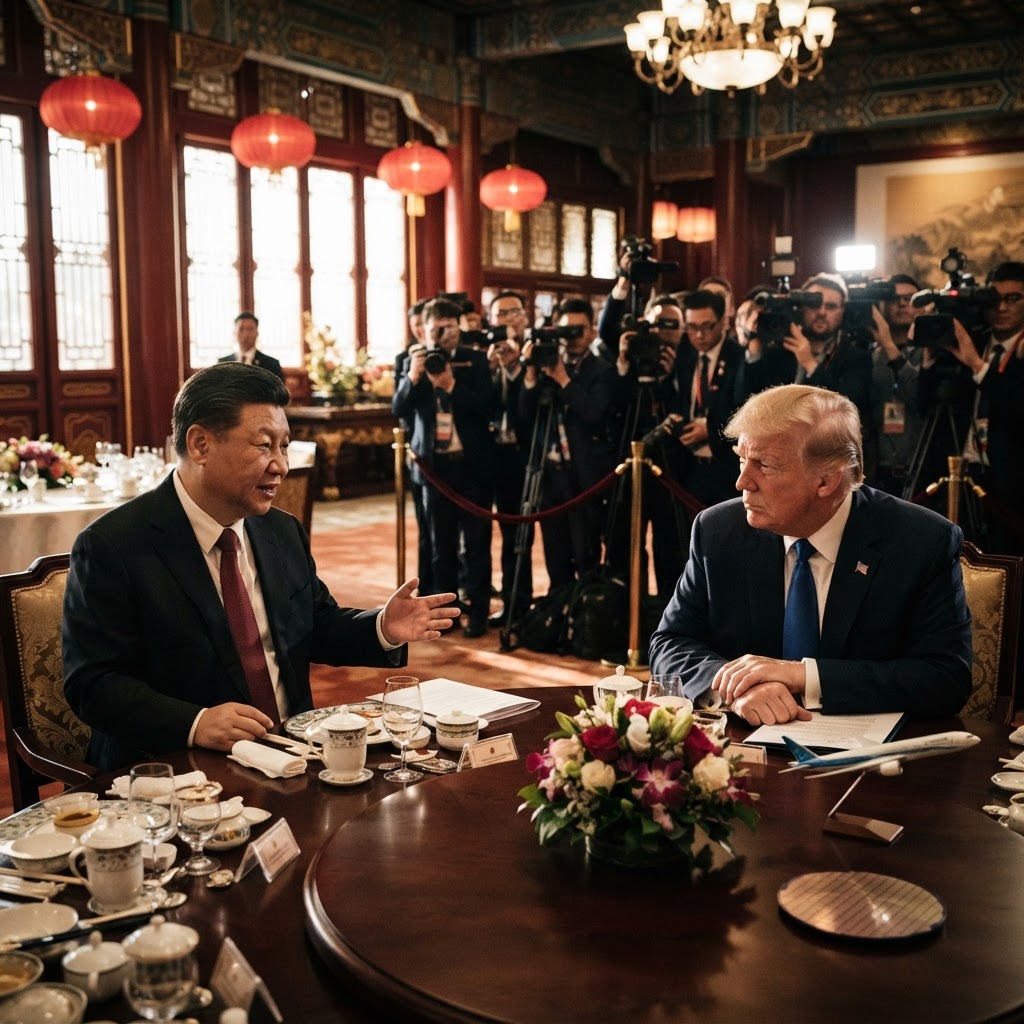
The legacy press recently reported on the Beijing summit with a palpable sense of relief, framing the interaction between Xi Jinping and Donald Trump as a pivotal shift away from confrontation. By prioritizing the aesthetics of a ten-course banquet and the prestige of a UNESCO world heritage site, the credentialed commentariat largely adopted the diplomatic tone of the subjects they were tasked to cover. This approach, however, obscured the fundamental friction points that remain untouched by transactional trade wins. When major outlets lead with aspirational quotes about being 'partners, not rivals,' they offer a curated version of events that favors a desired stability over the messy reality of geopolitical competition.
Xi Jinping's assertion that the two nations 'should not be rivals' serves as the cornerstone of the latest managed message, yet it lacks the specific policy commitments required to alter the current trajectory of the relationship.
What We Know
Headline writers failed to highlight that the celebrated 'thaw' is predicated on temporary purchases rather than structural reform. The focus on Boeing jets and agricultural exports acts as a distraction from the machinery of power's inability to resolve the semiconductor stalemate. While the official line emphasized cooperation, there was no verifiable movement on the US Entity List or China’s request to ease export controls on high-end lithography. Furthermore, the press pack ignored the reality that these trade 'victories' represent a tiny fraction of the bilateral deficit, serving more as political optics for domestic consumption than a recalibration of economic strategy. This reporting style represents stenography dressed as journalism, where state-sanctioned rhetoric is laundered into objective news without questioning the sincerity of the actors involved.
Conclusion
Ultimately, the Beijing summit demonstrates that the appearance of stability is currently more valuable to both leaderships than the resolution of systemic conflict. For official Washington, it offers a pre-election narrative of 'tough but fair' negotiation; for Beijing, it provides a buffer against further export restrictions. The story beneath the surface is not one of newfound partnership, but of two powers managing their mutual distrust through expensive optics. Understanding this requires looking past the 10-course menu to the unresolved disputes that will inevitably resurface once the dinner plates are cleared.
FAQ
Q: What were the main outcomes of the Beijing summit between Xi Jinping and Donald Trump?
A: The summit focused on temporary trade deals involving Boeing jets and agricultural exports, without addressing key policy issues like the semiconductor stalemate or export controls on high-end lithography.
Q: Why do the article's authors criticize the media coverage of the summit?
A: The authors argue that the media focused on the diplomatic veneer, ignoring underlying friction points and not scrutinizing the lack of structural reforms, instead presenting a narrative of manufactured stability.
Q: What does the article suggest about the real relationship between the U.S. and China?
A: The article suggests that despite the optics of cooperation, the U.S. and China continue to manage their mutual distrust without resolving deeper conflicts, relying instead on temporary agreements for political purposes.
Q: How does the article view the reported 'thaw' in U.S.-China relations?
A: The article views the 'thaw' as largely superficial, based on temporary trade agreements rather than meaningful policy changes, and serving as political optics more than substantial economic strategy shifts.
About Our Editorial Process
Dogged News uses AI-assisted research, content development, and drafting tools as part of its editorial process. Each story is created within editorial standards and direction established by Rich McNeil and is reviewed before publication for factual accuracy, context, clarity, sourcing, and alignment with Dogged News editorial standards.
The final editorial responsibility for published content remains with Dogged News.
Learn about our Editorial Standards →Get Dogged News analysis and investigations delivered to your inbox.
Discussion (2)
0/2000 · Comments are reviewed before publishing.
Have an account? to comment with a verified identity.
As someone who works in tech manufacturing, I can tell you the uncertainty is the real killer. Whether it's a 'trophy' deal or not, we just need a predictable policy framework to invest long-term.
Do you really think either side wants predictability though? It feels more like both are actively choosing friction to serve their own domestic political optics.
It's refreshing to see someone actually acknowledge that these photo ops are just PR stunts. Those semiconductor restrictions aren't going anywhere just because the leaders shared a meal.
I don't know, Marcus. Maybe diplomacy needs those 'trophies' to keep the tension from boiling over entirely. Small wins sometimes create the space for bigger structural talks later.