

Leverage or Justice? The Real Drivers Behind the Raúl Castro Indictment
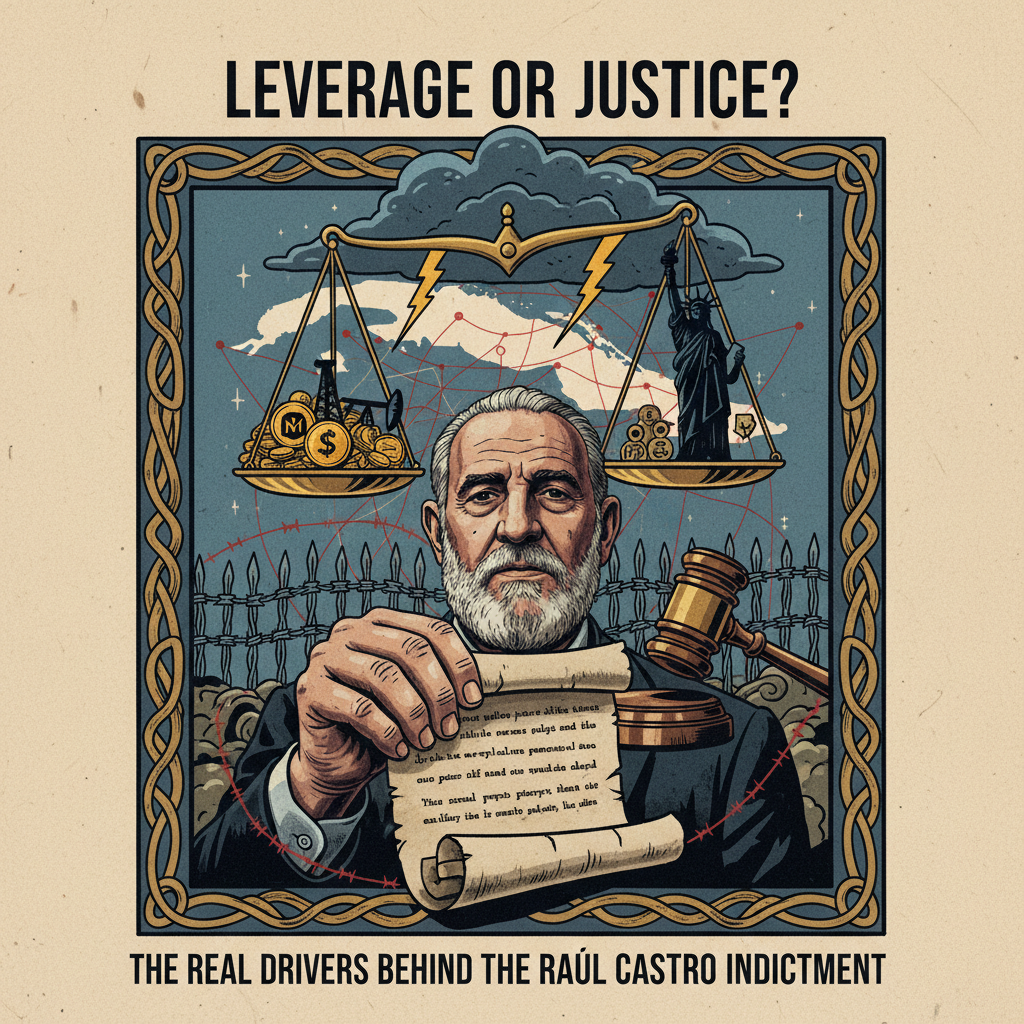
Mainstream coverage of the Trump administration's move to indict 94-year-old Raúl Castro has largely adhered to a script of 'delayed justice.' By focusing on the 1996 shootdown of the 'Brothers to the Rescue' aircraft as a static legal fact, the press has largely ignored the operational context of 2024. Reporting has defaulted to
access journalism
, where the official announcement of a criminal indictment is treated as a neutral procedural milestone rather than a tactical escalation in a broader economic conflict. The primary failure of the established narrative is its refusal to scrutinize the thirty-year gap between the event and the indictment, as well as the immediate proximity of a clandestine visit by the CIA Director to Havana.
What We Know
The 1996 shootdown was not a secret; it was a high-profile international incident that has been documented for nearly three decades. No new forensic evidence or whistleblowers have been cited to justify why an indictment is being 'advanced' at this specific moment. This suggests the legal move is not a response to a breakthrough in the case, but rather a utilization of existing history to meet current political needs. When the press fails to ask 'why today?', they allow the state to set a timeline that disguises policy shifts as mere judicial diligence.
What's Being Claimed
The proximity of Director Ratcliffe’s 'surprise' visit to the announcement of the indictment is the most significant data point in this story. In the realm of international relations, legal threats against former heads of state often serve as bargaining chips. If the CIA Director's visit failed to extract specific concessions regarding Cuba’s alignment with foreign adversaries or its domestic policy, the move to indict Castro functions as a predictable 'Plan B.' The press, by treating the visit and the indictment as separate or coincidental events, misses the likely causal link: lawfare as a punitive measure for failed diplomacy.
What's Missing
Standard reporting uses the term 'exacerbated' to describe the relationship between the U.S. oil embargo and the current suffering in Cuba. This is a linguistic sterilization of policy. An embargo is a deliberate tool of economic warfare designed to create internal pressure by inducing scarcity. By framing the crisis as an independent phenomenon that the U.S. is merely observing, the narrative avoids discussing the ethical and legal implications of creating the very 'humanitarian' conditions that are then used to justify further aggressive measures against the state.
Conclusion
The indictment of Raúl Castro is less about a 1996 tragedy and more about the 2024 strategy of maximum pressure. This is a clear example of the 'instrumentalization of law'—where the judicial system is deployed as an extension of the executive branch's foreign policy toolkit. For the reader, the takeaway is simple: when the government reaches back thirty years to prosecute an aging adversary immediately following a failed secret meeting, the story isn't about the crime—it’s about the leverage. Dogged News remains committed to identifying these patterns of incentive, rather than simply echoing the procedural updates provided by the state.
FAQ
Q: Why has Raúl Castro been indicted now after nearly three decades since the 'Brothers to the Rescue' incident?
A: The indictment's timing appears more related to current geopolitical strategies and diplomatic leverage rather than new evidence, as no breakthroughs have been reported.
Q: What role does the CIA Director's visit to Havana play in this situation?
A: The proximity of the CIA Director's visit to the indictment suggests a strategic link, possibly implying the legal move as a response to unsuccessful diplomatic negotiations.
Q: How does the U.S. oil embargo factor into the current situation in Cuba?
A: The embargo is described as a tool of economic warfare designed to create internal pressure in Cuba, exacerbating humanitarian conditions that are then used to justify further aggressive measures.
Q: What does 'instrumentalization of law' mean in the context of the Raúl Castro indictment?
A: 'Instrumentalization of law' refers to the use of judicial actions as tools to support foreign policy objectives, rather than solely seeking justice for past actions.
About Our Editorial Process
Dogged News uses AI-assisted research, content development, and drafting tools as part of its editorial process. Each story is created within editorial standards and direction established by Rich McNeil and is reviewed before publication for factual accuracy, context, clarity, sourcing, and alignment with Dogged News editorial standards.
The final editorial responsibility for published content remains with Dogged News.
Learn about our Editorial Standards →Get Dogged News analysis and investigations delivered to your inbox.
Discussion (0)
0/2000 · Comments are reviewed before publishing.
Have an account? to comment with a verified identity.
No comments yet. Be the first to share your perspective.