

Escalation as Stenography: Unpacking the U.S. Strikes on Iran
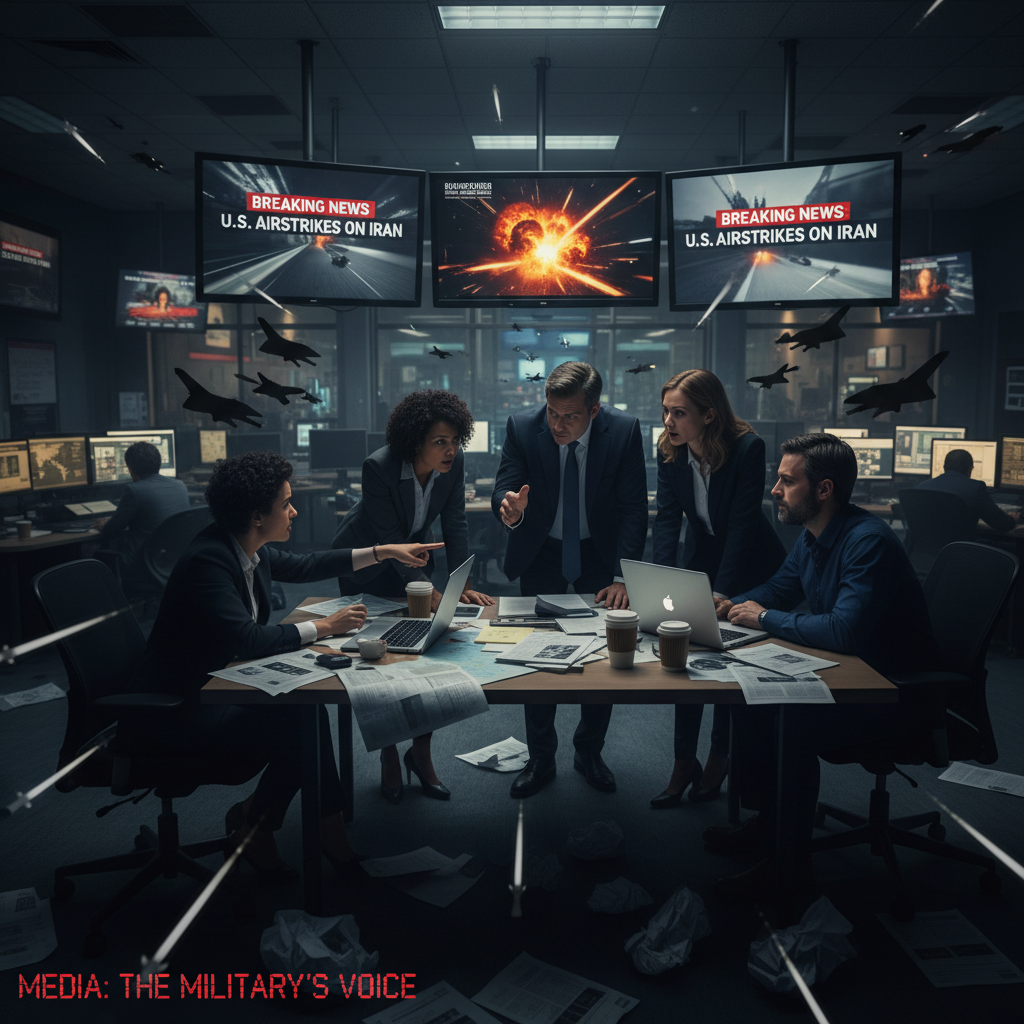
In the wake of U.S. Central Command’s (CENTCOM) airstrikes on Iranian missile and radar sites, mainstream reporting has largely functioned as an extension of the Pentagon’s press office. The initial coverage by outlets like Reuters failed to distinguish between a military allegation and a verified fact. While the press dutifully echoed the administration's claim that the strikes were a response to a drone attack on a Singapore-flagged vessel, they omitted a crucial reality: as of this publication, no independent international body or third-party forensic team has verified the origin of the drone in question.
By adopting the causal framing—reporting that the U.S. struck following an Iranian attack—the media implicitly validates the U.S. military’s retaliatory logic without requiring the burden of proof. This is a classic example of 'access journalism,' where the desire to maintain a pipeline to high-level briefings results in the abandonment of basic skepticism. When the press repeats terms like 'freedom of navigation' and 'ceasefire violation' without defining their legal parameters or interviewing dissenting experts, they are not reporting the news; they are laundering state narrative into the public record.
What's Being Claimed
CENTCOM’s assertion that the drone which struck the Singapore-flagged vessel was Iranian remains just that—an assertion. modern drone technology is increasingly 'off-the-shelf' or distributed through proxies across the region, including Houthi rebels in Yemen and various militias in Iraq. Without satellite telemetry, recovered wreckage analysis, or electronic signature data made available for independent review, the direct link to the Iranian state remains an unproven premise. The press failed to ask for the data, accepting the 'intelligence' at face value despite the historical precedent of intelligence failures in the region.
Access journalism relies on the unspoken agreement that the reporter will not challenge the fundamental assumptions of the source in exchange for early details. In the case of these strikes, that trade-off has left the public with a one-sided view of a potentially catastrophic regional escalation.
What's Actually Happening
The administration cited a violation of a 'recent ceasefire agreement' as the legal and moral justification for kinetic action. However, the specific terms, the signatories, and the geographic scope of this agreement remain opaque. Was this a formal treaty, a memorandum of understanding, or an informal 'de-confliction' arrangement? By failing to interrogate the specifics of this agreement, the media allows the executive branch to define 'violation' unilaterally, effectively moving the goalposts for what constitutes a legitimate act of war.
Why It Matters
Striking targets inside a sovereign nation is an act of war. Under the U.S. Constitution, the power to declare war rests with Congress, and under international law, such strikes usually require a mandate from the UN Security Council unless they are in immediate self-defense. The 'freedom of navigation' argument is a policy goal, not a legal loophole for cross-border bombardment. No mainstream report meaningfully addressed whether the President sought or received legal counsel regarding the War Powers Resolution or the UN Charter before ordering the strikes.
Conclusion
The events in the Strait of Hormuz should be understood not as a simple chain of 'attack and response,' but as a deliberate policy choice by the U.S. administration to project power. By framing the strikes as a reactive necessity, the administration avoids a public debate on the risks of a broader conflict with Iran. The media’s role is to provide the context for that debate, yet by deferring to military authorities, they have instead provided cover for it. The true story here is not just the strikes themselves, but the lack of transparency and legal scrutiny surrounding the decision to launch them. Until the press demands verifiable evidence and legal justification, the public is being told what to believe rather than being given the tools to think for themselves.
FAQ
Q: What initiated the U.S. airstrikes on Iranian sites?
A: The U.S. Central Command claimed the strikes were in response to a drone attack on a Singapore-flagged vessel, alleged to have been carried out by Iran.
Q: Has there been any independent verification of the drone's origin?
A: No, as of this publication, no independent international body or forensic team has verified the origin of the drone.
Q: What legal justifications did the U.S. administration provide for the strikes?
A: The administration cited a violation of a 'recent ceasefire agreement' as justification, though details about this agreement remain unclear.
Q: Why is there criticism of the media's coverage of the U.S. strikes on Iran?
A: The media has been criticized for echoing government claims without demanding evidence or exploring the legal implications, leading to potentially biased public understanding.
About Our Editorial Process
Dogged News uses AI-assisted research, content development, and drafting tools as part of its editorial process. Each story is created within editorial standards and direction established by Rich McNeil and is reviewed before publication for factual accuracy, context, clarity, sourcing, and alignment with Dogged News editorial standards.
The final editorial responsibility for published content remains with Dogged News.
Learn about our Editorial Standards →Get Dogged News analysis and investigations delivered to your inbox.
Discussion (0)
0/2000 · Comments are reviewed before publishing.
Have an account? to comment with a verified identity.
No comments yet. Be the first to share your perspective.