

Crisis Laundering: The Political Architecture of the Venezuelan Earthquake Response
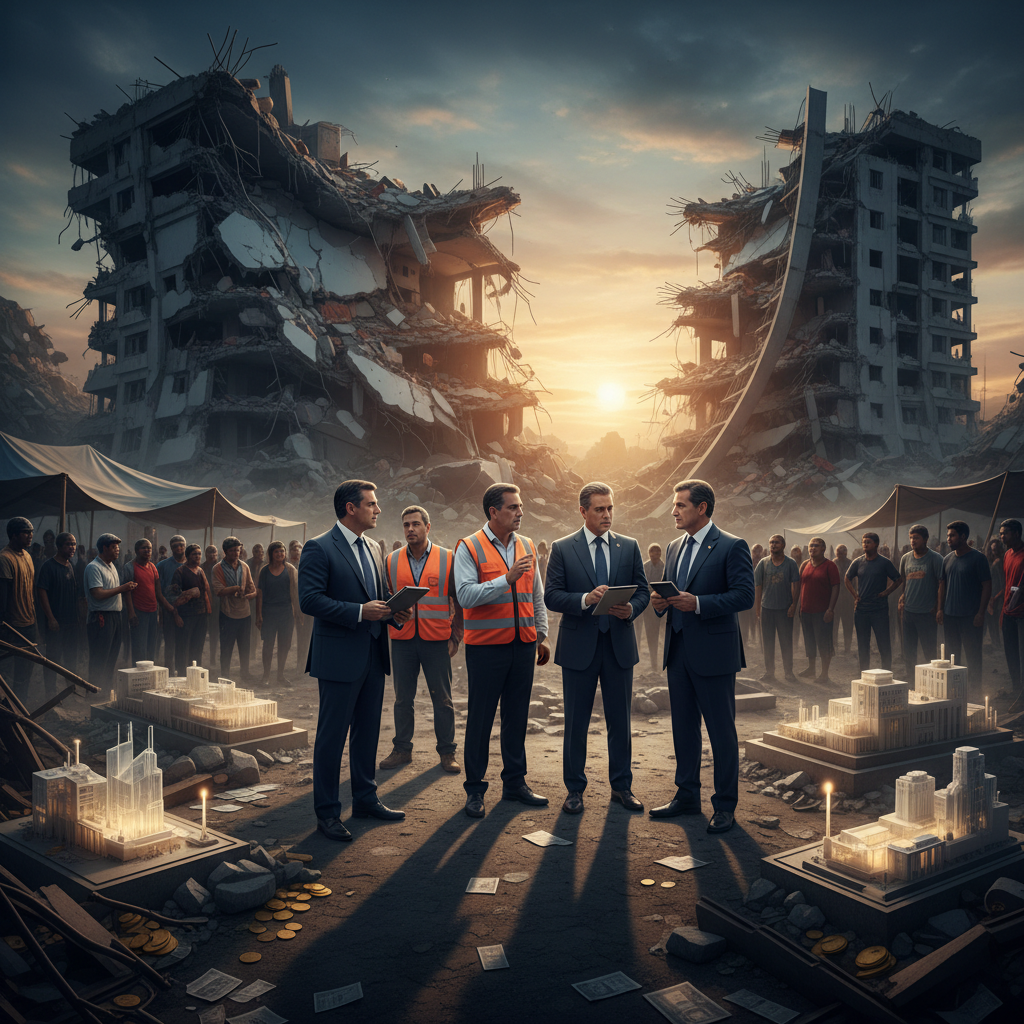
In the wake of the 'seismic doublet' that struck northern Venezuela on Wednesday, international reporting has settled into a familiar groove of disaster pathos. Coverage from the Associated Press and other major outlets has focused on rising death tolls, the 'desperation' of survivors, and the arrival of international aid. However, by adopting the terminology and unverified statistics of a 'newly established administration' in Caracas, the press is doing more than reporting on a disaster; it is providing a veneer of legitimacy to a government whose legal and operational standing remains opaque.
What We Know
The mainstream coverage has effectively served as a PR arm for the Caracas administration. By uncritically reporting a death toll of 1,430 alongside a staggering 69,000 missing, outlets have failed to apply basic statistical scrutiny. In high-magnitude urban disasters, the ratio of missing to dead rarely maintains such a massive gap unless there is a total collapse of census data or a deliberate inflation of figures to attract international aid and justify emergency powers.
Furthermore, the reporting of 'tensions' in La Guaira as a byproduct of 'desperation' ignores the political character of the unrest. When citizens clash with security forces over 'public relations' concerns, they are not merely acting out of grief; they are identifying a specific state failure: the prioritization of image over infrastructure. The press has framed these events as emotional outbursts rather than what they are—a rational critique of systemic state negligence.
The press has a habit of mistaking 'official' for 'factual.' When a government in the midst of a legitimacy crisis provides precise numbers during a catastrophe, the role of the journalist is to ask for the ledger, not just the press release.
What's Missing
The willingness of major outlets to use technical jargon like 'seismic doublet' while simultaneously using distancing verbs like 'alleging' for civilian complaints reveals a deep-seated deference to authority. access journalism requires a certain level of cooperation with the powers that be to maintain 'boots on the ground.' The cost of that access, in this case, appears to be the suspension of skepticism regarding state-issued data. When reporters parrot government terminology, they become an extension of the state’s communication strategy, burying the lead: that a disaster is being used to solidify a fragile political transition.
Conclusion
The story in Venezuela is not just an earthquake; it is a stress test for a regime attempting to trade a tragedy for international standing. The 'tensions' in the street are the friction between a populace that knows the state’s history of neglect and an international community eager to find a stable partner to work with, regardless of how that stability is achieved. Until the press begins to question the data and the incentives behind the Caracas response, they are not reporting the news—they are documenting a narrative of convenience.
FAQ
Q: What is 'crisis laundering' as it pertains to the Venezuelan earthquake?
A: Crisis laundering refers to the use of a disaster, like the Venezuelan earthquake, by a government to legitimize its authority or actions, often assisted by uncritical media coverage.
Q: Why is the reported gap between missing and dead unusual in the Venezuelan earthquake coverage?
A: In urban disasters, a large disparity between the numbers of missing and dead often indicates either a failure to accurately collect data or an intentional inflation of figures to elicit aid and justify control measures.
Q: How does the media's language choice impact public perception of the Venezuelan earthquake response?
A: By using technical terms for geological events and distancing language for civilian complaints, media outlets may inadvertently lend credibility to state narratives while minimizing valid criticism of government actions.
Q: What role should journalists play in covering politically sensitive disasters like the Venezuelan earthquake?
A: Journalists should critically evaluate official data, question government motives behind provided figures, and highlight both the disaster and the surrounding political dynamics to provide a balanced account.
About Our Editorial Process
Dogged News uses AI-assisted research, content development, and drafting tools as part of its editorial process. Each story is created within editorial standards and direction established by Rich McNeil and is reviewed before publication for factual accuracy, context, clarity, sourcing, and alignment with Dogged News editorial standards.
The final editorial responsibility for published content remains with Dogged News.
Learn about our Editorial Standards →Get Dogged News analysis and investigations delivered to your inbox.
Discussion (0)
0/2000 · Comments are reviewed before publishing.
Have an account? to comment with a verified identity.
No comments yet. Be the first to share your perspective.