

Brinkmanship and Blockades: The Missing Context in the U.S.-Iran Standoff
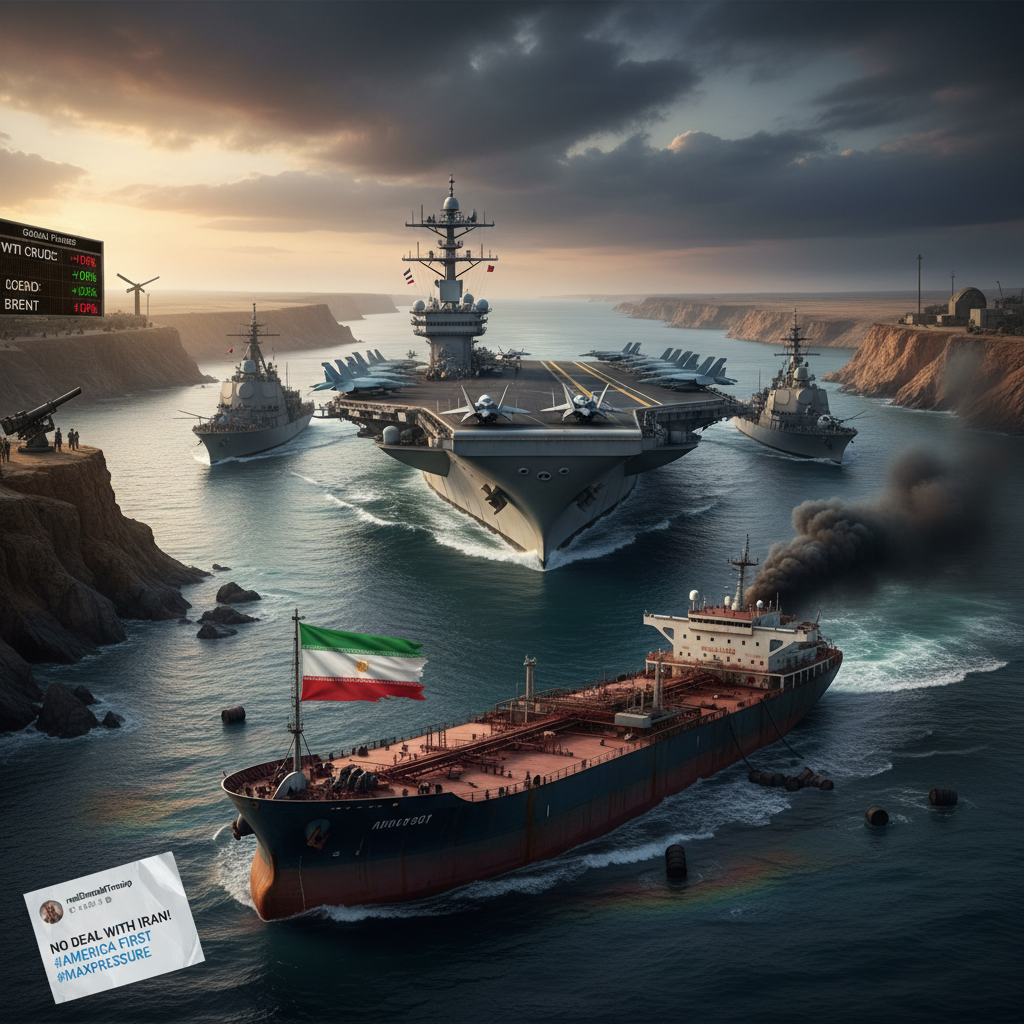
In the wake of President Trump's recent rejection of an Iranian counter-proposal, mainstream reporting has largely functioned as a megaphone for executive rhetoric rather than an analytical lens. By framing the administration's refusal as "holding firm" and labeling the Iranian terms as "totally unacceptable" without scrutiny, outlets like Reuters have deferred to authority at the expense of clarity. What is being characterized as a display of strategic strength is, upon closer inspection, a deepening stalemate defined by a maximalist policy that offers no realistic off-ramp for either party.
What We Know
The press has overlooked the fundamental shift in how this conflict is being managed: from the halls of the State Department to the character limits of social media. This transition is not merely stylistic; it represents a move away from traditional diplomatic frameworks like the JCPOA toward an unpredictable, unilateral posture. Furthermore, the reporting has treated the spike in global oil prices as an unfortunate byproduct of Iranian intransigence, failing to interrogate the specific incentives that high energy prices create for various global actors, including domestic U.S. energy producers.
"By repeating the administration's framing without scrutiny, current reporting lapses into access journalism—prioritizing the speed of a presidential post over the depth of geopolitical analysis."
What's Missing
The failure of the press to ask for the legal basis of this operation allows a significant escalation of kinetic force to be rebranded as mere economic policy.
What's Being Claimed
By presenting this demand as a neutral prerequisite for peace, the administration is effectively ensuring that no deal can be reached. Historically, the demand for zero enrichment has been a non-starter in international negotiations. For Iran, uranium enrichment is not just a technical process but a matter of national sovereignty and a core component of their energy strategy. Even the most stringent international agreements — such as the 2015 JCPOA — allowed for limited, monitored enrichment. To demand total cessation is to demand a surrender that no sovereign state is likely to grant, suggesting that the administration's goal may not be a deal, but a controlled, long-term conflict.
What's Actually Happening
While the closure of the Strait is often presented as a global catastrophe, it is worth noting that not all sectors are suffering. A significant spike in oil prices provides a massive windfall for U.S. shale producers and energy speculators. While the average consumer faces higher costs at the pump, the increased valuation of energy assets serves specific economic interests. By focusing solely on the "instability," the press ignores the incentives — specifically, how a prolonged state of tension in the Middle East bolsters the market position of non-OPEC energy suppliers.
Conclusion
When the rhetoric is stripped away, the current situation reveals a strategy of perpetual leverage. The U.S. administration is utilizing a blockade to extract a concession — total enrichment cessation — that is historically unattainable, while Iran uses the closure of the Strait of Hormuz to remind the world of the costs of U.S. maximalism. This is a cycle designed for domestic consumption on both sides rather than international resolution.
For the American public, the Truth Social diplomacy creates a narrative of unyielding strength. For the Iranian leadership, the refusal to buckle under a blockade serves a narrative of national resistance. Beneath these narratives is a verifiable reality: a 10-week conflict with no clear end, a global energy market under artificial strain, and a diplomatic vacuum where nuanced negotiation has been replaced by performative rejection. Understanding this story requires moving past the "totally unacceptable" headlines and recognizing that, in the current landscape, the stalemate itself may be the intended product.
FAQ
Q: What is the main issue in the U.S.-Iran standoff?
A: The main issue is the U.S. demand for Iran to cease all uranium enrichment, a demand seen as unrealistic and historically unattainable, and Iran's closure of the Strait of Hormuz, creating global economic tension.
Q: Why has the press been criticized in their reporting of this standoff?
A: The press has been criticized for uncritically amplifying the U.S. administration's narrative and failing to offer in-depth geopolitical analysis or question the legal basis of U.S. actions.
Q: How are global oil prices affected by this conflict?
A: The closure of the Strait of Hormuz has led to a spike in global oil prices, benefiting U.S. shale producers and energy speculators while increasing costs for average consumers.
Q: Why might the stalemate itself be the intended outcome for both parties?
A: The stalemate allows both the U.S. and Iran to project narratives of strength and resistance to their domestic audiences, without moving toward an actual resolution.
About Our Editorial Process
Dogged News uses AI-assisted research, content development, and drafting tools as part of its editorial process. Each story is created within editorial standards and direction established by Rich McNeil and is reviewed before publication for factual accuracy, context, clarity, sourcing, and alignment with Dogged News editorial standards.
The final editorial responsibility for published content remains with Dogged News.
Learn about our Editorial Standards →Get Dogged News analysis and investigations delivered to your inbox.
Discussion (0)
0/2000 · Comments are reviewed before publishing.
Have an account? to comment with a verified identity.
No comments yet. Be the first to share your perspective.