

Beyond the Red Carpet: The Strategic Utility of the "Life Support" Narrative
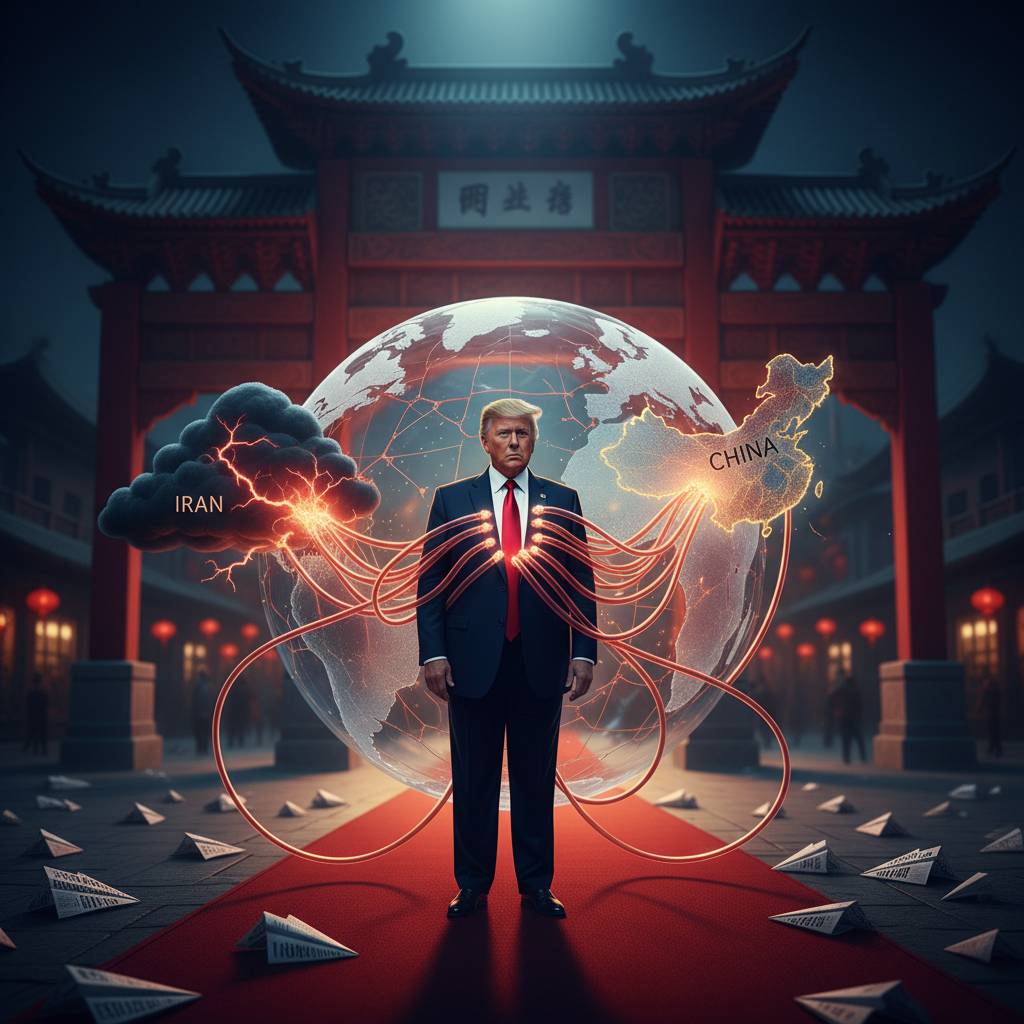
In the standard reporting of President Trump’s departure for China, the press has largely defaulted to a stenographic role. By adopting the White House’s own metaphor—that the Iran ceasefire is on "life support"—major outlets have abdicated their responsibility to define the situation based on verifiable data. This is a classic example of access journalism: by repeating the executive branch's framing without demanding the underlying evidence, the media validates a state of crisis that may or may not exist in reality. The focus on the "state visit" to Beijing serves as a convenient distraction, allowing the administration to set a tone of global instability while simultaneously presenting the President as a steady hand on the world stage. What is missing is an interrogation of the metrics. A ceasefire is a technical arrangement, yet the coverage has treated it as an emotional state.
What We Know
To date, neither the State Department nor the Department of Defense has released a detailed list of ceasefire violations that would justify the term "life support." By accepting this rhetorical flourish, the press bypasses the need for technical verification. If the ceasefire is failing, we must ask: Are there specific troop movements, enrichment level increases, or proxy skirmishes that have been documented? Without these facts, the "life support" narrative functions as a political tool rather than a geopolitical reality. The lack of pushback from the press corps suggests a deference to authority that ignores the possibility that the rhetoric itself is designed to provoke the very collapse it claims to lament.
What's Being Claimed
The timing of a state visit is rarely accidental. By pivoting to the high-stakes optics of a meeting in Beijing, the administration effectively pushes the Iran crisis into the background of the news cycle while maintaining the ability to escalate it at will. This allows the executive branch to manage two disparate narratives simultaneously: one of dignified diplomacy in East Asia and one of looming conflict in the Middle East. The media's failure to interrogate this timing allows the White House to avoid answering for the "smoldering" situation with Iran. If the situation were truly on the brink of war, a state visit involving the entire senior diplomatic apparatus would be a curious choice, suggesting either the crisis is less urgent than the rhetoric implies, or the trip is a calculated move to shift public attention.
What's Missing
Describing a conflict as "smoldering" is a linguistic choice that removes agency and accountability. Fires smolder; wars are prosecuted by people and institutions. By using passive language, the press obscures the specific policy decisions that led to the current tension. This ambiguity benefits those within the military-industrial complex and the administration who favor a policy of maximum pressure without the burden of declaring a specific end-goal. When the media parrots these terms, they provide cover for an open-ended escalation that lacks clear Congressional authorization or public debate. It is the height of institutional deference to let the executive branch define the stakes of a war without ever defining the path to peace.
The media functions as a feedback loop when it adopts the metaphors of power as its primary analytical lens.
Conclusion
This story is not merely about a trip to China or a shaky ceasefire; it is about the mechanics of narrative control. The administration has successfully used the media to broadcast a sense of impending doom regarding Iran, while using a high-profile diplomatic trip to maintain an image of control. The press, by failing to demand evidence for the "life support" claim and by focusing on the pageantry of the state visit, has facilitated a strategic ambiguity. This allows the White House to navigate geopolitical tensions without being held to a standard of factual transparency. For the reader, the takeaway is clear: the crisis is being managed not just through policy, but through the careful curation of media metaphors. To understand what is actually happening, one must look past the red carpets in Beijing and the inflammatory rhetoric in Washington to see the lack of verifiable evidence supporting the current trajectory toward conflict.
FAQ
Q: What does the 'life support' narrative mean in this context?
A: The 'life support' narrative suggests that the Iran ceasefire is on the brink of collapse. It is criticized for being a rhetorical tool that lacks supporting evidence.
Q: Why is the media's role described as stenographic in the article?
A: The media is described as stenographic because it is accused of merely repeating the administration's narratives without demanding concrete evidence or engaging in critical analysis.
Q: How does the state visit to China relate to the Iran situation according to the article?
A: The state visit to China is presented as a strategic distraction, allowing the administration to shift focus from the Iran crisis while managing two narratives of diplomacy and potential conflict.
Q: What evidence should the media demand to verify the 'life support' claim?
A: The media should seek evidence such as specific ceasefire violations, troop movements, or increases in enrichment levels to verify the claim. Without this information, the narrative remains unsubstantiated.
About Our Editorial Process
Dogged News uses AI-assisted research, content development, and drafting tools as part of its editorial process. Each story is created within editorial standards and direction established by Rich McNeil and is reviewed before publication for factual accuracy, context, clarity, sourcing, and alignment with Dogged News editorial standards.
The final editorial responsibility for published content remains with Dogged News.
Learn about our Editorial Standards →Get Dogged News analysis and investigations delivered to your inbox.
Discussion (0)
0/2000 · Comments are reviewed before publishing.
Have an account? to comment with a verified identity.
No comments yet. Be the first to share your perspective.