

Beyond the 'Peace Plan': The Vance-Qatar Meeting and the Limits of Access Journalism
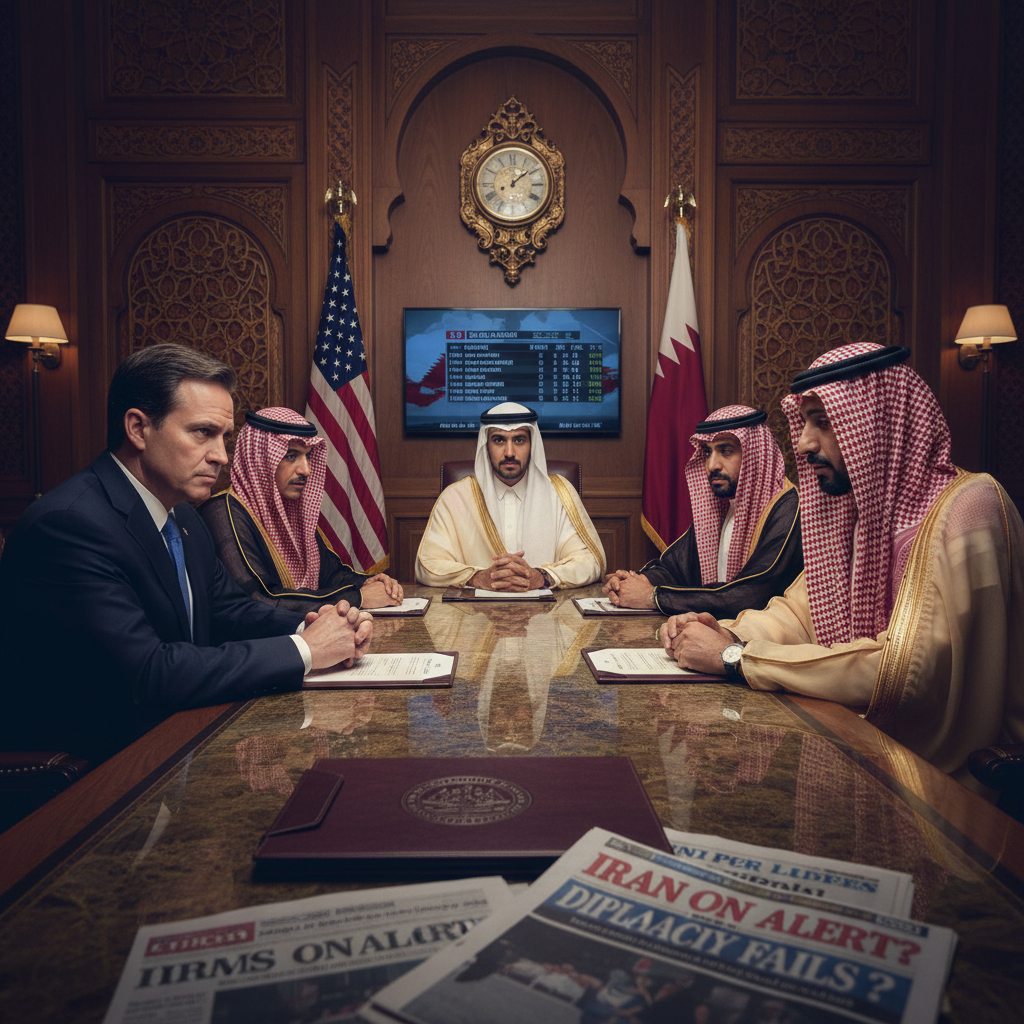
In the wake of Vice President JD Vance’s meeting with Qatari mediators, mainstream reporting has largely functioned as a passive conduit for the Trump administration’s preferred narrative. Outlets like Axios have centered their coverage on the existence of a 'peace plan' and the administration’s posture of 'awaiting' a response from Tehran. This framing, while convenient for White House press offices, omits the most critical component of the story: the substance of the document and the contradictory reality of ongoing kinetic operations.
What We Know
What the press missed—or perhaps more accurately, what it chose to overlook—is that a diplomatic proposal delivered in the shadow of active military strikes is rarely a 'peace plan' in the traditional sense. It is a strategic ultimatum. By adopting the administration’s terminology without scrutiny, journalists have transformed a calculated geopolitical maneuver into a benevolent effort for stability. This isn’t just a matter of semantics; it is a failure to distinguish between diplomacy and coercive leverage.
The central irony ignored by major outlets is the claim of 'awaiting response' while military strikes continue in the region and Lebanon. This creates a narrative where the U.S. is the patient observer and Iran is the sole obstacle to peace, regardless of the terms presented in the undisclosed document.
What's Being Claimed
A plan is only a peace plan if it offers a pathway to mutual de-escalation. However, the Trump administration has not disclosed whether this document contains realistic diplomatic trade-offs or a list of non-negotiable demands. If the 'plan' requires Iran to dismantle its regional influence or nuclear capabilities without reciprocal sanctions relief or security guarantees, it is not a negotiation—it is a demand for surrender. Without knowing the terms, reporting the plan as a 'good faith' effort is speculative at best and misleading at worst.
The administration claims to seek peace while 'maintaining military operations.' In diplomatic history, 'bombing toward the table' is a high-risk strategy that often hardens the resolve of the adversary. Access-heavy reporting fails to ask if these strikes are intended to force Iran to the table or if they are the primary policy, with the 'peace plan' serving as a secondary public relations cover. If the U.S. remains in active combat, the 'waiting for a response' narrative ignores how military pressure actively shapes (or prevents) that very response.
The term 'awaiting response' implies that a formal, bilateral process is underway. Yet, there is no verifiable evidence that Tehran has agreed to the Qatari backchannel as a legitimate venue for this specific document. By framing the situation this way, the administration sets a 'ticking clock' narrative. If no response comes—or if the response is a rejection of terms the public hasn't seen—the administration can then frame further military escalation as a necessary reaction to Iranian 'intransigence.'
What's Missing
The reporting surrounding the Vance-Qatar meeting is a textbook example of access journalism. When reporters rely on senior administration officials for 'scoops' about high-level meetings, there is an implicit pressure to adopt the official's framing to maintain that access. This leads to the 'parroting' of terms like 'peace plan' and 'mediator' without applying the necessary skepticism. In this environment, the journalist stops being a watchdog and starts being a megaphone.
We see this in the lack of independent military or legal analysis. None of the primary reports questioned whether the administration’s actions in Lebanon align with international law or if they contradict the stated goal of a 72-day conflict resolution. Instead, the military operations are treated as a neutral background fact rather than a primary driver of the conflict's continuation.
Conclusion
The reality of the Vance-Qatar meeting is less about a breakthrough in peace and more about the management of narratives. By presenting a 'plan' and then publicizing the fact that they are 'waiting,' the Trump administration is positioning itself to hold the moral high ground regardless of the outcome. If Iran accepts, the administration wins a lopsided victory; if Iran ignores or rejects it, the administration has already primed the public to view subsequent military escalation as the only remaining option.
Understanding this story requires looking past the diplomatic optics. We are not witnessing the start of a peace process; we are witnessing the refinement of a pressure campaign. For the press to report otherwise is to abandon logic in favor of a comfortable, government-provided script.
FAQ
Q: What is the main criticism of the media's coverage of the Vance-Qatar meeting?
A: The main criticism is that the media has adopted the administration's framing by describing the initiative as a 'peace plan' without scrutinizing the substance of the proposal or the ongoing military operations.
Q: Why is the term 'peace plan' considered misleading in this context?
A: The term 'peace plan' is misleading because the proposal is delivered amidst active military operations, suggesting coercion rather than mutual de-escalation, and the specific terms remain undisclosed.
Q: How does the media's reliance on access journalism affect their reporting?
A: Access journalism pressures reporters to adopt official narratives to maintain privileged access to information, thus potentially compromising their critical scrutiny and independence.
Q: What is missing from the current reporting on the Vance-Qatar meeting?
A: The reporting lacks independent military or legal analysis, failing to question the legality of U.S. actions or whether they align with the stated peace objectives of a 72-day conflict resolution.
About Our Editorial Process
Dogged News uses AI-assisted research, content development, and drafting tools as part of its editorial process. Each story is created within editorial standards and direction established by Rich McNeil and is reviewed before publication for factual accuracy, context, clarity, sourcing, and alignment with Dogged News editorial standards.
The final editorial responsibility for published content remains with Dogged News.
Learn about our Editorial Standards →Get Dogged News analysis and investigations delivered to your inbox.
Discussion (0)
0/2000 · Comments are reviewed before publishing.
Have an account? to comment with a verified identity.
No comments yet. Be the first to share your perspective.