

Beyond the 'Hellscape': The Marketing of the Drone Deterrent
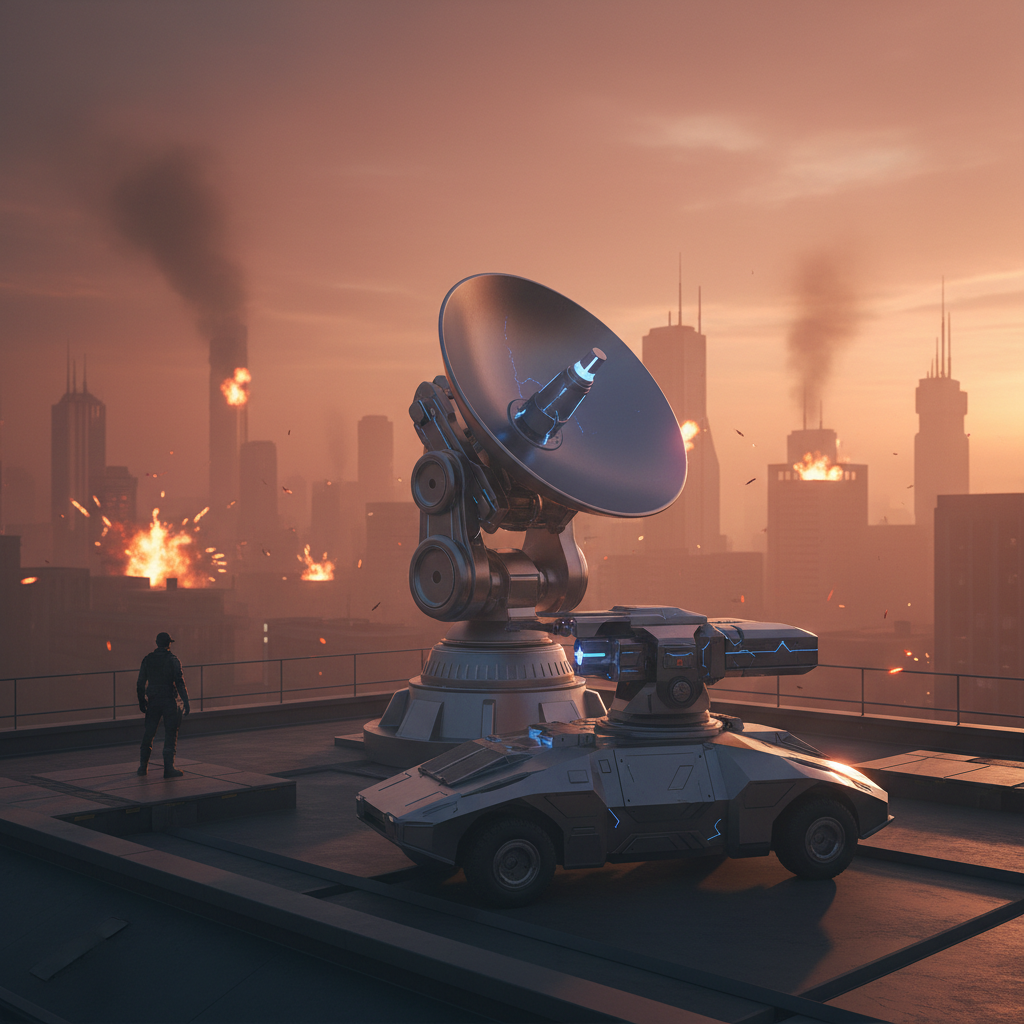
Recent reporting on the expansion of Ukrainian drone technology into the Indo-Pacific has focused heavily on a specific, high-octane narrative: that the battlefields of Eastern Europe have provided a turnkey solution for the defense of Taiwan and Japan. Headlines frequently lead with the phrase "battle-tested," positioning the pivot toward Asia as an organic strategic evolution. However, by adopting the terminology of military commanders and defense contractors, mainstream analysis has largely ignored the industrial incentives and technological gaps that define this story.
What's Actually Happening
The primary oversight in current coverage is the failure to distinguish between terrestrial and maritime warfare. The success of small, low-cost drones in Ukraine is heavily dependent on a landscape of dense foliage, urban ruins, and trenches where line-of-sight and short-range communication suffice. The Taiwan Strait, by contrast, is a high-intensity maritime environment. The press has largely failed to mention that the Electronic Warfare (EW) capabilities of the People’s Liberation Army (PLA) are considered significantly more sophisticated and layered than the Russian systems currently operating in Ukraine. Treating a drone that works in a forest as a solution for a 100-mile sea crossing is not a strategic assessment; it is a marketing leap.
Furthermore, there is the issue of "access journalism." By relying almost exclusively on US commanders and Ukrainian defense CEOs, reporting has mirrored the internal goals of the military-industrial complex. The phrase "unmanned hellscape," popularized by US Indo-Pacific Command, is not a neutral description of a tactical reality; it is a psychological warfare term designed to signal intent and secure funding. When journalists adopt this language without critique, they cease being observers and become part of the signaling mechanism.
Conclusion
What is actually happening beneath the surface of the "Ukrainian drones in Asia" story is a global reorganization of the defense market. The conflict in Ukraine has provided a massive amount of data, but that data is being used to sell a specific vision of future warfare that may not survive contact with a more advanced adversary.
The move to export this technology is as much about economic survival for Ukrainian firms and strategic entrenchment for US military doctrine as it is about the actual defense of Taiwan. For the reader, the lesson is clear: when a weapon system is described with the same adjectives used by its manufacturer, you are no longer reading news—you are reading a brochure. True deterrence relies on cold, hard technical parity, not the adoption of catchy, escalatory slogans from a command center.
"By quoting US commanders and defense firms as the primary sources, the reporting reflects their specific worldview—framing technological proliferation as an objective deterrent rather than a catalyst for a regional arms race."
FAQ
Q: Why is the success of Ukrainian drones not directly transferable to the Indo-Pacific region?
A: Ukrainian drones are optimized for terrestrial environments like dense forests and urban areas, unlike the high-intensity maritime environment of the Indo-Pacific, making their direct application challenging.
Q: What are the main shortcomings of current media coverage on drone technology in Asia?
A: The media often overlooks the technological and environmental differences between regions and tends to adopt the language of military insiders, which can blur the line between strategic assessment and marketing.
Q: How does the concept of 'access journalism' influence reporting on military technology?
A: Access journalism results in reporting that often mirrors the goals of military and defense companies, leading to coverage that supports certain narratives rather than offering critical analysis.
Q: What is the role of the defense industry in the promotion of Ukrainian drones for Asia?
A: The defense industry uses the success of Ukrainian drones as a marketing tool to promote future technology sales, driven by economic survival and strategic goals rather than genuine regional defense needs.
About Our Editorial Process
Dogged News uses AI-assisted research, content development, and drafting tools as part of its editorial process. Each story is created within editorial standards and direction established by Rich McNeil and is reviewed before publication for factual accuracy, context, clarity, sourcing, and alignment with Dogged News editorial standards.
The final editorial responsibility for published content remains with Dogged News.
Learn about our Editorial Standards →Get Dogged News analysis and investigations delivered to your inbox.
Discussion (0)
0/2000 · Comments are reviewed before publishing.
Have an account? to comment with a verified identity.
No comments yet. Be the first to share your perspective.