

Beyond Brinkmanship: Scrutinizing Iran's Tanker Threats and the Missing Math of Global Oil
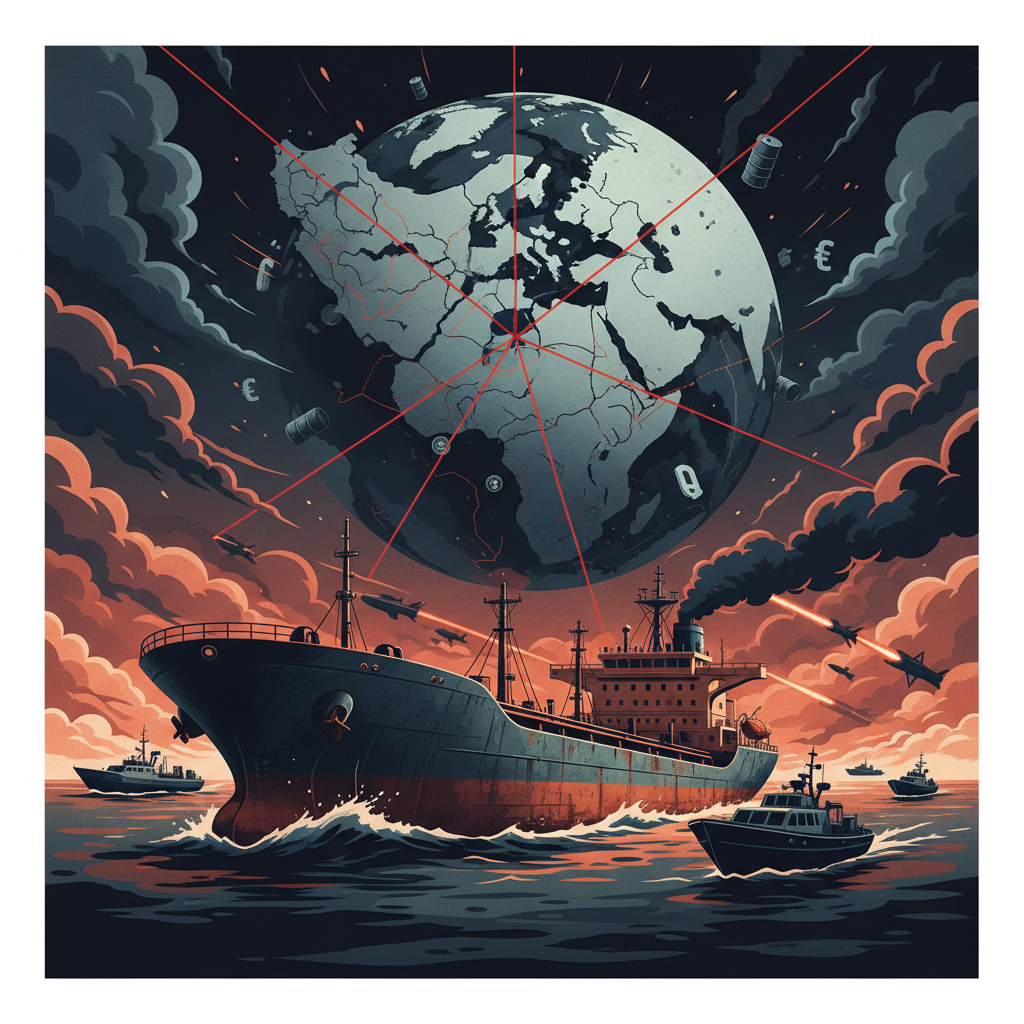
Mainstream coverage of the recent tensions in the Strait of Hormuz has largely followed a predictable script: quoting government threats as gospel while amplifying catastrophic economic figures without a single source. By framing Iran’s recent warnings as a 'stern' escalation, several outlets have effectively transitioned from news-gathering to acting as a megaphone for state-level brinkmanship. What was missing from the initial reporting was any attempt to verify the staggering claim that 'one billion barrels of oil' have been lost to the market, nor was there any investigation into the legal or tactical reality of the 'interceptions' being discussed.
What We Know
Instead of questioning the incentives behind these statements, the press has largely deferred to authority, practicing a form of access journalism that prioritizes the speed of a quote over the accuracy of the data. When a news organization reports a figure as massive as a billion-barrel loss without attribution, it isn't providing information—it is participating in psychological signaling on behalf of the sources it covers.
What's Being Claimed
The claim that the global economy has lost over one billion barrels of oil since the current conflict began is a statistical outlier that requires extraordinary evidence. To put that number in perspective, total global oil production is roughly 100 million barrels per day. A loss of one billion barrels would imply a total cessation of 10% of the world's supply for 100 days, or a more prolonged disruption that has not been reflected in current global inventory data. By failing to attribute this number to a specific agency—such as the IEA or EIA—the reporting serves to heighten market anxiety rather than inform it. Evidence suggests this figure is likely an aggregate of theoretical future losses or an unverified claim from a biased party intended to create economic pressure.
What's Missing
The term 'intercepted' is used loosely in mainstream reports, blurring the line between legal sanctions enforcement and maritime piracy. Under international maritime law, the right of 'transit passage' applies to the Strait of Hormuz. While the U.S. uses domestic law to seize Iranian oil as part of sanctions enforcement, Iran views these actions as theft. The 'warning' from Tehran is not a sudden escalation but a standard rhetorical response to the U.S. Department of Justice's ongoing program of seizing oil cargoes. Reporting the threat without this context makes it appear as a random act of aggression rather than a calculated, tit-for-tat legal dispute.
What's Actually Happening
While Iran maintains a significant fleet of fast-attack craft and anti-ship missiles, the threat to target 'U.S. military bases' is a major logistical hurdle. Most U.S. bases in the region, such as Al-Udeid in Qatar or the 5th Fleet headquarters in Bahrain, are protected by sophisticated multi-layered missile defense systems. The press often ignores the domestic incentive for these threats: the Iranian leadership must appear defiant to its domestic base and regional proxies, regardless of whether a full-scale military strike is a viable or intended option.
"When journalists report unverified state statistics as concrete facts, they stop being observers and start being participants in the conflict's narrative architecture."
Conclusion
This story is not fundamentally about a pending naval war; it is about the weaponization of uncertainty. By allowing unverified figures and inflammatory adjectives like 'stern' to drive the narrative, the press helps create the very 'escalation' it claims to report on. This is a classic example of authority deference, where the words of a government official are treated as more significant than the verifiable data on the ground.
The reality is a strategic stalemate: Iran uses threats to deter the seizure of its primary export, while the U.S. uses seizures to tighten financial pressure. The 'one billion barrels' is a ghost number, a piece of rhetorical fiction designed to make the stakes feel existential. For the reader, the takeaway should be clear: watch the flow of ships and the actual data from independent energy monitors, not the headlines generated by state press offices and the journalists who parrot them.
FAQ
Q: What is the significance of the Strait of Hormuz in global oil transportation?
A: The Strait of Hormuz is a vital chokepoint for global oil transportation, through which approximately 20% of the world's petroleum passes daily.
Q: Why is the reported loss of 'one billion barrels of oil' controversial?
A: The claim of a one billion barrel oil loss is controversial because it lacks credible sourcing and would represent an unrealistic disruption to global oil supply, indicating a misuse of statistics to incite fear.
Q: What is meant by 'interceptions' in the context of Iran and U.S. relations?
A: 'Intercepted' is a term used ambiguously in media reports, referring to disputes over U.S. seizures of Iranian oil under domestic sanctions, which Iran views as unauthorized acts akin to piracy.
Q: How does media reporting impact public perception of the Iran-U.S. conflict?
A: Media reporting that uncritically repeats government statements and unsubstantiated figures contributes to public fear and misunderstanding, potentially escalating tensions through misinformation.
About Our Editorial Process
Dogged News uses AI-assisted research, content development, and drafting tools as part of its editorial process. Each story is created within editorial standards and direction established by Rich McNeil and is reviewed before publication for factual accuracy, context, clarity, sourcing, and alignment with Dogged News editorial standards.
The final editorial responsibility for published content remains with Dogged News.
Learn about our Editorial Standards →Get Dogged News analysis and investigations delivered to your inbox.
Discussion (0)
0/2000 · Comments are reviewed before publishing.
Have an account? to comment with a verified identity.
No comments yet. Be the first to share your perspective.