

43 Hours in Beijing: The High Cost of Diplomatic Vapors
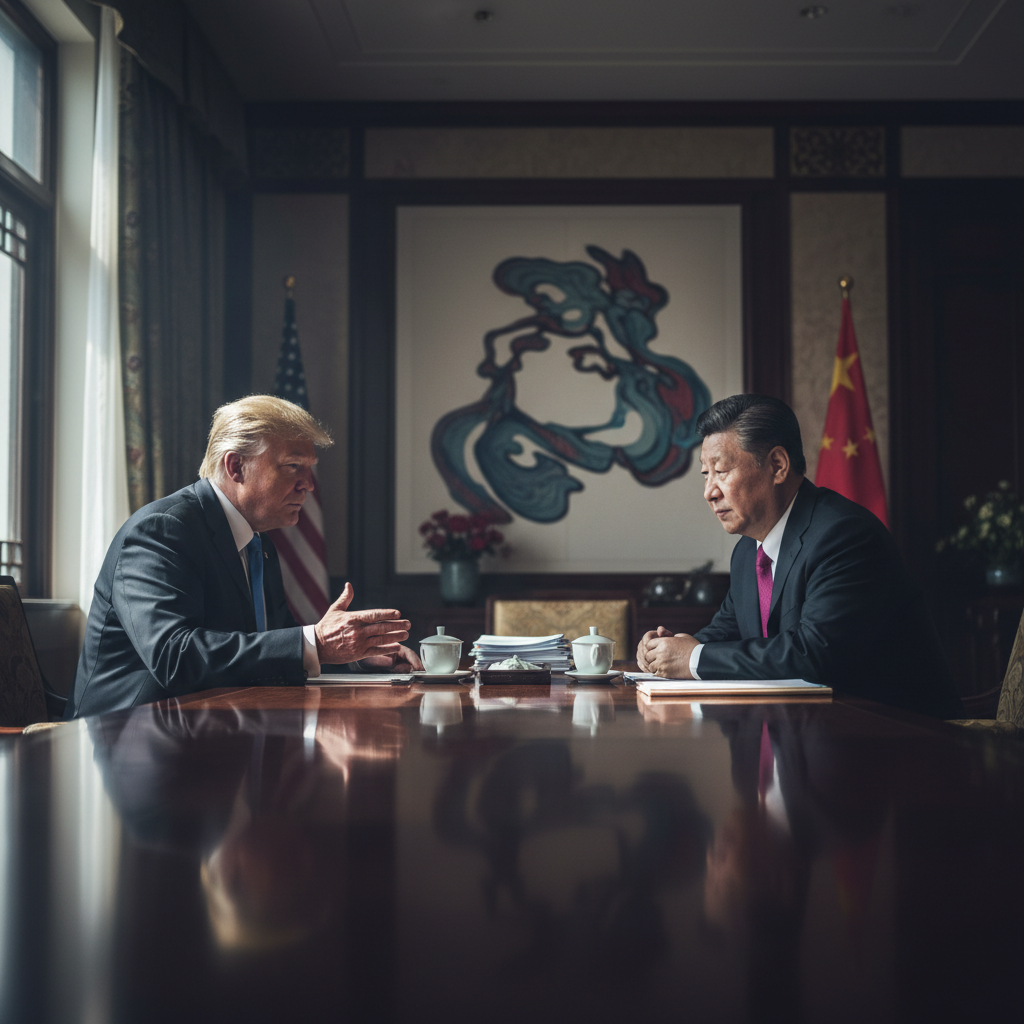
The establishment coverage of the 43-hour summit between President Donald Trump and Xi Jinping in Beijing has followed a predictable, yet deeply flawed, script. By framing the meeting as a successful effort to 'ease tensions' without 'giving ground,' mainstream outlets have opted for the safety of diplomatic platitudes over the rigor of objective analysis. What the press missed—or perhaps ignored—is the distinction between a diplomatic event and a policy outcome. Forty-three hours of high-level proximity resulted in zero signed treaties, zero formal agreements, and zero shifts in the underlying economic or military frictions between the two nations.
What We Know
The fundamental failure of the establishment narrative is the conflation of proximity with progress. Reporting that treats a 'commitment to stability' as a concrete deliverable is not journalism; it is stenography for the state.
By adopting the linguistic framing of both administrations, the media has engaged in access journalism, prioritizing the 'vibe' of the meeting to maintain standing with official sources. They have presented 'red lines' as newly discovered geographical facts rather than unilateral rhetorical claims, and they have laundered 'confidence' as a substitute for verifiable strategy.
What's Missing
In the currency of international relations, the acknowledgment of a rival's 'red line' is a significant concession. It grants the opponent a psychological and rhetorical anchor for future escalations. However, there is no evidence—not a single data point or briefing note—to suggest that the U.S. delegation received any reciprocal commitment. Whether it be trade tariffs, technology export bans, or military de-escalation in the South China Sea, the 'easing of tensions' appears to be a one-sided rhetorical gift from Washington to Beijing.
When two superpowers engage in a summit of this duration, the historical standard for success is a joint communique—a signed document detailing shared goals or agreed-upon facts. This summit produced none. By failing to highlight this absence, the press allowed the 'strongman' images of both leaders to go unchallenged. Without a legal or formal framework, these 'verbal assurances' carry no weight and serve only as temporary political cover for domestic audiences.
President Trump’s 'confidence' in China’s mediation role is a statement of personal belief, not a reflection of geopolitical reality. China is currently the largest purchaser of Iranian oil and a strategic partner in the region. To suggest that Beijing would risk its energy security and its leverage against Western influence to satisfy a U.S. diplomatic request—without any tangible incentive—defies logic. The original reporting failed to cite a single Chinese official or policy document suggesting a shift in their long-standing non-interventionist stance regarding Iran.
What's Actually Happening
The reporting on this summit reveals a troubling deference to authority. When the press uses phrases like 'successfully established red lines' or 'eased tensions,' they are validating a state-sanctioned narrative that has no basis in measurable change. This is the hallmark of 'access journalism': the reporter becomes a conduit for the official version of events because questioning the lack of substance might jeopardize future leaks or invitations.
We must look at the incentives. For Xi Jinping, the summit was a win because it projected parity with the United States without requiring a single policy change. For Donald Trump, the summit was a win because it allowed him to project the image of a dealmaker on the world stage. For the press, reporting the 'vibe' of a high-stakes meeting is easier than analyzing why 43 hours of talk yielded zero pages of policy.
Conclusion
Strip away the diplomatic adjectives and the 'strongman' framing, and the reality of the Beijing summit becomes clear: it was a performance of stability intended to mask a stalemate. The 'red lines' on Taiwan are not new; they are the same positions China has held for decades, now re-packaged and sold to a compliant press as a 'breakthrough' in clarity. The 'confidence' on Iran is a placeholder for a missing strategy.
What actually happened in Beijing was a mutual agreement to maintain the status quo while pretending otherwise. In the absence of signed agreements or verifiable concessions, the 'easing of tensions' is merely a temporary pause in a structural rivalry—one that remains as volatile and unaddressed as it was before the 43-hour clock started ticking.
FAQ
Q: What was the main purpose of the 43-hour summit in Beijing?
A: The main purpose of the summit was to discuss diplomatic relations between the U.S. and China, with a focus on 'easing tensions' without making substantial policy commitments.
Q: Why is the absence of signed agreements significant in this context?
A: In diplomatic contexts, signed agreements or treaties are benchmarks of progress. Their absence suggests the summit was more about optics than substantive developments.
Q: What criticisms were made about media coverage of the summit?
A: The article criticizes media for prioritizing diplomatic pleasantries and 'access journalism' over objective analysis, failing to scrutinize the lack of tangible outcomes or questioning official narratives.
Q: Did the summit lead to any changes in U.S.-China relations?
A: No, the summit did not result in changes; there were no formal agreements or policy shifts, only verbal assurances with no measurable impact on the economic or military tensions.
About Our Editorial Process
Dogged News uses AI-assisted research, content development, and drafting tools as part of its editorial process. Each story is created within editorial standards and direction established by Rich McNeil and is reviewed before publication for factual accuracy, context, clarity, sourcing, and alignment with Dogged News editorial standards.
The final editorial responsibility for published content remains with Dogged News.
Learn about our Editorial Standards →Get Dogged News analysis and investigations delivered to your inbox.
Discussion (0)
0/2000 · Comments are reviewed before publishing.
Have an account? to comment with a verified identity.
No comments yet. Be the first to share your perspective.