

The Supreme Court AI Fair Use Ruling is the Greatest Wealth Transfer in History
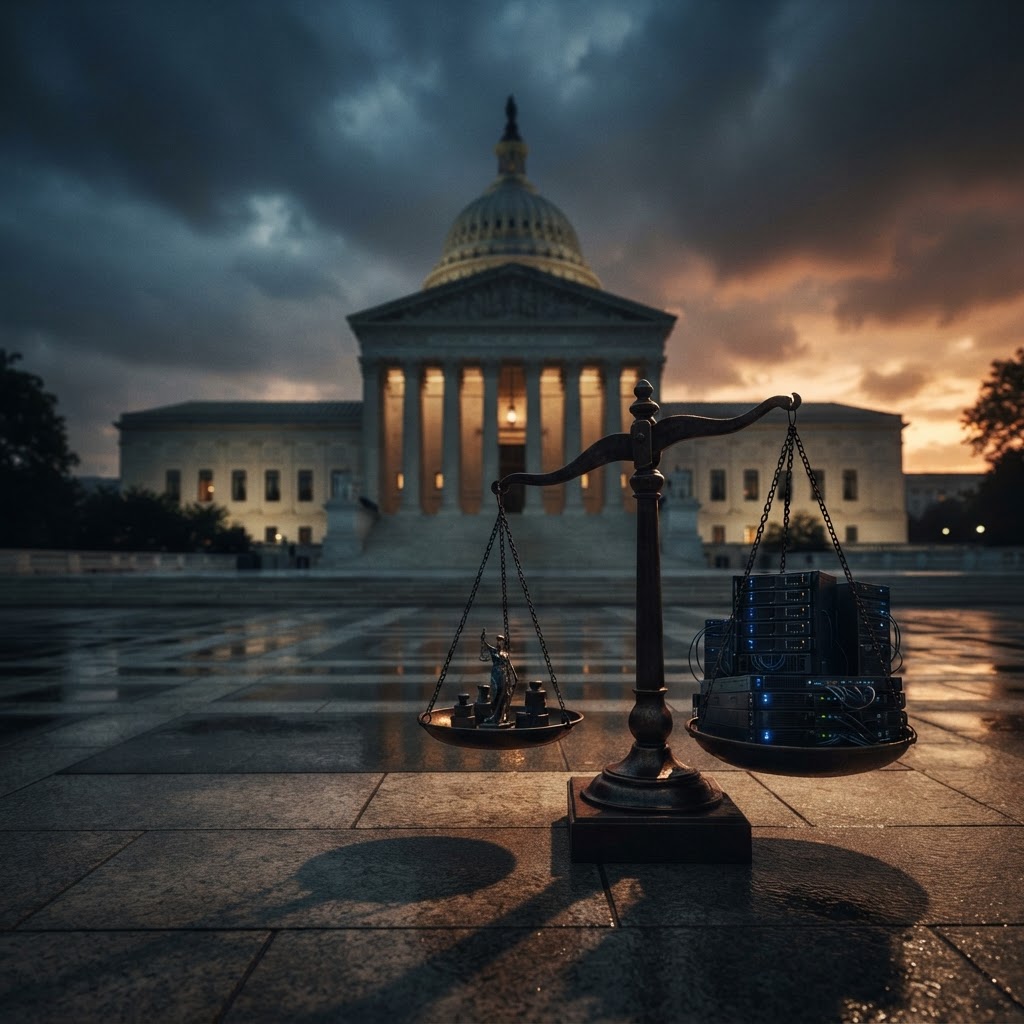
The recent Supreme Court ruling on AI fair use might go down in history as the largest legally-sanctioned artistic expropriation ever witnessed. By allowing AI systems to mine copyrighted materials for training, the ruling essentially greenlights what amounts to a wealth transfer from individual creators to sprawling tech behemoths. What was once a carefully guarded creative space is now open season for algorithmic exploitation.
What We Know
The court’s decision permits artificial intelligence to tap into copyrighted content for training purposes under the broad umbrella of fair use. This is not just an esoteric legal adjustment; it fundamentally alters the landscape of intellectual property. The ruling was framed as an extension of fair use adaptation, a doctrine traditionally reserved for educational and transformative purposes—not bottom-line tech industry gains.
What's Being Claimed
Proponents of the ruling argue it spurs technological innovation and creativity, suggesting AI requires a breadth of data to advance. They claim it levels the playing field by democratizing access to information, allegedly benefiting society at large. But the reality is, this ruling heavily favors those who possess the computational power to wield AI technologies—namely mega-corporations, not grassroots innovators.
What's Missing
What’s conspicuously absent from the discourse is the human consequence. Individual creators see their life’s work stripped bare and repurposed without compensation. The court failed to address how traditional copyright considerations can coexist with AI’s hunger for data. Questions about opt-out mechanisms or fair recompense for creators remain unanswered—an oversight that privileges profit over fairness.
What's Actually Happening
Behind the legal jargon, something far more alarming is occurring. The governing consensus has effectively nullified the traditional boundaries of copyright, skewing the scales dramatically in favor of tech giants. These corporations retain ironclad patents on their AI algorithms while simultaneously benefiting from a free-for-all menu of human creativity. A few scrape the value generated by the many.
Why It Matters
This ruling is a tipping point in the control of intellectual property. It redefines ownership in the digital age, presenting a cloak of legitimacy to what can only be described as digital colonialism. If left unchecked, it decreases incentives to innovate at the individual level, potentially stifling the very creative processes it purports to protect.
Conclusion
This Supreme Court decision is more than a legal landmark; it signals a seismic shift in society’s handling of creative rights. In an age where technology and power dynamics are intertwined like never before, the public deserves more than cocktail-party journalism. What’s needed is a rigorous reassessment of who gains and who loses in this new regime of AI-powered economies.
FAQ
Q: What does the Supreme Court's AI fair use ruling allow?
A: The ruling allows AI systems to use copyrighted materials for training under the doctrine of fair use, which is traditionally reserved for educational and transformative purposes.
Q: How does this ruling affect individual creators?
A: Individual creators may see their copyrighted works used by AI without compensation, potentially diminishing their control and financial benefits from their creations.
Q: Who benefits most from this decision?
A: The ruling primarily benefits large tech corporations that have the resources to leverage AI technologies, while grassroots innovators and individual creators may find themselves at a disadvantage.
Q: Why is this ruling considered controversial?
A: The ruling is controversial because it fundamentally changes intellectual property laws, favoring corporate interests and possibly stifling individual creativity and innovation.
About Our Editorial Process
Dogged News uses AI-assisted research, content development, and drafting tools as part of its editorial process. Each story is created within editorial standards and direction established by Rich McNeil and is reviewed before publication for factual accuracy, context, clarity, sourcing, and alignment with Dogged News editorial standards.
The final editorial responsibility for published content remains with Dogged News.
Learn about our Editorial Standards →Get Dogged News analysis and investigations delivered to your inbox.
Discussion (3)
0/2000 · Comments are reviewed before publishing.
Have an account? to comment with a verified identity.
It's honestly terrifying how quickly this decision undermines the livelihoods of independent artists. If models can just ingest decades of our work without compensation, we're essentially subsidizing our own replacement.
I disagree that it's a 'wealth transfer' in that sense, Marcus. Most of these models are creating entirely new patterns rather than just copying. Isn't this just the next evolution of how humans learn from existing work?
Do we really think the Court had another choice though? If they had ruled against AI training, wouldn't that effectively hand a monopoly to the two or three companies that already have massive proprietary datasets?
That's a fair point, Tom, but why can't we mandate some form of licensing or royalty pool instead of total fair use? It shouldn't be binary.
I am a freelance illustrator and I have already seen my commissions drop by 40% this year. Companies are choosing 'good enough' AI images over human work now, and the courts just told them it's legal to build those tools on my back.