

Remote Car Deactivation: The End of Private Ownership on the Highway
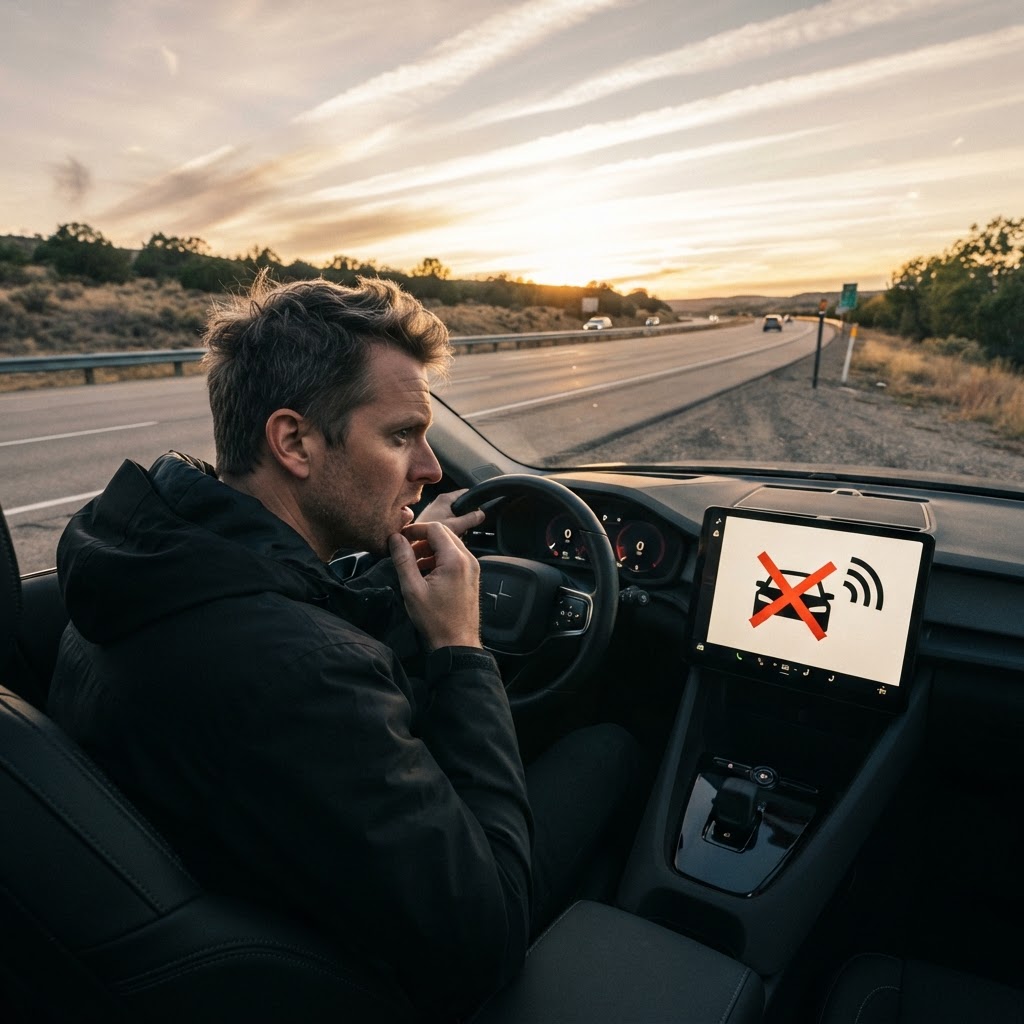
Imagine cruising down the highway only to have your car suddenly stop in its tracks. Not due to a mechanical failure, but because a remote signal deactivates it. Welcome to the unsettling reality of remote car deactivation—a concept threatening to redefine ownership altogether.
What We Know
As vehicles transition towards becoming more software-oriented, car manufacturers are implementing technologies enabling them to remotely deactivate a car. Through firmware updates, they possess the ability to disable vehicles at will, integrating mechanisms supposedly for safety or financial defaults.
The shift isn’t just technological; it’s ideological—the cars we once owned are now vessels for software we merely lease.
What's Being Claimed
Proponents argue these systems are designed to enhance security and ensure compliance. For instance, they can prevent theft or encourage timely financial payments. The idea is that, through these systems, automakers can better service the vehicles—ensuring they always run on the latest updates.
What's Missing
Conveniently absent from the discussion is the potential misuse of such technology. With automakers holding keys to this digital kingdom, the threat of governmental overreach looms large. What if authorities begin to demand access to deactivate vehicles en masse?
If the software is king, the local mechanic is its pawn, pushed out as the industry centralizes repairs—with sky-high costs that follow.
What's Actually Happening
The ramifications extend beyond law enforcement ambitions. It’s about consolidating control, shifting leverage from individual owners to conglomerates. Traditional car mechanics, unable to service these high-tech chariots, face extinction. Right to repair laws attempt to address this dynamic, but with mixed results.
Why It Matters
This isn't just a technical issue—it's economical and political. Who benefits when power dynamics are this skewed? The machinery of power effortlessly tightens its grip when consumers capitulate to convenience.
Conclusion
Remote car deactivation is more than a technological phenomenon; it is an ominous shift away from personal autonomy. As drivers, we need to question where this path leads. Will we find ourselves as mere subscribers in a world that once promised ownership?
FAQ
Q: What is remote car deactivation?
A: Remote car deactivation is a technology allowing car manufacturers to disable vehicles remotely through software updates, usually for reasons like enhancing security or enforcing financial compliance.
Q: How could this technology affect car ownership?
A: The technology challenges traditional car ownership by shifting control from individual owners to manufacturers, as vehicles become more dependent on software leases rather than full ownership.
Q: What are the potential risks associated with remote car deactivation?
A: Potential risks include misuse by governments for mass deactivations and increased repair costs, as local mechanics may be pushed out due to the complex technology.
Q: What can be done to address concerns over this technology?
A: Right to repair laws could help, but their effectiveness is mixed. Public awareness and questioning the implications of such technologies on personal autonomy are crucial for balancing power dynamics.
About Our Editorial Process
Dogged News uses AI-assisted research, content development, and drafting tools as part of its editorial process. Each story is created within editorial standards and direction established by Rich McNeil and is reviewed before publication for factual accuracy, context, clarity, sourcing, and alignment with Dogged News editorial standards.
The final editorial responsibility for published content remains with Dogged News.
Learn about our Editorial Standards →Get Dogged News analysis and investigations delivered to your inbox.
Discussion (4)
0/2000 · Comments are reviewed before publishing.
Have an account? to comment with a verified identity.
It is terrifying to think that a software update from a corporate headquarters could effectively brick my primary mode of transportation. Private property rights feel like they are just becoming a suggestion.
Does anyone know if there is pending legislation to limit this? It seems like something that should be handled by a strict consumer protection law before every brand adopts it.
My 2012 sedan doesn't have an internet connection and I plan on keeping it that way as long as possible. The 'smart' car trend is just a way for manufacturers to lease us our own mobility.
David, that is a great point. I feel the same way about my truck. Once they move the kill switch to the cloud, you aren't really the owner anymore, just a long-term renter.
While I agree the privacy concerns are valid, think about how this technology could assist in recovering stolen vehicles or stopping high-speed pursuits. It isn't all black and white.
Exactly, Sarah. But who defines when a situation warrants deactivation? I don't trust an algorithm or a local precinct to make that call without some serious oversight.