

Beyond the 'Gospel' of Tech: The Real Mechanics of the U.S.-China AI Realignment
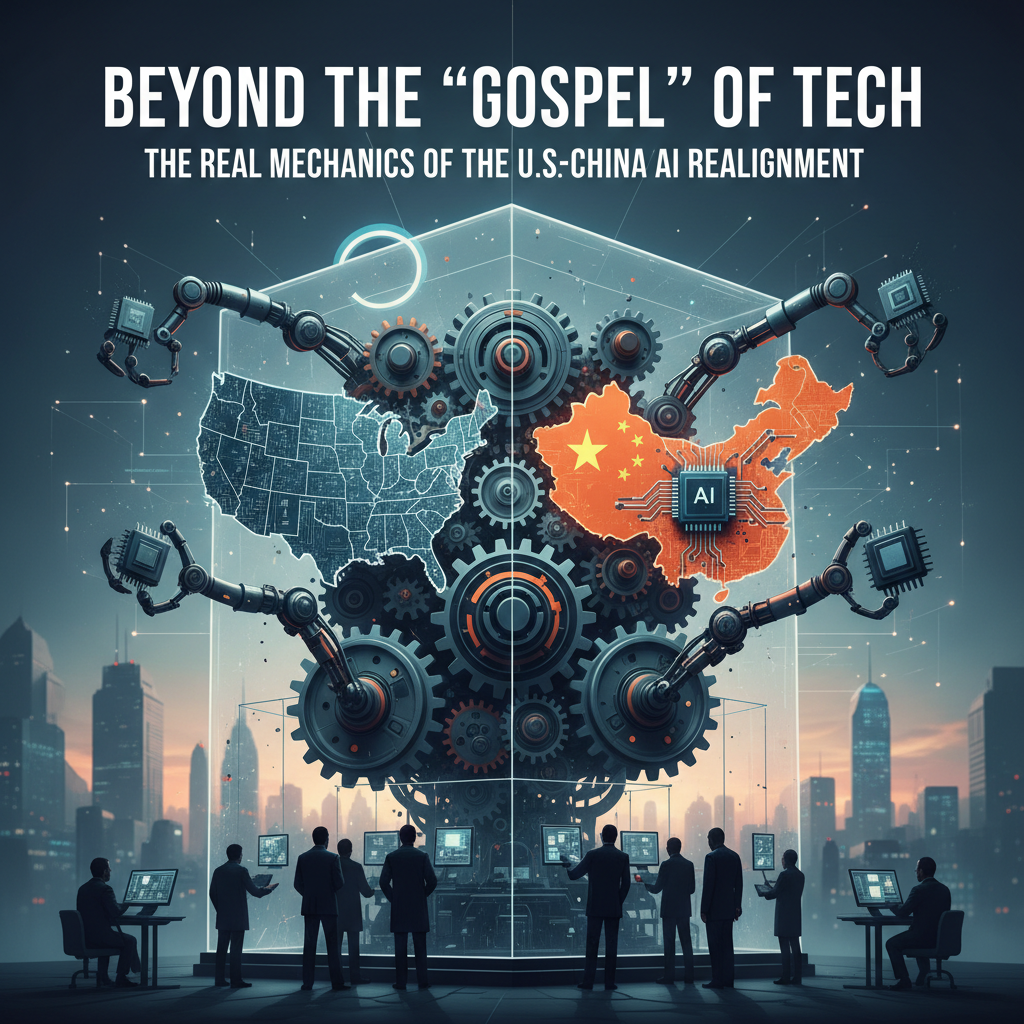
Current coverage of President Trump’s visit to Beijing suggests a diplomatic mission to "spread the gospel" of American technology. It is a framing that leans heavily on religious metaphor to mask a secular and highly transactional shift in industrial policy. By characterizing the administration as a missionary for innovation, mainstream outlets have effectively laundered a radical pivot toward state-managed economics as a form of cultural or ideological outreach.
What the public is being told is that the U.S. is merely "emulating" the Chinese model to stay competitive. What is actually happening is a structural dismantling of the barrier between private enterprise and executive authority, using geopolitical tensions as the primary justification. The reliance on anonymous "observers" to frame this as a necessary strategic maneuver is a hallmark of access journalism, where the goal is to mirror the administration’s self-image rather than interrogate its actions.
What's Missing
While the press focuses on the optics of the Beijing summit, they have largely ignored the quiet installation of a state-led innovation framework that bypasses traditional market mechanisms. The narrative of "emulating Xi Jinping" is treated as a stylistic choice or a personality quirk of the President, rather than a fundamental shift in how American capital and intellectual property are controlled. The Guardian and its contemporaries failed to examine the specific legal precedents being cited to allow the executive branch to direct private tech investment—effectively turning Silicon Valley into a department of the state.
"The goal is not to promote American tech, but to centralize it. By framing this as a response to global fragility, the administration secures a mandate for intervention that would be unthinkable in peacetime."
FAQ
Q: Which specific technology companies are part of the delegation, and what are their existing financial ties to the Chinese state?
A: The delegation is not a representative sample of the American tech sector; it is a curated group of large-scale defense contractors and AI infrastructure giants. Many of these firms, such as the major cloud providers, have significant outstanding joint ventures with Chinese state-owned enterprises. The press has failed to ask if this "diplomacy" is actually a coordinated effort to protect the balance sheets of these specific entities, rather than a broad promotion of American innovation. When the state picks the winners to take to Beijing, it is effectively picking which companies are allowed to survive the next decade of trade instability.
Q: What legal mechanisms are being used to shift U.S. tech policy toward a 'state-led' model without Congressional oversight?
A: The transition toward a state-led model is being executed primarily through a series of expansive Executive Orders and the invocation of emergency economic powers, citing the ongoing conflict with Iran and "national security imperatives." By focusing on the "gospel" of tech, reporters are ignoring the fact that there has been no legislative debate regarding the federal government's new role in directing AI development. This is a significant bypass of the constitutional role of Congress in regulating commerce and the purse.
Q: How does the Iran-U.S. conflict specifically leverage these AI negotiations?
A: The timing of the Beijing visit during a period of military tension with Iran is not coincidental. Intelligence sources suggest that the U.S. is seeking Chinese cooperation—or at least neutrality—in the Persian Gulf in exchange for specific concessions on AI export controls and shared surveillance standards. If AI technology is being used as a bargaining chip for military positioning, the "gospel of tech" is actually a ledger of geopolitical trades. The press has failed to connect the dots between the technology on the table in Beijing and the drones over the Strait of Hormuz.
What's Actually Happening
The media's willingness to adopt the administration’s framing—using phrases like "state-led innovation strategy"—is a clear example of authority deference. By using the administration's own euphemisms, journalists validate the idea that this shift is a sophisticated strategic evolution rather than a domestic policy radicalization. When reporters fail to challenge the contradiction between the historical independence of American tech and this new centralized model, they allow the government to redefine "American innovation" to mean "State-approved innovation."
Conclusion
This story is not about tech diplomacy or the "gospel" of innovation. It is about the formalization of a new American industrial strategy that mirrors the very authoritarian models it claims to oppose. The visit to Beijing is the public unveiling of a domestic realignment where the executive branch exerts unprecedented control over private industry under the guise of geopolitical necessity. For the reader, the takeaway is clear: the independence of the American private sector is being traded for a centralized, state-managed stability. The "fragility" cited in the headlines is the justification for a permanent change in the American economic landscape.
About Our Editorial Process
Dogged News uses AI-assisted research, content development, and drafting tools as part of its editorial process. Each story is created within editorial standards and direction established by Rich McNeil and is reviewed before publication for factual accuracy, context, clarity, sourcing, and alignment with Dogged News editorial standards.
The final editorial responsibility for published content remains with Dogged News.
Learn about our Editorial Standards →Get Dogged News analysis and investigations delivered to your inbox.
Discussion (0)
0/2000 · Comments are reviewed before publishing.
Have an account? to comment with a verified identity.
No comments yet. Be the first to share your perspective.