

The 'Security' Trump Card: Dissecting the DOJ’s Maneuver Against Preservationists
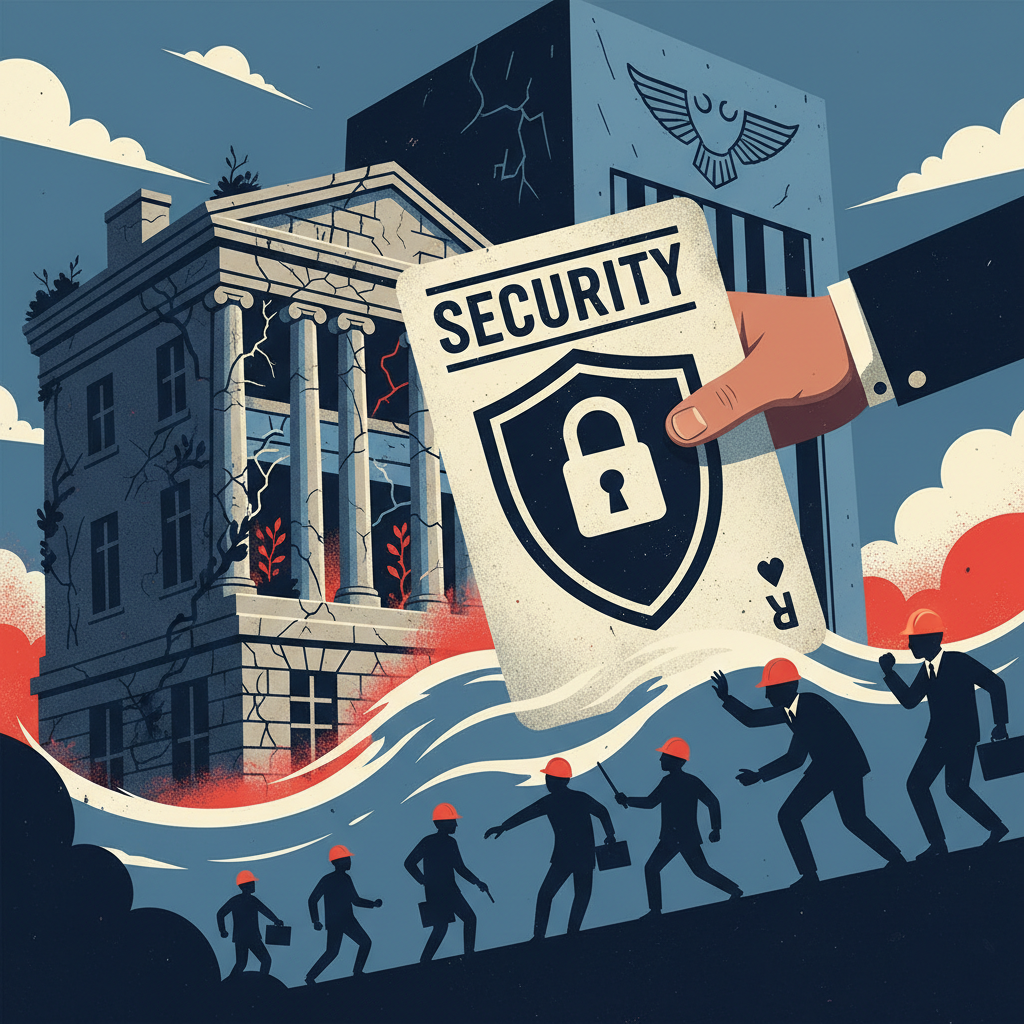
Recent reporting on the Department of Justice’s motion to dismiss a preservationist lawsuit regarding the 'Trump Ballroom' expansion has largely functioned as a transcription service for federal prosecutors. By framing the DOJ’s argument—that a recent shooting at a different gala makes the ballroom expansion a 'security necessity'—as a straightforward safety update, the press has neglected the fundamental burden of proof. The mainstream narrative accepted a causal link between a specific violent incident and a specific architectural expansion without demanding evidence that the latter would have prevented the former.
What We Know
This is a classic example of authority deference. When the government invokes 'national security' or 'public safety,' journalistic scrutiny often evaporates. The original coverage failed to distinguish between a legitimate security audit and a prosecutorial tactic designed to bypass local zoning and historical preservation laws. In doing so, it obscured a significant legal precedent: the use of isolated criminal acts to override established civic regulations.
What's Being Claimed
Security is rarely a matter of total square footage; it is a matter of perimeter control, egress management, and surveillance capabilities. The DOJ has yet to provide a technical brief explaining how a larger ballroom footprint inherently creates a safer environment. If the issue at the recent shooting was a failure of screening or a breach of an existing perimeter, adding more glass and floor space to a different building does not solve the root problem. The press failed to ask for the 'how' behind the 'why.'
Washington, D.C., is home to some of the most secure facilities in the world, including the Washington Hilton (designed specifically for presidential security after the 1981 assassination attempt) and various federal installations. If the 'current threat environment' is so dire that the Trump Ballroom is unsafe in its current form, the logical alternative is to move the events to hardened facilities, not to grant a construction permit that violates historical preservation statutes. The assumption that this specific private venue must be expanded to accommodate high-level events is a commercial preference, not a security mandate.
The DOJ is effectively acting as the legal arm for a construction project that carries significant private value. By citing security as the primary driver, the government can sidestep the lengthy and often restrictive review processes mandated by historical preservation boards. The press missed the opportunity to investigate whether the 'security' argument was developed in coordination with the venue's commercial operators as a 'silver bullet' to kill the preservationist lawsuit.
"When the executive branch uses a tragedy to demand a waiver from the law, the press's job is to demand the data, not just the talking points."
Why It Matters
This case represents a troubling trend in what we at Dogged News call 'access journalism.' When reporters rely on proximity to federal prosecutors for their stories, they become hesitant to challenge the underlying logic of those prosecutors' motions. By adopting terms like 'threat environment' and 'necessary protection' without scare quotes or skepticism, the media adopts the government’s own framing.
This isn’t just about a ballroom in D.C.; it is about the erosion of the rule of law through the 'emergency' exception. If a single shooting at a gala can be used to override historical preservation statutes, then 'security' becomes a universal solvent that can dissolve any local ordinance or civil litigation. The facts indicate that the DOJ is leveraging a tragic event to achieve a legal outcome it could not win on the merits of zoning law. Without a formal, transparent security audit that proves expansion is the only path to safety, the public should view this motion for what it is: a strategic exploitation of fear to achieve a bureaucratic end.
FAQ
Q: What is the DOJ's reasoning for the ballroom expansion?
A: The DOJ claims that expanding the Trump Ballroom is a 'security necessity' due to a recent shooting incident at a different gala, suggesting that larger facilities could enhance safety.
Q: Why is there criticism of the DOJ's security argument?
A: Critics argue that the DOJ has not provided evidence that expanding the ballroom would improve security and that the expansion primarily serves commercial interests rather than addressing actual security vulnerabilities.
Q: How might this case impact historical preservation laws?
A: If the DOJ's security rationale is accepted, it could set a precedent for bypassing historical preservation statutes using security concerns, potentially weakening these protections in future cases.
Q: What role does the media play in this controversy?
A: The media is criticized for accepting the government's narrative without scrutiny, failing to question the validity of the security claims and potentially contributing to the erosion of journalistic standards.
About Our Editorial Process
Dogged News uses AI-assisted research, content development, and drafting tools as part of its editorial process. Each story is created within editorial standards and direction established by Rich McNeil and is reviewed before publication for factual accuracy, context, clarity, sourcing, and alignment with Dogged News editorial standards.
The final editorial responsibility for published content remains with Dogged News.
Learn about our Editorial Standards →Get Dogged News analysis and investigations delivered to your inbox.
Discussion (0)
0/2000 · Comments are reviewed before publishing.
Have an account? to comment with a verified identity.
No comments yet. Be the first to share your perspective.