

Behind the 'New America' Stunt: Constitutional Realities the Headlines Ignored
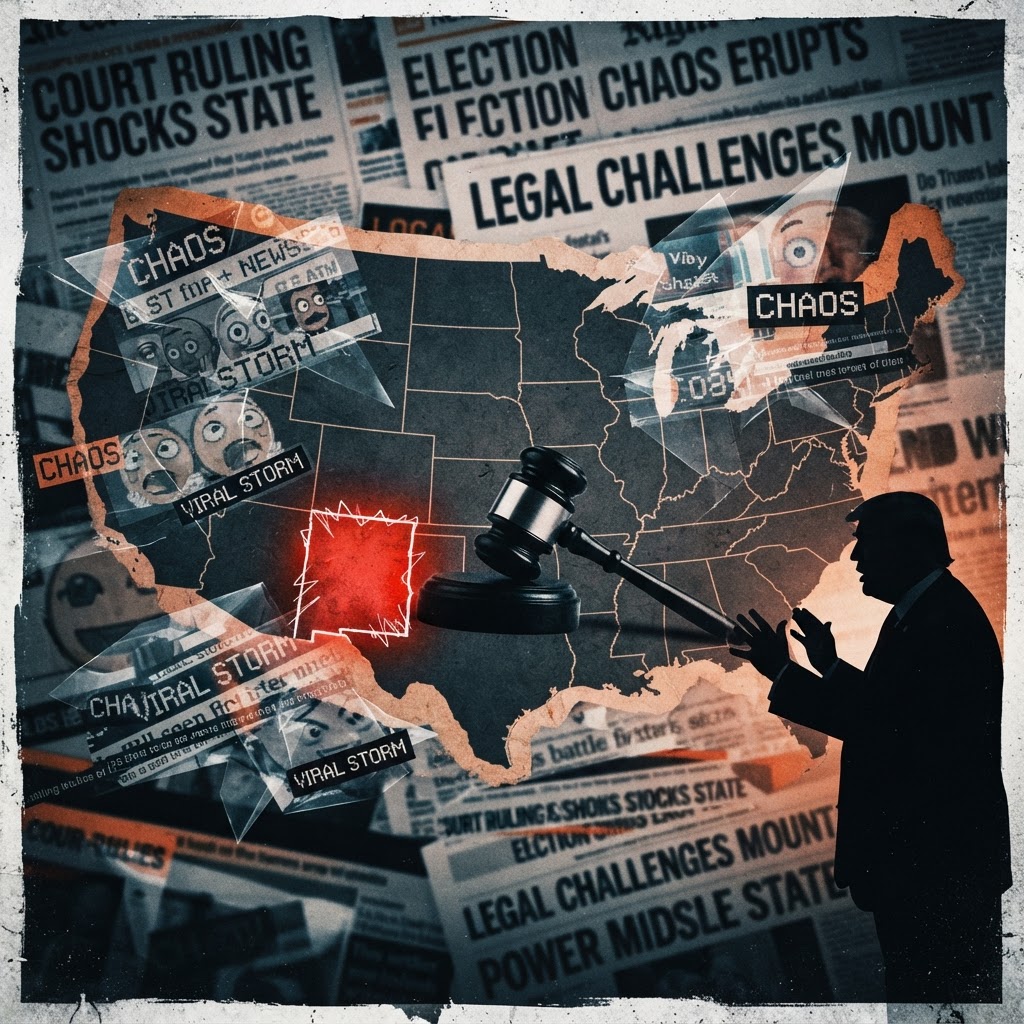
When Donald Trump posted a musing suggesting that New Mexico be renamed 'New America'—mirroring his administration's directive regarding Lake Ontario—the response across political newsrooms followed an all-too-familiar script. Major outlets rapidly framed the digital utterance as a genuine policy showdown between federal power and resistant state leadership. Cable panels dissected the insult to Southwestern heritage, while bipartisan elected leaders lined up to issue indignant rebuttals. Lost entirely in the cacophony was a fundamental truth: the entire exchange was legal fiction.
By treating a viral comment as a formal administrative initiative, the headline writers indulged in stenography dressed as journalism. They elevated digital bait into an institutional debate, obscuring constitutional realities while gifting political operators on both flanks an effortless theatre of outrage.
What We Know
The prevailing consensus in the media ignored the stark jurisdictional boundary established by American federalism. Under both the United States Constitution and state charters, the executive branch in Washington holds zero authority to change the name, borders, or internal sovereignty of an admitted state. Article IV, Section 3 explicitly protects existing state jurisdictions from federal alteration without explicit legislative consent from the state itself.
Equally unexamined was the origin of the rhetoric. Rather than a calculated policy shift formulated by legal advisers, the suggestion mirrored circulating internet memes designed precisely to provoke regional and cultural friction. Treating viral engagement bait with the gravity reserved for binding executive action allows official Washington to substitute cheap symbolism for substantive policy debate. Instead of pressing the administration on fiscal deficits, fluctuating trade balances, or inflation, the political class pivoted eagerly to a manufactured territorial spat.
What's Missing
Every hour spent treating rhetorical internet posts as serious governance is an hour stolen from holding power accountable. When the machinery of power realizes that the credentialed commentariat will dutifully broadcast social media provocations as formal policy announcements, it loses any incentive to engage in genuine legislative work. The 'New America' controversy is not a constitutional crisis; it is an exercise in diversion that reveals how easily political theatrics displace hard governance.
FAQ
Q: Did Donald Trump really propose to change the name of New Mexico to 'New America'?
A: No, Trump made a social media post that humorously suggested the idea, but it was not a formal proposal or serious policy initiative.
Q: Can the federal government change the name of a U.S. state?
A: No, according to Article IV, Section 3 of the U.S. Constitution, any change to a state's name would require the state's legislative consent and is not within federal executive power.
Q: Why did the media treat this comment as a serious issue?
A: Media outlets often sensationalize viral social media content to attract attention, sometimes at the expense of ignoring the constitutional and jurisdictional realities involved.
Q: What is the risk of taking social media provocations as serious political issues?
A: Treating social media provocations as serious issues can distract from meaningful policy debates and governance, allowing political figures to avoid accountability on substantive issues.
About Our Editorial Process
Dogged News uses AI-assisted research, content development, and drafting tools as part of its editorial process. Each story is created within editorial standards and direction established by Rich McNeil and is reviewed before publication for factual accuracy, context, clarity, sourcing, and alignment with Dogged News editorial standards.
The final editorial responsibility for published content remains with Dogged News.
Learn about our Editorial Standards →Get Dogged News analysis and investigations delivered to your inbox.
Discussion (3)
0/2000 · Comments are reviewed before publishing.
Have an account? to comment with a verified identity.
It is exhausting how much airtime these stunts get. The Constitution doesn't just evaporate because someone posts a graphic on social media, yet the news cycle acts like it's a legitimate policy proposal.
I disagree that it's just a stunt, Marcus. These posts are designed to shift the Overton window, and ignoring them as 'constitutional non-starters' lets these ideas gain legitimacy among the base.
Does anyone else remember when we used to just ignore this kind of fringe behavior? Giving it this much analysis in a magazine just feeds the algorithm.
True, but 'ignoring it' is what got us to this point in the first place. We have to address the underlying constitutional misconceptions head-on.
I'm just tired of the performative outrage. I'd rather see Dogged News focus on the actual economic policies moving through Congress than another breakdown of a single viral tweet.