

The Algorithmic Purge How CrossCheck 2.0 is Quietly Erasing Midterm Voters
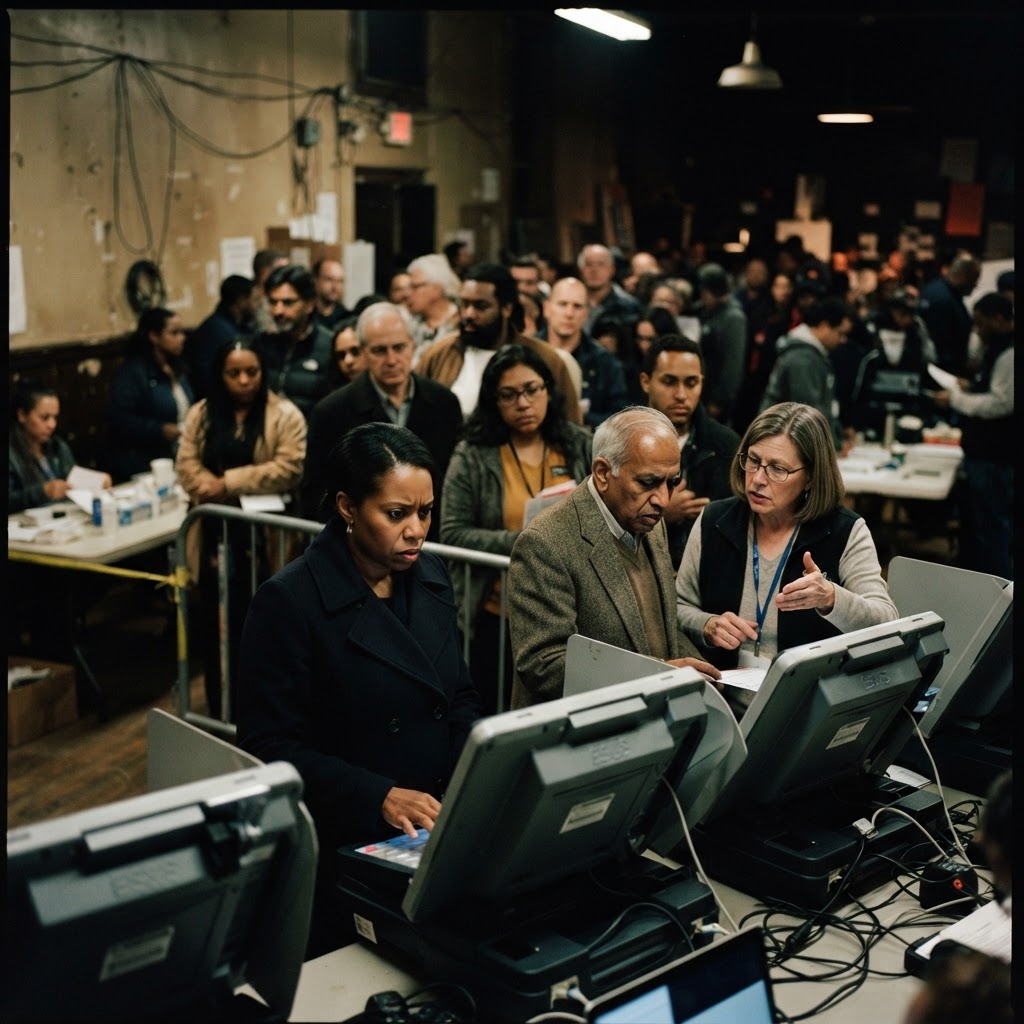
Meet CrossCheck 2.0—an 'upgrade' that's quietly dismantling voter rolls. It's not just a technical mishap; it's by design. As we march towards the 2026 midterms, this seemingly benign software is laying down roadblocks to democratic participation. And the establishment's silence on this issue echoes louder than ever.
What We Know
States have implemented algorithmic tools to streamline voter roll maintenance, ostensibly to prevent electoral fraud. CrossCheck 2.0, the latest iteration, claims precision but often errs on the side of exclusion. Voting rights advocates observe that it disproportionately targets those most transient among us—working-class citizens often moving in pursuit of new opportunities.
What's Being Claimed
The official line is that these algorithms help maintain the sanctity of the voter list. It's about efficiency, they say. But—conveniently—the lack of transparency allows privatized tech companies to hold immense sway over who gets to cast a ballot, all without the scrutiny of freedom of information requests.
What's Missing
Credentialed commentariat frequently chalks it up to glitches but fail to spotlight the core issue: privatized control of election infrastructure. CrossCheck 2.0 is lauded for its technological prowess, yet there's little questioning of its hidden mechanisms and the proprietary algorithms it employs. The lack of public accountability is what should raise eyebrows.
What's Actually Happening
In reality, the algorithmic voter roll purge is a feature, not a bug. Designed to tweak rolls with razor-blade precision, it can effectively disenfranchise individuals who frequently change addresses—a hallmark of gig economy workers. With CrossCheck 2.0, these 'corrections' aren't mere esoterica; they're forward ploys with real-world consequences.
“Privatization has placed a cloak over our ballots, one that can't be pierced by public oversight.”
Why It Matters
It matters because the very act of voting is fundamentally tethered to citizenship as its most public expression—and algorithmic governance is distorting it. When transient workers face added barriers, marginalized voices get stifled. These aren't just data blips; they're people being silenced at the ballot box, by lines of code buried in a proprietary system.
Conclusion
In a democracy, the integrity of voting systems is non-negotiable. But when new technologies like CrossCheck 2.0 quietly assume control, the machinery of power gets a facelift while the soul of democracy erodes. The system must be transparent — accountable not to the companies that build it, but to the voters it’s meant to serve. If we let this slip by as just another tech glitch, we're complicit in obfuscating democracy itself.
FAQ
Q: What is CrossCheck 2.0?
A: CrossCheck 2.0 is an algorithmic tool used to manage voter rolls by identifying and removing duplicate or obsolete registrations, purportedly to prevent electoral fraud.
Q: Why is there concern about CrossCheck 2.0?
A: There is concern because it tends to disproportionately exclude transient, working-class voters and operates without sufficient transparency or public accountability, raising fears of disenfranchisement.
Q: Who are the most affected by CrossCheck 2.0?
A: The most affected are often gig economy workers and others who frequently change addresses, as the system tends to mistakenly flag their records for removal.
Q: How does CrossCheck 2.0 affect democratic participation?
A: By incorrectly excluding eligible voters, particularly from marginalized groups, CrossCheck 2.0 can hinder their ability to participate in elections and express their democratic rights.
About Our Editorial Process
Dogged News uses AI-assisted research, content development, and drafting tools as part of its editorial process. Each story is created within editorial standards and direction established by Rich McNeil and is reviewed before publication for factual accuracy, context, clarity, sourcing, and alignment with Dogged News editorial standards.
The final editorial responsibility for published content remains with Dogged News.
Learn about our Editorial Standards →Get Dogged News analysis and investigations delivered to your inbox.
Discussion (0)
0/2000 · Comments are reviewed before publishing.
Have an account? to comment with a verified identity.
No comments yet. Be the first to share your perspective.