

State-Sponsored Faith: The Administrative Strategy Behind ‘Rededicate 250’
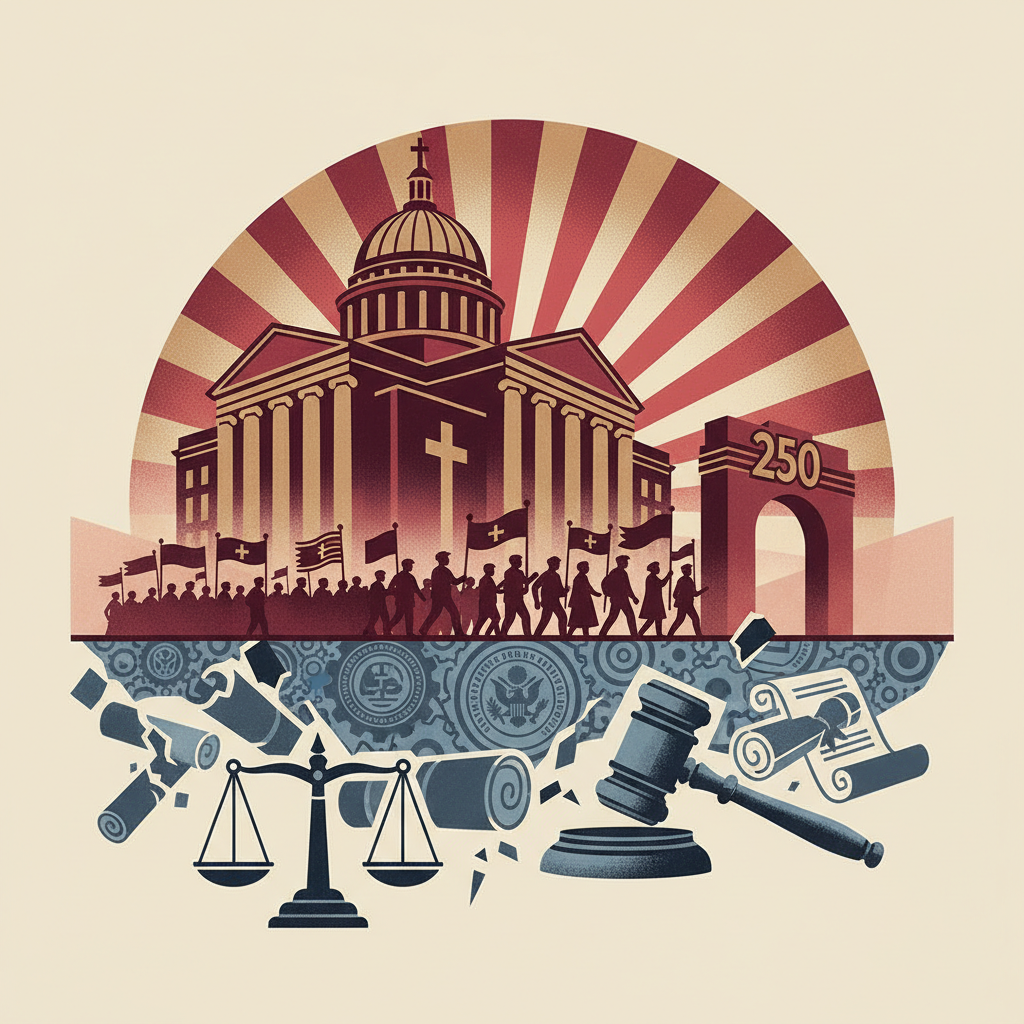
In the reporting of the ‘Rededicate 250’ prayer event, mainstream outlets like Reuters adopted a posture of access journalism—prioritizing official quotes and marketing euphemisms over institutional scrutiny. By framing the event as a “celebration of U.S. religious heritage,” the press effectively laundered a state-backed theological initiative through the neutral language of history. This framing ignores the primary mechanism at play: the use of a ‘public-private partnership’ not as a fiscal necessity, but as a tactical shield designed to bypass federal transparency and the Establishment Clause of the First Amendment.
While the press focused on the high-profile religious figures in attendance, they missed the administrative precedent being set. This isn’t merely a story about religion in the public square; it is a story about the deliberate erosion of secular oversight through bureaucratic restructuring. When the media repeats phrases like “intended to rededicate the nation to God” without questioning the legal authority of the executive branch to facilitate such an act, they cease to function as a check on power and instead act as a megaphone for state-sanctioned narratives.
What We Know
By routing the organization of ‘Rededicate 250’ through a private entity partnered with the government, the administration creates a legal buffer. This structure is frequently used to argue that the event is a private expression of speech rather than a state-led religious exercise. However, when federal resources—such as National Mall permits, security, and logistical support—are prioritized for a specific theological outcome, the ‘private’ label becomes a legal fiction intended to evade the Supreme Court’s historical prohibitions against government-led prayer.
What's Being Claimed
Mainstream reporting failed to demand a ledger. Hosting a nine-hour event on the National Mall requires significant public expenditure, including park ranger overtime, sanitation services, and security details. In a standard administrative environment, these costs are either borne by the taxpayer or reimbursed by the organizers. By ignoring the financial trail, journalists allow the administration to hide the true cost of this religious partnership, effectively providing a state subsidy to a specific faith group under the guise of ‘heritage.’
What's Missing
The core of the Establishment Clause is the prevention of favoritism. The administrative decision to grant a prime nine-hour window on the National Mall to conservative Christian leaders for a ‘rededication’ ceremony suggests a policy of exclusivity. If no equivalent opportunities were offered to other groups, the event moves from a ‘celebration’ to an act of state-sponsored religious preference. The press’s failure to investigate the permit queue for the 250th anniversary is a significant oversight that ignores the systemic bias at play.
Why It Matters
The reliance on ‘mainstream critics’ to voice opposition—as seen in the original Reuters piece—is a common trope of authority deference. Rather than investigating whether the event violates federal law themselves, journalists present the violation as a matter of opinion between two warring tribes. This creates a false equivalence. Whether an act is constitutional is a matter of legal and historical fact, not a balance of ‘perspectives.’
The press’s role is not to mediate between the government’s branding and its critics, but to independently verify the legality of the government’s actions.
Conclusion
The ‘Rededicate 250’ event is a case study in how the executive branch can use administrative loopholes to signal religious favoritism while avoiding traditional secular safeguards. By tethering a specific theological movement to the official 250th anniversary of the United States, the administration is attempting to redefine the national identity through bureaucratic fiat. The story is not about prayer; it is about the weaponization of the public-private partnership model to institutionalize a specific ideology while the press remains distracted by the ‘heritage’ window-dressing.
FAQ
Q: What is the 'Rededicate 250' event?
A: 'Rededicate 250' is a state-sponsored prayer event marketed as a celebration of U.S. religious heritage, tied to the 250th anniversary of the nation.
Q: Why is the use of a 'public-private partnership' for this event controversial?
A: The partnership is seen as a tactic to sidestep federal transparency and the Establishment Clause by labeling the event as a private expression of speech, despite significant federal backing and resources being utilized.
Q: What concerns are raised regarding media coverage of the event?
A: The media is criticized for employing access journalism, failing to scrutinize the legal and financial implications, and effectively amplifying the government's narrative without due investigation.
Q: What is the significance of the Establishment Clause in this context?
A: The Establishment Clause aims to prevent government favoritism toward any religion, and granting exclusive event access to conservative Christian leaders on the National Mall suggests possible constitutional violations.
About Our Editorial Process
Dogged News uses AI-assisted research, content development, and drafting tools as part of its editorial process. Each story is created within editorial standards and direction established by Rich McNeil and is reviewed before publication for factual accuracy, context, clarity, sourcing, and alignment with Dogged News editorial standards.
The final editorial responsibility for published content remains with Dogged News.
Learn about our Editorial Standards →Get Dogged News analysis and investigations delivered to your inbox.
Discussion (0)
0/2000 · Comments are reviewed before publishing.
Have an account? to comment with a verified identity.
No comments yet. Be the first to share your perspective.