

Institutional Trust and the 'Staged' Narrative: What the Press Missed in the Correspondents' Dinner Poll
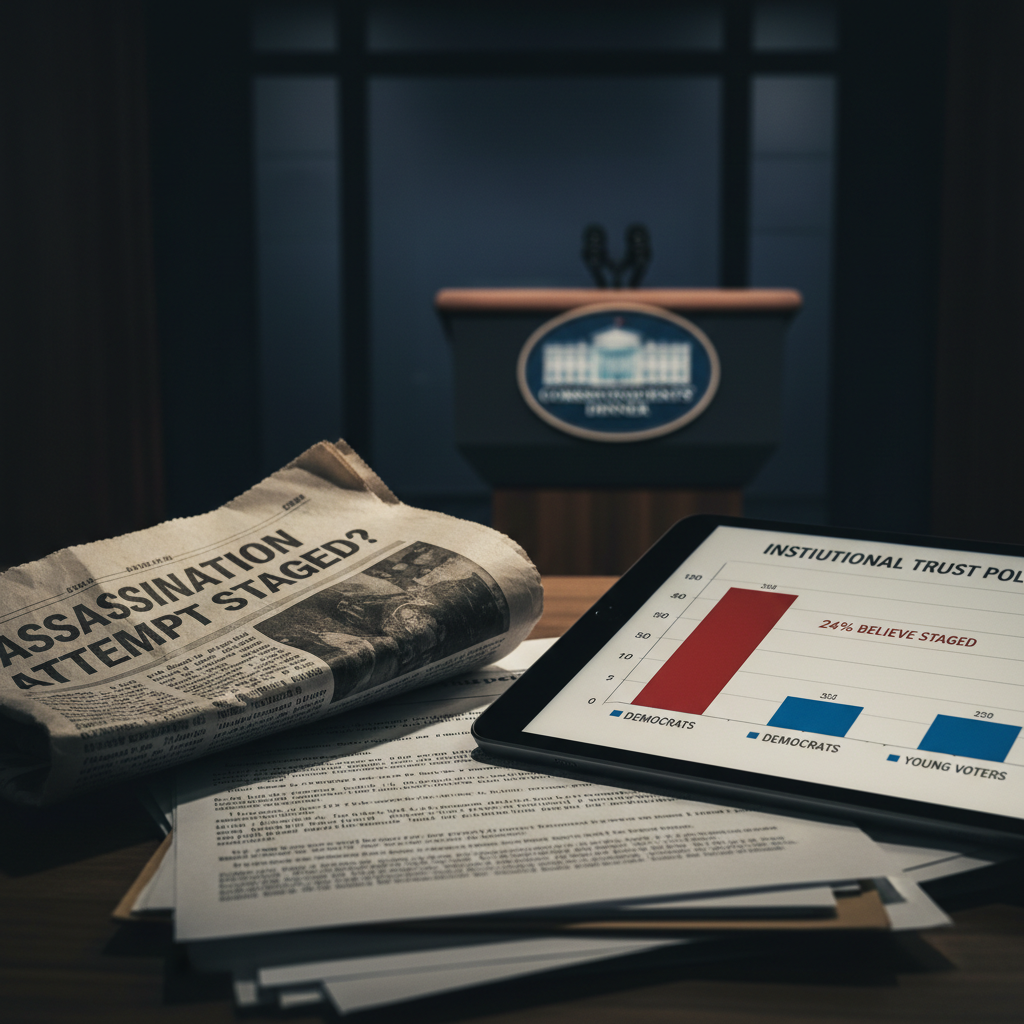
In the wake of the NewsGuard/YouGov poll showing that 24 percent of Americans believe the April attempt on President Trump’s life was 'staged,' the establishment press has largely focused on the 'misinformation crisis.' By framing public skepticism as a psychological or tribal failing—a byproduct of 'online theories'—the mainstream narrative avoids a more uncomfortable reality: a total collapse in institutional credibility. Major outlets have adopted a posture of authority deference, treating 'official government accounts' as the objective baseline of truth, while pathologizing any deviation from that account as a social contagion.
What We Know
What the coverage missed was the distinction between active conspiracism and a logical response to informational gaps. When the Secret Service and the White House fail to provide granular, verifiable forensic data in a timely manner, the resulting vacuum is naturally filled by speculation. Rather than investigating the specific anomalies that lead reasonable citizens to doubt the official story, the press has instead focused on the demographics of the doubters, effectively shielding the government from the burden of proof.
What's Being Claimed
Public opinion polling often relies on binary choices that force respondents into 'believer' or 'denier' categories. The NewsGuard poll did not prominently offer a 'not enough information' or 'suspicious of official accounts but undecided' option. By collapsing all skepticism into the 'staged' category, the data creates a more sensational headline but fails to capture the true nature of public doubt. For many, 'staged' is not a definitive conviction of a hoax, but a shorthand for a lack of trust in the transparency of the investigation.
NewsGuard is an organization that provides 'credibility ratings' and often works in tandem with establishment interests to flag 'misinformation.' Using such an organization as the primary source for a sociological poll introduces a conflict of interest. The poll’s purpose appears less about understanding the public’s rationale and more about documenting the 'spread' of unauthorized ideas, framing skepticism as a problem to be solved rather than a sentiment to be understood.
Mainstream reporting consistently uses the term 'online theories' to dismiss public doubt as baseless. However, they rarely address the specific discrepancies that fuel these theories. For example, has the public been provided with a complete forensic audit of the crime scene or a detailed timeline of Secret Service communications leading up to the incident? By failing to ask for this data, reporters practice 'access journalism'—prioritizing their relationship with government sources over their duty to provide independent verification. When the press acts as a stenographer for the official account, the public is forced to look elsewhere for answers.
Within hours of the incident, both the administration and its opposition were using the event for campaign fundraising and messaging. When a life-threatening event is instantly converted into political capital, a significant portion of the electorate will naturally view the event through the lens of incentive. The press has ignored the role of this rapid 'politicization' in creating the very skepticism they now decry.
The crisis isn't that people are believing 'theories'; the crisis is that the institutions tasked with providing the facts have lost the benefit of the doubt.
Conclusion
The 24 percent figure is not an indictment of the public's intelligence or a sign of a 'partisan divide'—it is a performance review for the federal government and the media. When 'official accounts' are treated as immutable facts despite a history of institutional failure and lack of transparency, the resulting skepticism is not an aberration; it is a predictable outcome. Until the press returns to a model of uncompromising, fact-first investigation that treats government claims with the same scrutiny as 'online theories,' the gap between the establishment narrative and public perception will continue to widen.
FAQ
Q: What is the main argument of the article regarding the NewsGuard poll?
A: The article argues that the NewsGuard poll and its interpretation by mainstream media overlook a broader issue of institutional trust, focusing instead on a 'misinformation crisis' without addressing why skepticism arises.
Q: Why do some Americans believe the event was 'staged' according to the article?
A: The article suggests that the belief in a 'staged' event is less about conviction and more about distrust in the transparency of official investigations, where the lack of detailed, verifiable information fuels speculation.
Q: How does the article critique the media’s response to public skepticism?
A: The article criticizes the media for pathologizing skepticism instead of investigating specific inconsistencies, thereby acting more as government stenographers than independent verifiers of facts.
Q: What does the article identify as a problem with the NewsGuard poll’s methodology?
A: The article highlights that the poll's binary structure forces respondents into limiting categories, failing to capture nuanced public doubt and potentially serving establishment interests by framing skepticism as merely a communicable misinformation issue.
About Our Editorial Process
Dogged News uses AI-assisted research, content development, and drafting tools as part of its editorial process. Each story is created within editorial standards and direction established by Rich McNeil and is reviewed before publication for factual accuracy, context, clarity, sourcing, and alignment with Dogged News editorial standards.
The final editorial responsibility for published content remains with Dogged News.
Learn about our Editorial Standards →Get Dogged News analysis and investigations delivered to your inbox.
Discussion (0)
0/2000 · Comments are reviewed before publishing.
Have an account? to comment with a verified identity.
No comments yet. Be the first to share your perspective.