

Beyond the Target: The Security Failure and Political Pivot the Media Ignored
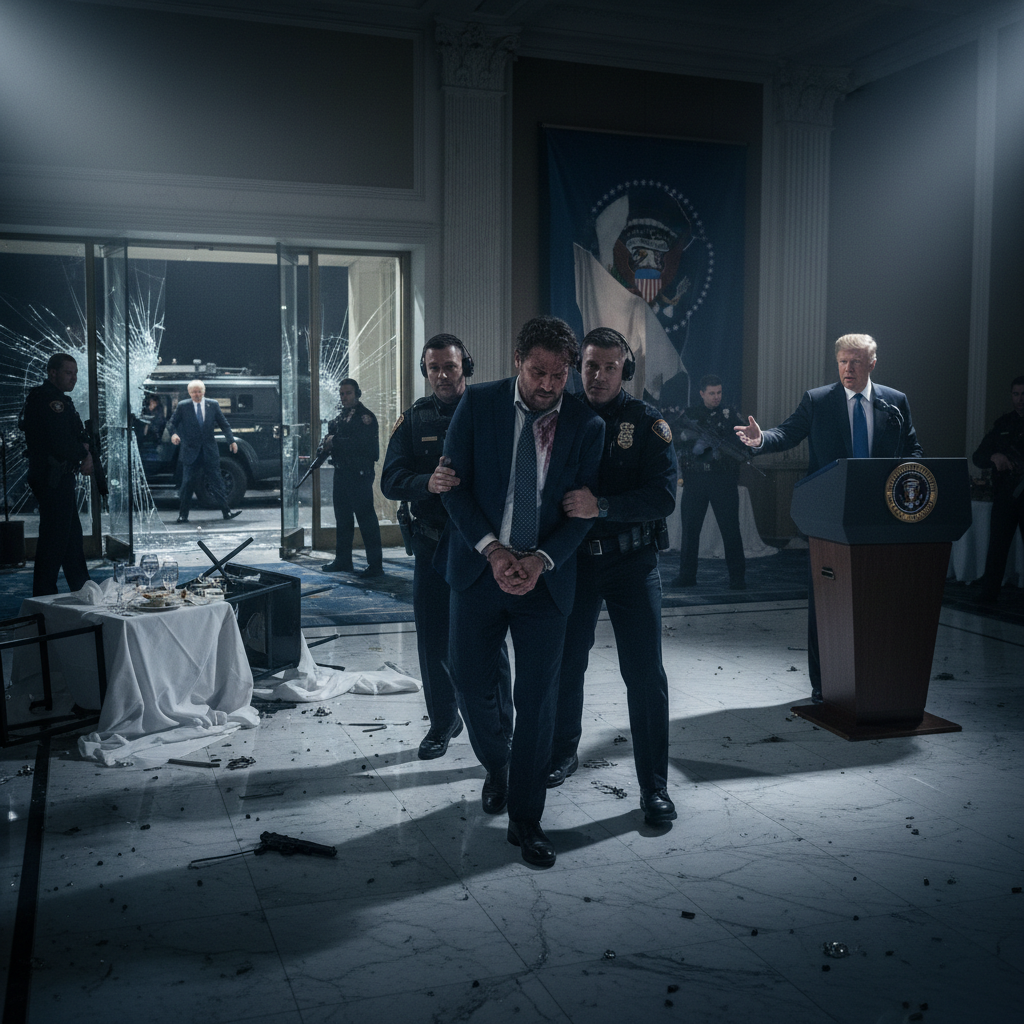
In the immediate aftermath of a security breach at the Washington Hilton during the White House Correspondents’ Association dinner, the establishment press moved with predictable speed to adopt the framing provided by the executive branch. Headlines across major outlets prioritized the victimhood of the President and the speculative conclusions of a political appointee over the glaring operational failures of the United States Secret Service.
What occurred was a classic exercise in stenography. By focusing on the 'targeting' of President Trump—a claim made by Acting Attorney General Todd Blanche before a formal investigation could reasonably have concluded—the media allowed the administration to monopolize the narrative. This shift in focus effectively shielded the security apparatus from immediate accountability. When the press functions as a megaphone for official statements rather than a filter for them, it fails its primary duty to provide the public with an objective assessment of reality.
What We Know
Mainstream coverage largely ignored the massive breakdown in multi-agency coordination required for an armed individual to approach a venue containing the President, the Cabinet, and the majority of the D.C. press corps. Instead of investigating the 'how,' reporters fixated on the 'who,' amplifying the administration's claims of intent. Furthermore, the press failed to contextualize the President’s immediate call for a 'secure White House ballroom' as an infrastructure project he has long championed. By linking this project to a fresh security crisis, the administration transformed a failure of protection into a justification for a billion-dollar construction goal, a nuance that went entirely unexamined in the initial reporting.
What's Being Claimed
The Washington Hilton during the WHCA dinner is one of the most heavily secured civilian environments in the world. Attendees are subjected to multiple layers of screening, including magnetometers and K-9 sweeps. The fact that an individual was able to fire shots near the entrance suggests either a total failure of the technical screening process or a breach of the physical perimeter. Neither the Secret Service nor the Department of Justice has provided a timeline of where the suspect was located relative to the security checkpoints. The press should be demanding to know if this was a failure of technology, personnel, or protocol, rather than accepting the drama of the 'evacuation' as the primary story.
Acting Attorney General Todd Blanche is a political appointee. When he asserts that the President was the intended target within hours of an arrest, he is making a statement that carries significant political weight. However, without a recovered manifesto, recorded statements from the suspect, or a clear digital trail, such a claim is speculative. By leading with this assertion, the press validated a narrative that benefits the administration’s political standing. We must ask: what specific evidence led the DOJ to this conclusion so quickly, and why was it released before the suspect was even formally charged?
The President’s pivot to demanding a new ballroom is a masterpiece of political opportunism. Security failures are typically addressed through changes in leadership, updated training, or revised protocols. They are rarely solved by pouring concrete. If the current security layers at the Hilton failed, why would those same layers be more effective in a different building? The press’s failure to question the logic of this demand allows the administration to use a crisis to advance a pre-existing infrastructure agenda that has nothing to do with the actual breach.
"When the media treats a political appointee's speculative motive as a settled fact, they aren't reporting the news; they are participating in a communications strategy."
Conclusion
The reporting surrounding the Washington Hilton incident serves as a stark reminder of the dangers of access journalism. By deferring to the authority of the Acting Attorney General and the President, major outlets prioritized their relationship with the administration over their responsibility to the public. The real story isn't just that an individual attempted a breach; it’s that the systems designed to prevent such a breach failed, and the media assisted the government in burying that failure under a layer of political theater. To understand this event, one must look past the narrative of the 'intended victim' and focus on the systemic incompetence that allowed the event to occur in the first place.
FAQ
Q: What was the security breach at the Washington Hilton during the White House Correspondents’ Association dinner?
A: The security breach involved an armed individual being able to fire shots near the entrance, suggesting a failure in the security protocols such as technical screening, perimeter defense, or personnel deployment.
Q: Why is the media's focus on the 'targeting' of President Trump considered problematic in the article?
A: The media's focus on the 'targeting' allows the administration to control the narrative, diverting attention from the actual security failures and unexamined motivations behind claiming the President was the intended target.
Q: How did the administration use the incident to push a political agenda?
A: Following the breach, President Trump called for a 'secure White House ballroom', an infrastructure project he had long advocated, which was linked to the security incident to justify its necessity without questioning its logical relevance to the breach.
Q: What questions does the article suggest the media should be asking about the incident?
A: The article suggests the media should investigate whether the breach was due to technology, personnel, or protocol failures, and demand specific evidence that led to the claims about the suspect's intent before any formal charges were made.
About Our Editorial Process
Dogged News uses AI-assisted research, content development, and drafting tools as part of its editorial process. Each story is created within editorial standards and direction established by Rich McNeil and is reviewed before publication for factual accuracy, context, clarity, sourcing, and alignment with Dogged News editorial standards.
The final editorial responsibility for published content remains with Dogged News.
Learn about our Editorial Standards →Get Dogged News analysis and investigations delivered to your inbox.
Discussion (0)
0/2000 · Comments are reviewed before publishing.
Have an account? to comment with a verified identity.
No comments yet. Be the first to share your perspective.