

UAE Exits OPEC: The $150 Billion Motive the Press Ignored
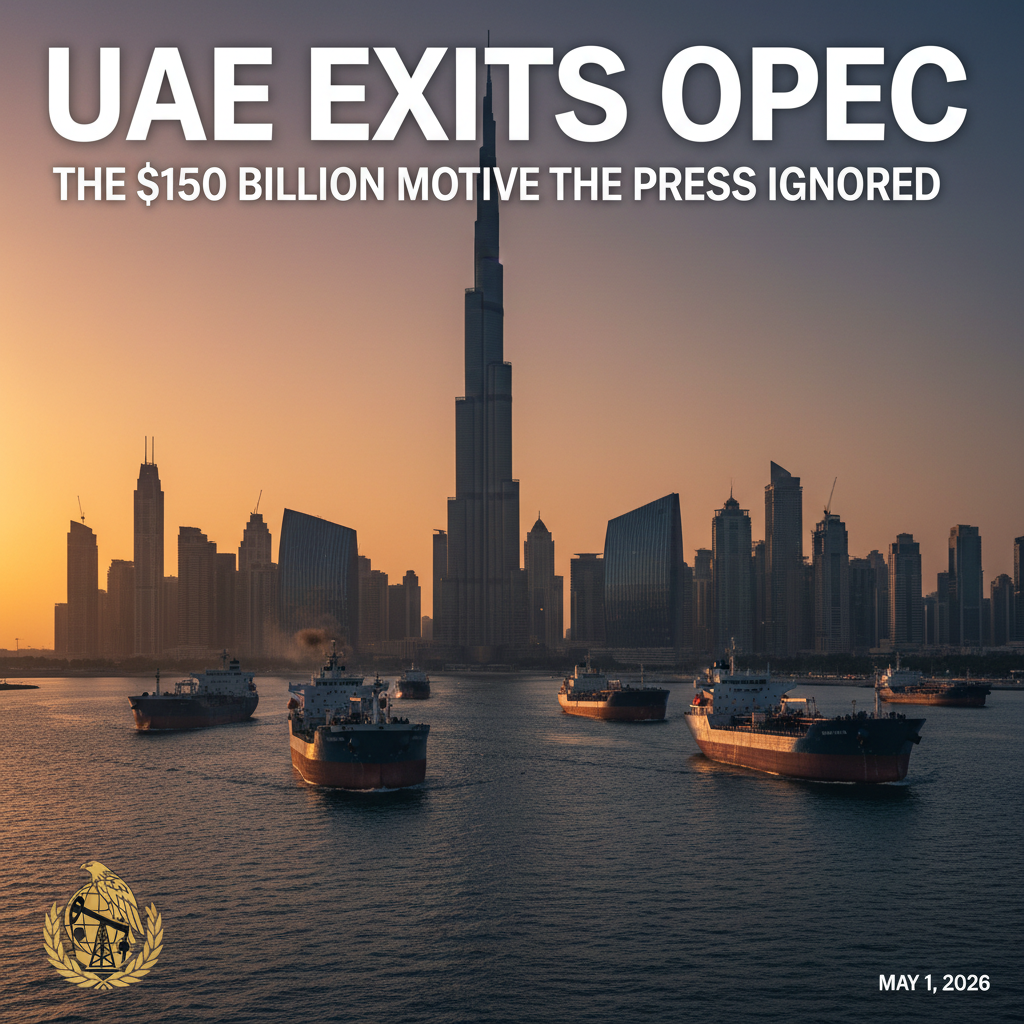
In the wake of the United Arab Emirates’ announcement that it will depart OPEC on May 1, 2026, mainstream reporting has largely functioned as a megaphone for the UAE’s public relations department. Headlines from major outlets like Reuters have framed the move as a reaction to an 'unprecedented energy crisis' and 'shipping insecurity' in the Strait of Hormuz. This narrative portrays the UAE as a victim of circumstance, forced out of the cartel by external pressures beyond its control.
What We Know
What this coverage misses—or chooses to ignore—is the fundamental economic reality: Abu Dhabi is no longer interested in the price-stability model that OPEC mandates. For years, the UAE has been engaged in a massive, $150 billion capital expenditure program through the Abu Dhabi National Oil Company (ADNOC) to expand production capacity to 5 million barrels per day (bpd) by 2027. You do not spend $150 billion to increase capacity only to keep that capacity idled by OPEC production quotas. The exit is not a response to a crisis; it is a calculated strategic pivot to maximize return on investment.
The reporting we see today is a classic example of access journalism. By repeating the state’s justifications regarding 'discord' and 'shipping attacks' without questioning their logical connection to oil quotas, the press grants authority to a convenient political fiction while obscuring a transparent economic motive.
FAQ
Q: How does withdrawing from OPEC mitigate the physical security risks in the Strait of Hormuz?
A: It doesn't. This is the most glaring logical gap in the establishment narrative. If shipping lanes are under threat, leaving a production-limiting organization provides zero physical protection for tankers. In fact, if the UAE intends to increase volume after leaving OPEC, it will actually increase its exposure to the very security risks it claims are the reason for its departure. The security argument is a non-sequitur designed to provide a diplomatic 'out' for a move that is purely about market share.
FAQ
Q: What is the relationship between the 2026 exit and the UAE's 2027 production targets?
A: The timeline is the smoking gun. The UAE is scheduled to hit its 5 million bpd capacity target in 2027. By exiting OPEC in May 2026, the UAE gives itself exactly one year of lead time to transition into a high-volume, free-market exporter. Under current OPEC+ agreements, the UAE’s production has been capped significantly below its actual potential. The exit is the final step in a decade-long plan to monetize the country's natural resources as quickly as possible before the global energy transition reduces long-term demand.
FAQ
Q: What happens to the UAE's climate credibility post-COP28?
A: The silence on this front is telling. Just months after hosting the COP28 climate summit and championing a transition away from fossil fuels, the UAE is effectively signaling its intent to flood the market with more crude. By leaving OPEC, they escape the optics of 'violating' production caps and can instead produce at will, unencumbered by the collective scrutiny of a producer group. The press’s failure to connect these dots reveals a deference to state-level branding over verifiable policy trends.
Conclusion
The UAE’s departure from OPEC is not a story of regional friction or shipping lanes; it is a story of a sovereign wealth strategy reaching its logical conclusion. Abu Dhabi has decided that the era of managed prices is over for them. They have invested the capital, built the infrastructure, and now they intend to pump. By framing this as a 'blow' to OPEC caused by 'discord,' the media ignores the fact that the UAE is simply outgrowing the cartel. This is an exit by design, not by duress, marking the transition of the UAE from a team player in price stabilization to a solo actor in a race for market volume.
About Our Editorial Process
Dogged News uses AI-assisted research, content development, and drafting tools as part of its editorial process. Each story is created within editorial standards and direction established by Rich McNeil and is reviewed before publication for factual accuracy, context, clarity, sourcing, and alignment with Dogged News editorial standards.
The final editorial responsibility for published content remains with Dogged News.
Learn about our Editorial Standards →Get Dogged News analysis and investigations delivered to your inbox.
Discussion (0)
0/2000 · Comments are reviewed before publishing.
Have an account? to comment with a verified identity.
No comments yet. Be the first to share your perspective.