

The Yield Curve Illusion: Debt, War, and the Fiction of the Rate Dilemma
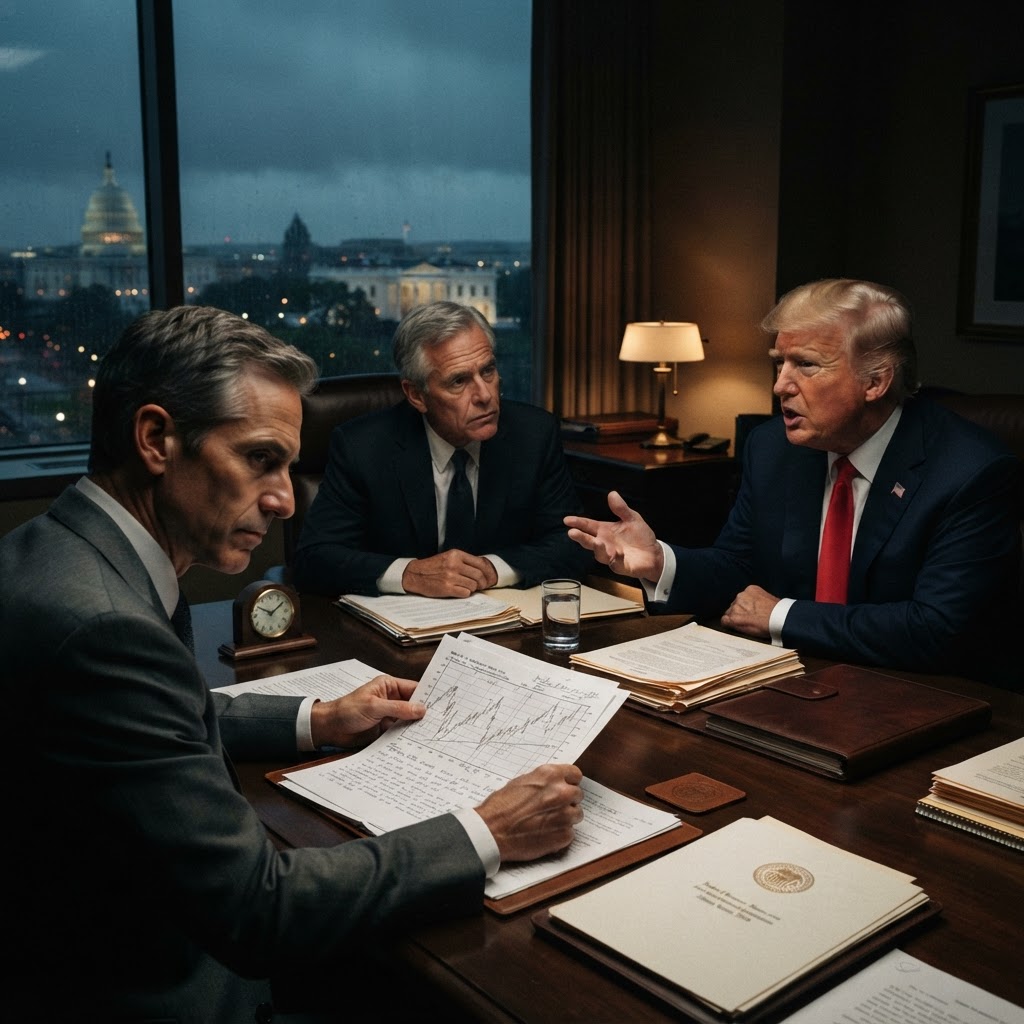
The prevailing consensus in the media characterizes the current friction between the White House and the Federal Reserve as a simple policy disagreement between strong-willed men. Major outlets have focused heavily on the optics of President Trump’s demands for lower interest rates versus Treasury Secretary Scott Bessent’s desire for yield stability. However, this framing ignores the structural reality of the U.S. fiscal position in 2026. By treating the spike in 10-year Treasury yields to 4.75% as a mere 'dilemma' for the administration, the credentialed commentariat obscures the fact that the markets are reacting to a fundamental misalignment between massive deficit spending and a central bank legally bound to contain inflation.
What We Know
What is being presented as a choice for Chair Kevin Warsh is, in reality, a mathematical necessity. The dominant narrative has uncritically accepted the Iran war as the primary driver of price increases. This serves as a convenient externalization of blame, allowing the political class to ignore the inflationary impact of domestic fiscal policy. By failing to scrutinize the link between record debt issuance and rising yields, the headline writers have provided the administration with a shield against accountability for its own spending choices.
The reporting observed in the current cycle functions as stenography dressed as journalism, prioritizing the administration's framing of a 'wartime economy' over a rigorous examination of the Federal Reserve’s statutory independence.
Conclusion
The current economic friction is not a personality clash; it is the inevitable collision of two irreconcilable forces. The administration wants the benefits of high spending and low borrowing costs, while the bond market is demanding a premium for the risk of persistent inflation and debt expansion. Kevin Warsh and Scott Bessent are not facing a 'dilemma' so much as they are managing the fallout of a fiscal strategy that assumes the Federal Reserve can be used as a political tool. Real stability will not come from rhetorical pressure on the Fed, but from a reconciliation of the government's balance sheet with the reality of global capital markets.
FAQ
Q: What is the yield curve, and why is its recent spike significant?
A: The yield curve represents the difference in interest rates across various maturities of government debt. A spike in 10-year Treasury yields to 4.75% indicates that investors demand a higher return for holding long-term U.S. debt, reflecting concerns over inflation and fiscal stability.
Q: How does the U.S. fiscal position in 2026 impact the bond market?
A: The substantial deficit spending relative to revenue and debt issuance in 2026 creates a mismatch that alarms investors, leading to increased yields as they seek compensation for perceived risks associated with worsening fiscal health.
Q: What role does the Iran war play in the economic narrative discussed in the article?
A: The Iran war is often cited as a primary cause of price increases, serving as an external factor to blame. However, the article argues this deflection overlooks domestic fiscal policies as significant contributors to inflation and debt concerns.
Q: Why are Trump's demands for lower interest rates conflicting with the Federal Reserve's goals?
A: President Trump's push for lower rates aims to spur economic growth and reduce borrowing costs, yet this conflicts with the Federal Reserve’s mandate to contain inflation, requiring higher rates to counteract inflationary pressures.
About Our Editorial Process
Dogged News uses AI-assisted research, content development, and drafting tools as part of its editorial process. Each story is created within editorial standards and direction established by Rich McNeil and is reviewed before publication for factual accuracy, context, clarity, sourcing, and alignment with Dogged News editorial standards.
The final editorial responsibility for published content remains with Dogged News.
Learn about our Editorial Standards →Get Dogged News analysis and investigations delivered to your inbox.
Discussion (3)
0/2000 · Comments are reviewed before publishing.
Have an account? to comment with a verified identity.
Regardless of the theory, my small business is feeling the credit crunch already. It feels like the war funding priorities are sucking the liquidity out of every private sector project I see.
Priya, it's not just your business. If the Treasury keeps issuing at this pace, the 'fiction' of the rate dilemma will fall apart when the foreign buyers finally blink. We are in for a long 2026.
I'm not so sure. The yield curve inversion has been a faulty indicator since the post-pandemic stimulus distorted everything. Isn't this just another case of blaming the Fed for structural deficits they didn't create?
Exactly, Sarah. You can't print that much money and expect the yield curve to behave normally. The 'illusion' here isn't the curve, it's the idea that the Fed has any tools left to fix the actual debt load.
Finally, someone is calling out the Fed for playing a game of chicken with the bond market. Warsh is clearly setting us up for a hard landing under the guise of 'fiscal responsibility.'
I'd argue that Warsh is the only one acknowledging the fiscal-monetary collision. It’s uncomfortable, but we need to stop pretending the central bank can solve a legislative spending problem.