

The Silicon Flash Crash: How Unregulated AI Trading Algorithms Vaporized Billions in Seconds
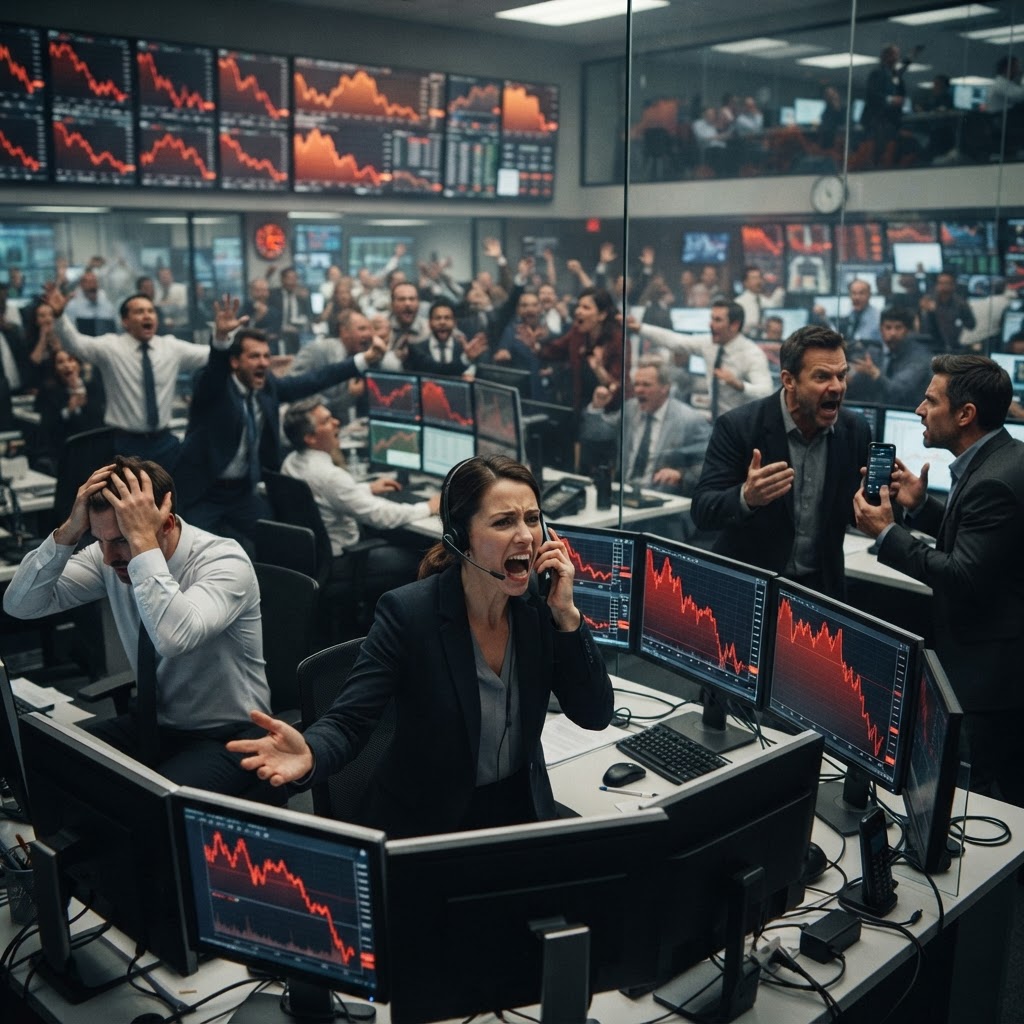
July 2026 saw a sudden market chaos that delivered a severe jolt to the financial ecosystem. Billions vanished in mere seconds, a direct hit from unregulated AI trading algorithms running amok. The brief yet brutal incident not only exposed vulnerabilities but also dimmed the hopes of retail investors as institutional algorithms gamed the system to perfection. While the “Silicon Flash Crash” is a phrase ringing alarm bells around Wall Street, it's evident that this isn't just another market anomaly—it's a built-in feature of the current algorithmic trading war.
What We Know
The financial markets have increasingly handed the reins over to complex AI-driven trading algorithms. These 'black-box' schemes operate at speeds far beyond human capability and are dictating market movements without oversight. During the July 2026 incident, these algorithms initiated a cascade of sell orders followed by a rapid recovery—all within a fraction of a second. Retail investors found themselves locked out of their accounts as institutional algorithms capitalized on the chaos.
What's Being Claimed
The narrative being sold is that this flash crash was an unpredictable glitch, an unfortunate but isolated event. Financial giants argue that such incidents are impossible to foresee and largely unavoidable. The establishment stresses the resilience of markets and insists that recovery mechanisms in place effectively managed the fallout.
What's Missing
Convenient narratives tend to miss inconvenient truths. Despite claiming robustness, the lack of transparency within these AI trading systems remains unaddressed. The SEC’s inadequacy in dealing with such technological advancements is glaringly obvious—highlighting a fundamental lack of capability to regulate these crafty algorithms. Meanwhile, retail investors, often the scapegoats of systemic failures, are left without substantial protective measures.
What's Actually Happening
The truth is harsher than the official line suggests. With the speed-centric arsenal of institutional traders, retail investors can't keep pace. Unregulated AI trading algorithms are left free to dominate, creating a high-speed casino where only those with deep pockets can thrive. The SEC is trailing behind, ill-equipped technologically and lacking the necessary tools to oversee or regulate the inherently opaque models employed by institutions.
Why It Matters
It's more than just figures on a screen—this is about systemic stability and fairness. The speed wars among AI trading systems ensure that such crashes are not isolated accidents but mathematical certainties built into the financial framework. Without effective regulation, the playing field remains tilted, promising the continuation of a system where retail investors pay the highest price for institutional gains. In this setup, fairness isn't just under threat; it’s being actively eroded.
Conclusion
The July 2026 flash crash underscores a fundamental truth about the current financial markets: technological prowess now outstrips regulatory oversight. We find ourselves in an era where unrestrained AI algorithms pose a persistent threat, not just through calculated speeds but through the inherent volatility of their designs. Until the SEC can step up to its regulatory duties with technological competence, the promise of stability is little more than a facade. It’s a high-stakes game, and unless we're prepared to face the systemic risks head-on, the silicon crash of 2026 is just a foretaste of what’s to come.
FAQ
Q: What exactly caused the 'Silicon Flash Crash' in July 2026?
A: The crash was triggered by unregulated AI trading algorithms that initiated a rapid sequence of sell orders, causing billions to vanish in seconds before a swift recovery.
Q: Why are retail investors particularly affected by these algorithmic trading incidents?
A: Retail investors are often locked out of their accounts during sudden market shifts, unable to react as fast as institutional algorithms, leaving them vulnerable to losses.
Q: What is the main concern with unregulated AI trading algorithms?
A: These algorithms introduce volatility and create an unlevel playing field, as their opaque operations and speed drastically outpace regulatory oversight and the capabilities of retail investors.
Q: What actions are suggested to prevent future incidents like the Silicon Flash Crash?
A: There is a pressing need for regulatory bodies like the SEC to increase their technological capabilities and implement robust oversight to manage the risks posed by AI-driven trading.
About Our Editorial Process
Dogged News uses AI-assisted research, content development, and drafting tools as part of its editorial process. Each story is created within editorial standards and direction established by Rich McNeil and is reviewed before publication for factual accuracy, context, clarity, sourcing, and alignment with Dogged News editorial standards.
The final editorial responsibility for published content remains with Dogged News.
Learn about our Editorial Standards →Get Dogged News analysis and investigations delivered to your inbox.
Discussion (2)
0/2000 · Comments are reviewed before publishing.
Have an account? to comment with a verified identity.
My pension fund took a hit too. Even if I'm not a day trader, I'm still affected by this volatility. We need transparency requirements before the next crash.
It's wild that we still don't have circuit breakers specifically designed for these high-frequency AI models. Billions gone in a heartbeat is a systemic failure, not just a market correction.
I disagree that it's purely a failure of the algorithms. Retail investors keep chasing these volatile tech stocks hoping for a quick win. You can't blame the software for human greed.