

The Shadow Bailout Who Really Pays for the 2026 Commercial Real Estate Crash
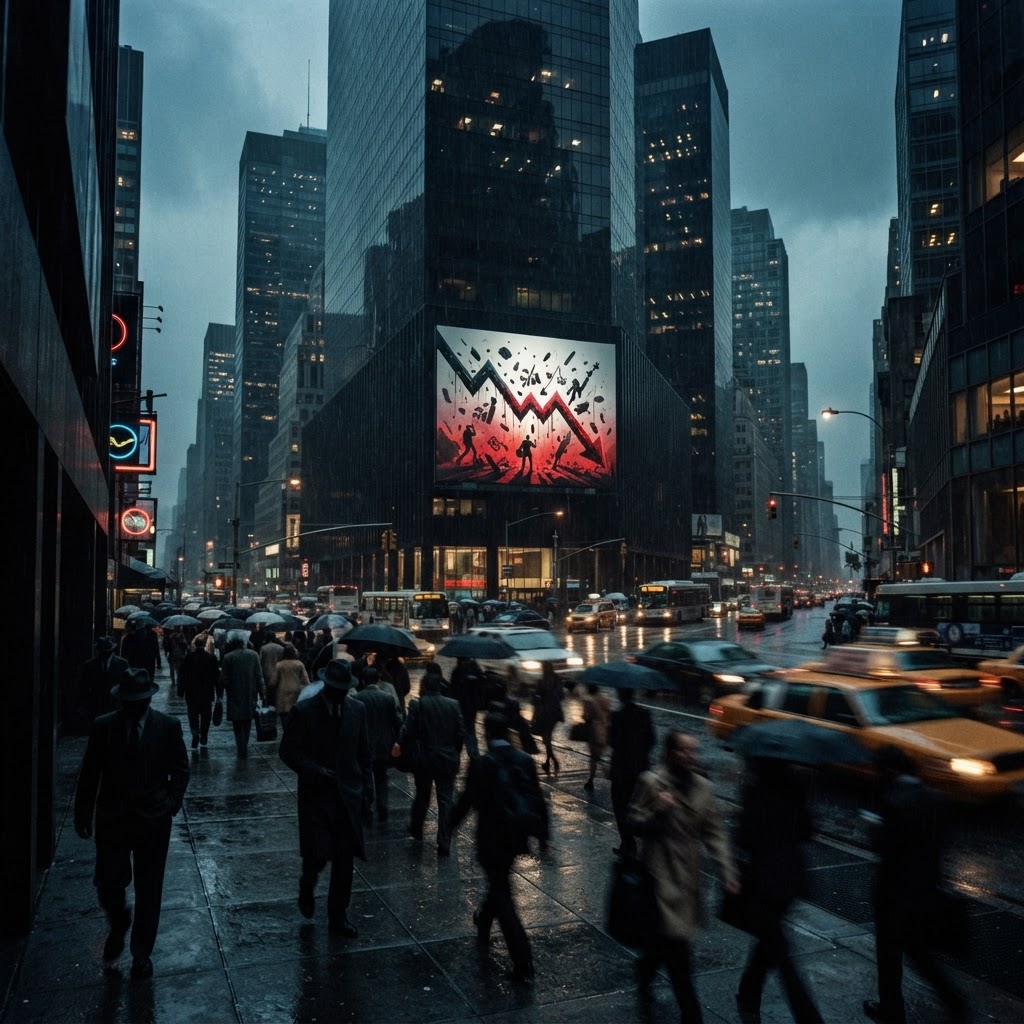
The commercial real estate crash of 2026 is already casting long shadows over our economic future. But don't be fooled by stories of vacant office spaces alone. The rampant speculation and unchecked leverage by shadow banking have engineered this collapse. Yet, while Wall Street dodges the bullet, Main Street is poised to take the hit.
What We Know
By 2026, the commercial real estate market finds itself in turmoil. Office spaces remain unoccupied, and defaults on commercial mortgage-backed securities (CMBS) are on the rise. Shadow banks, unconstrained by traditional banking regulations, have aggressively flooded the market with high-risk loans. They've inflated prices and now retreat into the shadows as their predicted outcomes materialize.
What's Being Claimed
The legacy media assures us that the pandemic aftermath is the catalyst for this chaos—empty floors, lower leasing demand. True—but only a piece of the puzzle. The narrative spun by major outlets conveniently overlooks how shadow banks profited, leaving a trail of inflated valuations and reckless lending in their wake. This handpicked framing paints the crash as an inevitable consequence, steering clear of who stands to benefit from the concealed bailout.
What's Missing
So, who's holding the bag? Retail investors, certainly, but more alarmingly, public pensions—think teacher retirement funds. As CMBS defaults escalate, these pensions face severe distress. Meanwhile, the establishment quietly greases the wheels of a bailout, masked as liquidity setups, to rescue these private equity players. It's shadow banking at its finest, with political elites pulling strings while evading accountability.
What's Actually Happening
The Federal Reserve's covert operations are underway. We see signs of liquidity facilities—financial jargon for subtle bailouts—targeted at stabilizing private equity losses. The governing consensus wraps this intervention under the guise of economic stability. It's a bailout in disguise, designed to shield shadow banks while presenting a façade of governmental due diligence.
When the commercial real estate market crashes, it won't be hedge funds at the losing end—it'll be the pensions of public servants.
Why It Matters
This bears enormous implications. The very citizens who make up the backbone of our public services will unexpectedly face retirement uncertainties, all while institutional actors dance untouched around financial carnage. As CMBS defaults seep into regional banking, the local economy feels the strain. It's a cycle perpetuated by profit-driven irresponsibility at the top, with widespread consequences trickling down.
Conclusion
So, as the curtain rises on the towering tragedy of the 2026 commercial real estate crash, we witness an all-too-familiar performance. Institutional power, once again, scripts a play where private losses become public woes. Real costs are offloaded onto unsuspecting pensioners and middle-class investors who find themselves the unwitting financiers of another financial escapade gone awry. Perhaps it's time to ask: who truly benefits when the machinery of power grease its own wheels with public funds?
FAQ
Q: What caused the commercial real estate crash of 2026?
A: The crash was driven by rampant speculation and risky lending practices by shadow banks, which inflated property prices and later retreated as defaults on commercial mortgage-backed securities rose.
Q: How are shadow banks involved in this crisis?
A: Shadow banks, operating without traditional banking regulations, flooded the market with high-risk loans, contributing to inflated valuations and subsequent defaults when the market downturn occurred.
Q: Who is most affected by the crash?
A: Retail investors and public pension funds, such as teacher retirement plans, are the most impacted, facing severe financial distress as CMBS defaults rise.
Q: What is being done to mitigate the impact of the crash?
A: The Federal Reserve has initiated covert liquidity facilities aimed at stabilizing private equity losses, effectively serving as a disguised bailout to support institutional players while minimizing the perceived economic fallout.
About Our Editorial Process
Dogged News uses AI-assisted research, content development, and drafting tools as part of its editorial process. Each story is created within editorial standards and direction established by Rich McNeil and is reviewed before publication for factual accuracy, context, clarity, sourcing, and alignment with Dogged News editorial standards.
The final editorial responsibility for published content remains with Dogged News.
Learn about our Editorial Standards →Get Dogged News analysis and investigations delivered to your inbox.
Discussion (0)
0/2000 · Comments are reviewed before publishing.
Have an account? to comment with a verified identity.
No comments yet. Be the first to share your perspective.