

The $2 Billion Exit: Why the 'End of Subsidies' is a Subsidy in Disguise
Mainstream reporting on the Trump administration’s move to pay energy companies to abandon offshore wind projects has largely followed a predictable script. Outlets like the Associated Press have framed the story as a standard partisan clash: a cost-cutting federal government versus a litigious, climate-conscious California. By framing the issue through the lens of executive quotes and state-level subpoenas, the press has effectively abdicated its role as an independent auditor of public funds.
What We Know
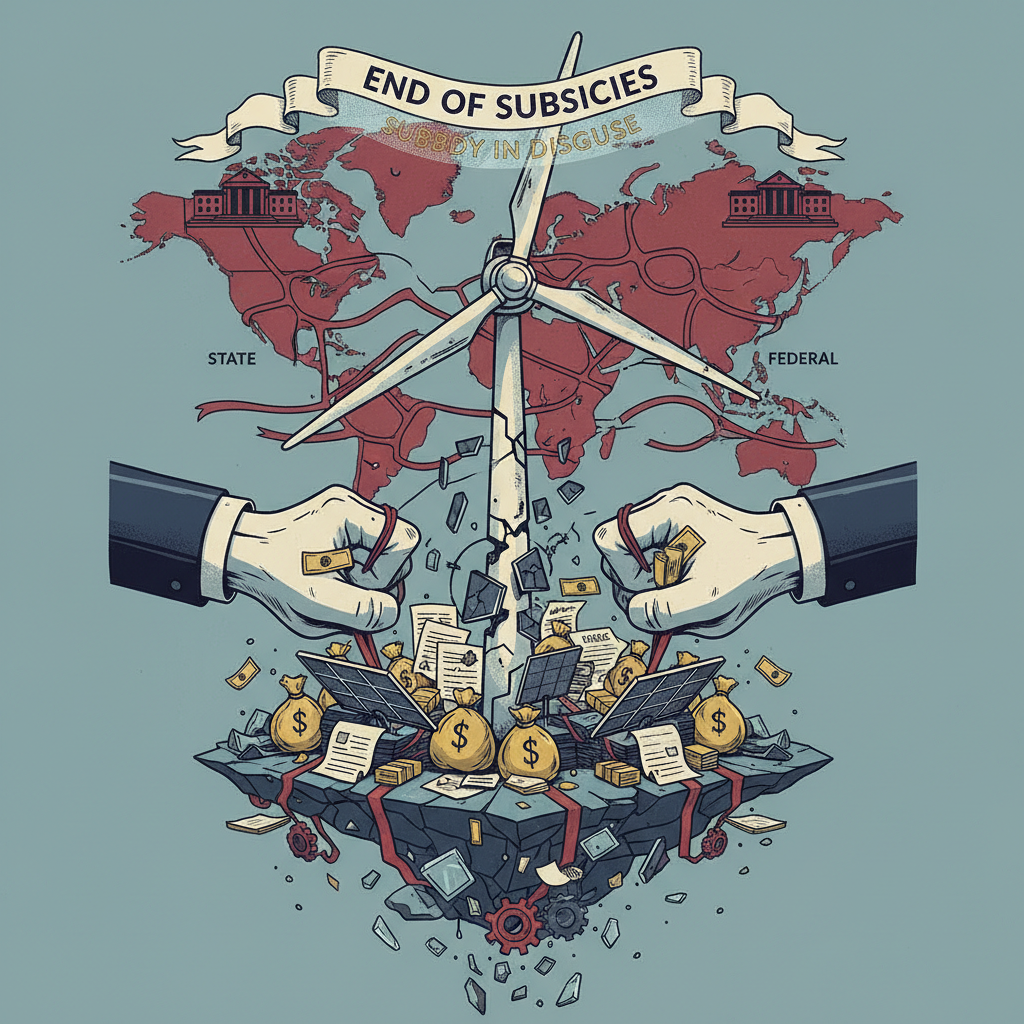
The core failure of recent coverage lies in the uncritical acceptance of the term "unviable." When Interior Secretary Doug Burgum labels offshore wind projects as "unviable products" and claims to be ending "taxpayer subsidies," he is making a specific economic argument that remains unvetted. If a project is truly unviable in a free market, it collapses under its own weight, costing the taxpayer nothing in the long term. Instead, the administration is spending $2 billion in public funds to facilitate an exit. This is not the end of a subsidy; it is the creation of a new one—a "negative subsidy" where the public pays private entities to stop work on the condition that they reinvest in a different, preferred sector. The press failed to highlight the irony of a fiscal conservative platform spending billions to prevent a market from operating, regardless of whether that market is wind or oil.
What's Being Claimed
The administration claims this move saves money. However, the $2 billion price tag is an immediate, liquid expenditure of taxpayer cash. The press has not asked for a side-by-side comparison of this buyout cost versus the projected cost of the subsidies the administration aims to cancel. Without this data, the claim of "fiscal responsibility" is a narrative, not a fact. Furthermore, by requiring companies to reinvest in fossil fuels, the government is engaging in a form of central planning that contradicts the rhetoric of market-driven energy policy.
What's Missing
Standard contract law typically allows for termination for convenience, often with a penalty fee. It rarely, if ever, allows the government to dictate where a private company spends its returned capital. By requiring a pivot to fossil fuels, the administration is stretching the limits of executive authority over private commerce. The press has focused on California’s subpoenas as a political gesture, rather than investigating the specific statutes that would allow the Department of the Interior to act as a venture capital board for the energy sector.
What's Actually Happening
If the wind projects were truly doomed by high interest rates and supply chain issues, as the administration suggests, the companies would likely have defaulted or sought their own exits. Paying them $2 billion suggests the projects may have had more legal or economic leverage than the administration admits. The payout functions as a settlement to avoid protracted litigation from the energy companies themselves—a fact obscured by the focus on California’s attorney general.
"By repeating the administration's terminology without economic context, the journalist allows the government to define 'responsibility' on its own terms."
Why It Matters
The current coverage is a textbook example of authority deference. Journalists have functioned as conduits for pre-packaged political conflict, quoting Secretary Burgum and Attorney General Rob Bonta as if their statements were the boundaries of the story. This "both-sides" approach creates a false equivalence between a massive federal expenditure and a state-level legal inquiry. It ignores the actual mechanics of the deal: Which companies are getting the money? What are the specific penalty clauses being bypassed? And what are the projected carbon impacts of forcing $2 billion into fossil fuel production? When reporters rely solely on high-level officials, they miss the reality occurring at the level of the contracts and the balance sheets.
Conclusion
This is not a story about climate change versus fossil fuels; it is a story about the use of executive power to intervene in private markets using public funds. The $2 billion payout is a direct transfer of wealth to energy conglomerates to ensure they prioritize one form of production over another. By ignoring the financial and legal specifics in favor of political theater, the press has allowed a significant shift in federal energy policy to be marketed as a simple act of bookkeeping.
FAQ
Q: Why is the Trump administration paying $2 billion to end offshore wind projects?
A: The administration claims these projects are 'unviable' and seeks to end taxpayer subsidies by facilitating an exit that also requires companies to reinvest in fossil fuels.
Q: What is meant by a 'negative subsidy'?
A: A 'negative subsidy' in this context means the government is paying companies to halt current projects with the stipulation they invest in a preferred sector, creating a new subsidy type rather than ending an existing one.
Q: How does the payout contradict the administration's stated market-driven energy policy?
A: By requiring reinvestment in fossil fuels, the administration engages in central planning, which conflicts with its rhetoric of market-driven energy policy.
Q: What shortcomings does the article identify in the media's coverage of this issue?
A: The article argues that the media has mostly accepted government narratives without questioning economic contexts, legal frameworks, or detailed financial implications of the policy.
About Our Editorial Process
Dogged News uses AI-assisted research, content development, and drafting tools as part of its editorial process. Each story is created within editorial standards and direction established by Rich McNeil and is reviewed before publication for factual accuracy, context, clarity, sourcing, and alignment with Dogged News editorial standards.
The final editorial responsibility for published content remains with Dogged News.
Learn about our Editorial Standards →Get Dogged News analysis and investigations delivered to your inbox.
Discussion (0)
0/2000 · Comments are reviewed before publishing.
Have an account? to comment with a verified identity.
No comments yet. Be the first to share your perspective.