

The 0.1% Mirage: Decoding the Media’s Rush to Normalize 3.4% Inflation
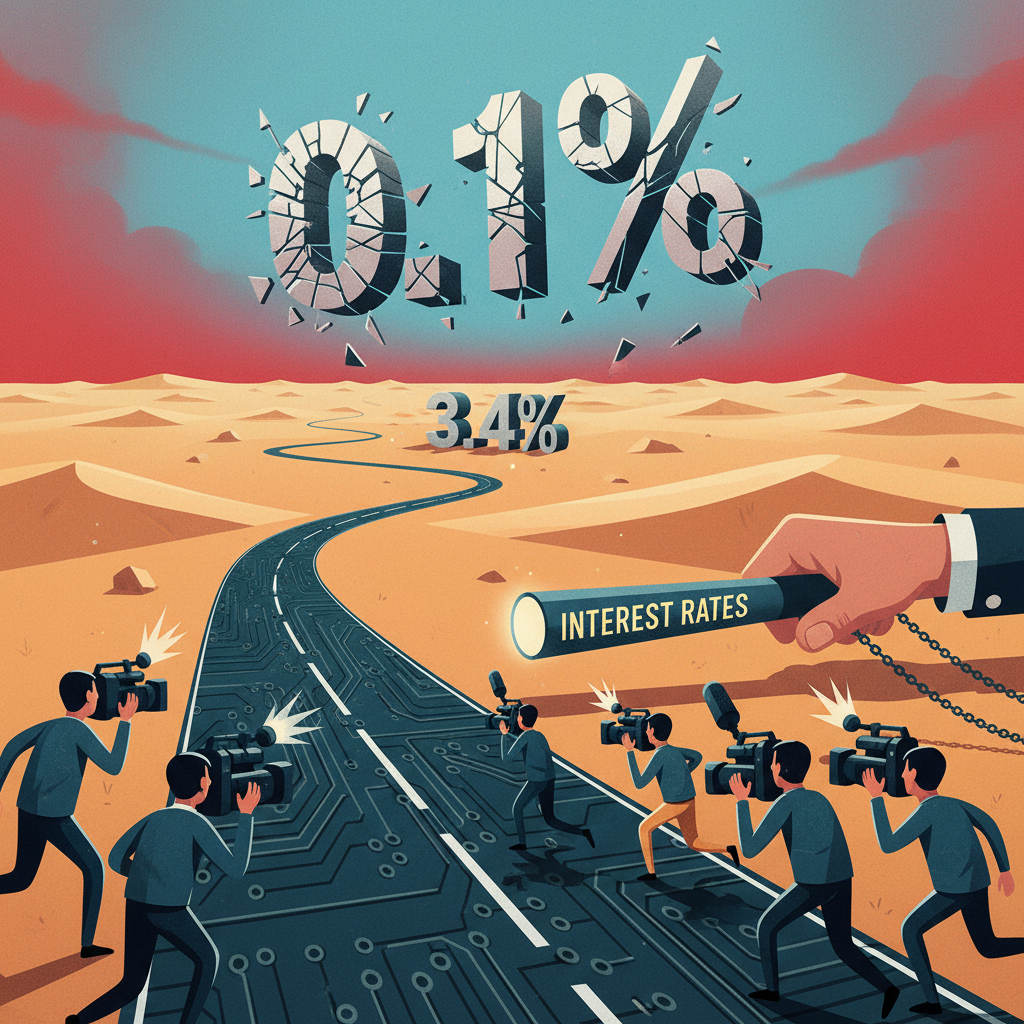
The recent reporting on the Consumer Price Index (CPI) follows a predictable script: take a minor statistical fluctuation and frame it as a victory for institutional policy. By labeling a move from 3.5% to 3.4% as a 'cooling' of the economy, mainstream outlets are acting as a signaling mechanism for the Federal Reserve rather than providing an objective audit of consumer health. What is missing is the context of scale. This 0.1% shift is statistically negligible, yet it is being leveraged to justify a pivot toward lower interest rates—a move that favors institutional debt structures over the long-term goal of price stability.
What We Know
In any complex data set, a 0.1 percentage point change falls well within the margin of error and seasonal adjustment variance. To treat this as a meaningful 'easing' is to mistake a temporary plateau for a downward trajectory. By emphasizing this minor drop, the press helps the Fed socialize the idea of rate cuts before inflation has actually returned to its stated 2% target. It is an exercise in perception management, not economic analysis.
The media's reliance on 'access journalism'—where the goal is to interpret the Fed’s desires rather than challenge its outcomes—has turned economic reporting into a form of central bank public relations.
What's Being Claimed
Inflation is not a reset; it is an addition. While the rate of increase might slow slightly, the higher prices baked into the economy over the last three years remain. A 3.4% increase on top of the double-digit cumulative inflation seen since 2021 means the average consumer's purchasing power continues to erode. Reporting that focuses solely on the month-over-month 'rate' ignores the reality that for most Americans, the cost of living remains at a record high. The 'cooling' narrative suggests relief that the average shopper simply does not feel at the checkout counter.
What's Missing
The Federal Reserve’s official mandate is a 2% inflation target. At 3.4%, inflation is still 70% higher than that goal. The eagerness to discuss rate cuts suggests that the Fed is more concerned with the stability of the banking sector and the servicing of federal debt than with protecting the value of the dollar. The mainstream press facilitates this by framing the conversation around 'when' cuts will happen, rather than 'why' they are being discussed while the primary mission remains unaccomplished. This deference to authority assumes the Fed's priorities are synonymous with the public's interests.
What's Actually Happening
This story is not about a recovering economy; it is about the management of expectations. The 'cooling' narrative serves to lower the public's guard and prepare the markets for a return to cheaper money. When journalists defer to the Fed’s internal logic, they stop asking who benefits from these policies. Lowering rates prematurely may fuel further asset bubbles while leaving the working class to deal with 'sticky' prices in housing and services that show no sign of retreating. Fact-first reporting requires us to see through the 0.1% mirage and recognize that the cost-of-living crisis is far from over. The real story isn't that inflation is 'easing,' but that it is becoming entrenched at levels the public was promised would be transitory.
FAQ
Q: Why is the 0.1% decrease in inflation considered negligible?
A: A 0.1% change falls within the typical margin of error and seasonal adjustments in economic data, making it statistically insignificant in terms of actual economic impact.
Q: What does the article mean by 'access journalism'?
A: Access journalism refers to media practices that prioritize maintaining good relationships with influential figures like those at the Federal Reserve, often at the expense of critical, independent reporting.
Q: How does the 3.4% inflation rate impact the average consumer?
A: The 3.4% rate means that prices continue to rise, compounding on previous years' inflation, thereby eroding the purchasing power of consumers and keeping the cost of living high.
Q: What is the Federal Reserve's inflation target, and why does it matter?
A: The Federal Reserve targets a 2% inflation rate to ensure price stability. Deviating from this target affects economic decisions, such as interest rates, impacting everything from loans to the cost of goods and services.
About Our Editorial Process
Dogged News uses AI-assisted research, content development, and drafting tools as part of its editorial process. Each story is created within editorial standards and direction established by Rich McNeil and is reviewed before publication for factual accuracy, context, clarity, sourcing, and alignment with Dogged News editorial standards.
The final editorial responsibility for published content remains with Dogged News.
Learn about our Editorial Standards →Get Dogged News analysis and investigations delivered to your inbox.
Discussion (0)
0/2000 · Comments are reviewed before publishing.
Have an account? to comment with a verified identity.
No comments yet. Be the first to share your perspective.