

The Trojan Tariff: How Washington's 100% EV Tax Just Handed China the Mexican Border
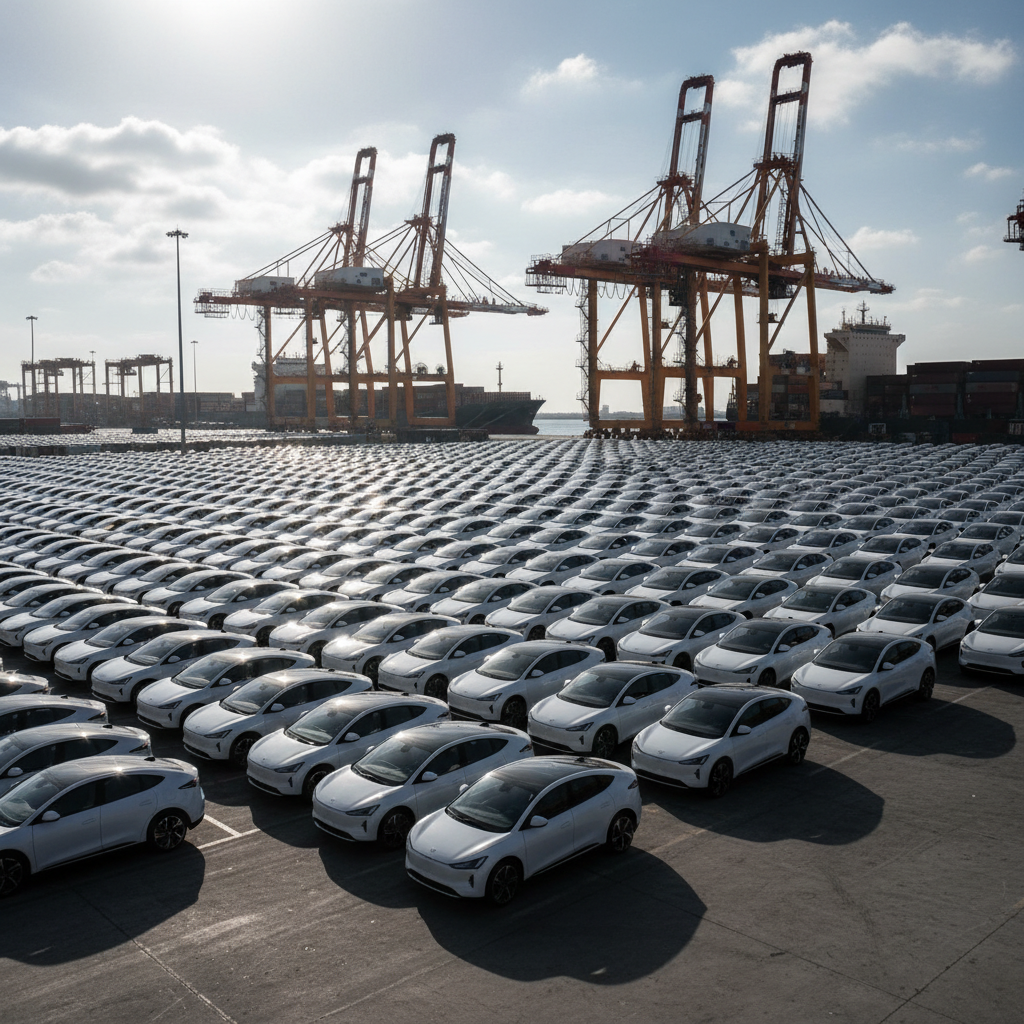
In the strategic chess game of global commerce, Washington's recent move to impose a 100% tariff on electric vehicles (EVs) might initially seem like a robust defense against Chinese economic influence. Yet, like a poorly anticipated maneuver, it's backfired significantly. Instead of isolating Chinese manufacturers, it has inadvertently facilitated their foothold on the doorstep of the United States—Mexico. Chinese EV companies, notably the giant BYD, navigate these tariffs by seamlessly integrating their supply chains within Mexico. An unintended assist, if you will, from American policy-makers.
What We Know
The U.S. recently slapped a prohibitively high 100% tariff on imported EVs, targeting predominantly Chinese manufacturers. On paper, this was a strategic effort to invigorate domestic EV production and curb China's momentum. Chinese companies, faced with increasing tariffs, have responded by fortifying their presence in Mexico. This isn't just hypothesis but already in motion, with manufacturers like BYD setting up production facilities south of the U.S. border.
“China isn't just surviving U.S. tariffs—they're outsmarting them.”
What's Being Claimed
Proponents of the tariffs argue they're essential for protecting and revitalizing the American industrial sector. The notion is that higher tariffs will force consumers and companies to 'Buy American.' It positions Washington as a warrior against unfair trade practices, taking a strong stance to break China's perceived chokehold on the global EV market.
What's Missing
What the sheen of these claims often omits is the reality of globalized supply chains and market integration. It underestimates China's agility and resourcefulness in maneuvering around such economic barricades. A fundamental oversight here: assuming that deterrent strategies of the 20th century would hold in our current, exceedingly interconnected world.
What's Actually Happening
Chinese EV giants, already world-leaders in battery technology and production scale, are deftly bypassing these tariffs through strategic relocations. BYD's burgeoning presence in Mexico—aided by the lower labor costs and proximity to the U.S.—is just the tip of the spear. Additionally, entry through Mexican facilities leverages the USMCA agreement, creating an unexpected loophole: vehicles assembled in Mexico can potentially bypass certain tariffs when entering the U.S. Moreover, Latin American nations are actively courting Chinese investments, recognizing them as opposed to Washington's isolationism. While the U.S. builds walls, China builds bridges.
Why It Matters
The implications are stark. Rather than showcasing American industrial might, these tariffs highlight a deeper ailment: an inability to adapt to the complexities of global competition. Meanwhile, China's integration in Mexico symbolizes a shift in global alliances—with the Global South gravitating towards the economic locomotive that is China. For the U.S., the outcome isn't just economic but geopolitical, weakening its influence at its very borders.
Conclusion
This isn’t merely about the trade of cars across borders; it's about the trajectory of global power dynamics. A policy meant to isolate might just have isolated the very nation that wields it. As Washington grapples with outdated playbooks, it’s becoming increasingly clear: economic strategies need innovation, not blind protectionism to stay relevant in an ever-shifting world. Perhaps the question isn't whether China will dominate global markets, but rather how nations like the U.S. can learn to compete smarter, not just harder.
FAQ
Q: How are Chinese EV companies bypassing U.S. tariffs?
A: By establishing production facilities in Mexico, Chinese companies like BYD can leverage geographic proximity and potentially utilize the USMCA agreement to mitigate tariffs when entering the U.S. market.
Q: Why is Mexico an attractive location for Chinese EV manufacturers?
A: Mexico offers lower labor costs, strategic location near the U.S., and trade agreements that can be beneficial in bypassing tariffs, making it an ideal refuge against U.S. trade barriers.
Q: What's the impact of these tariffs on consumers?
A: American consumers may face higher costs and limited choices in the EV market due to these tariffs, as domestic production struggles to meet demands.
Q: How does this affect global power dynamics?
A: By integrating into Mexico, China strengthens its economic influence in the Americas, offering an alternative to U.S.-led trade paradigms and building stronger ties with Latin America.
Q: What does this mean for U.S. industrial policy?
A: It signals the need for a shift from protectionist policies to innovative strategies that account for globalization's current landscape and competitive realities.
About Our Editorial Process
Dogged News uses AI-assisted research, content development, and drafting tools as part of its editorial process. Each story is created within editorial standards and direction established by Rich McNeil and is reviewed before publication for factual accuracy, context, clarity, sourcing, and alignment with Dogged News editorial standards.
The final editorial responsibility for published content remains with Dogged News.
Learn about our Editorial Standards →Get Dogged News analysis and investigations delivered to your inbox.
Discussion (0)
0/2000 · Comments are reviewed before publishing.
Have an account? to comment with a verified identity.
No comments yet. Be the first to share your perspective.