

Decoding the Three-Year Media Blackout in Gaza
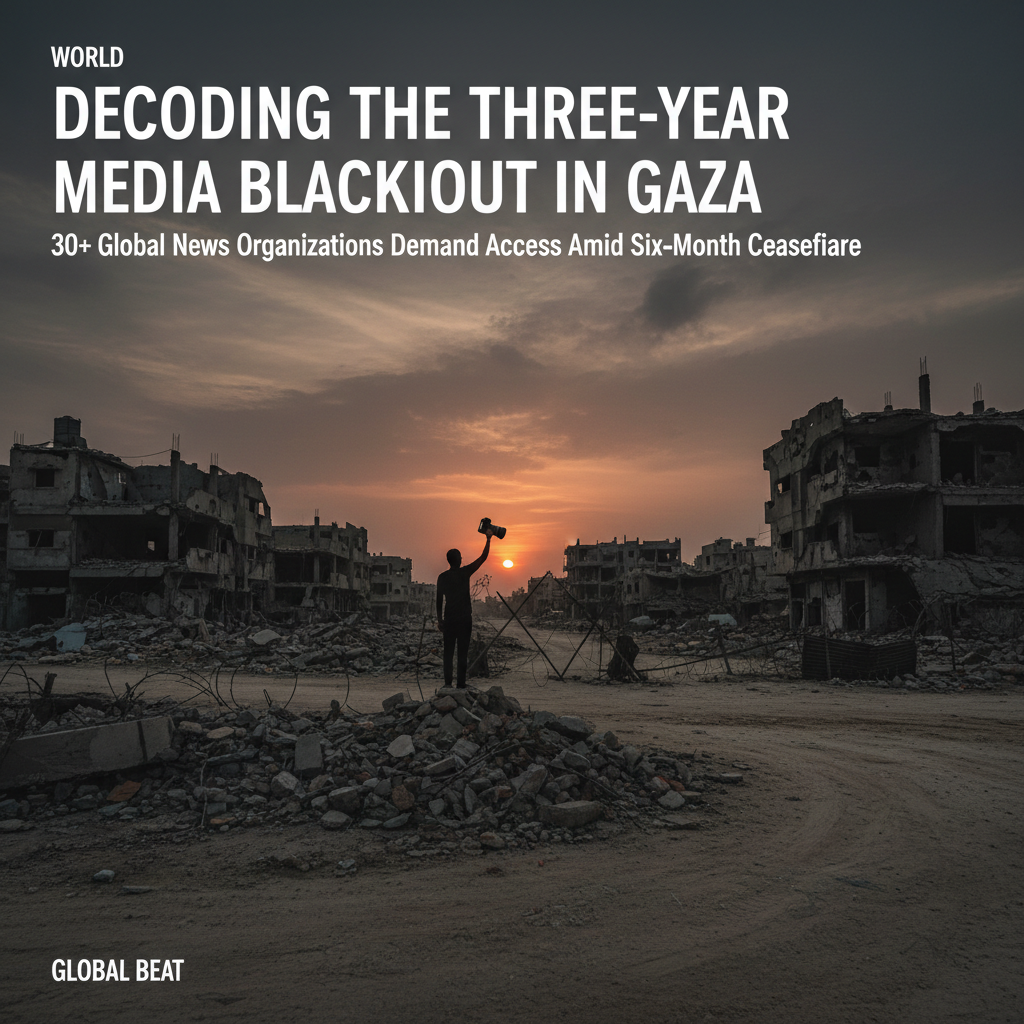
In the wake of an open letter signed by more than 30 global news organizations, mainstream coverage has largely framed the media blackout in Gaza as a temporary security policy awaiting a diplomatic nudge. This framing obscures a more uncomfortable reality: a three-year cessation of independent reporting is not a 'restriction'; it is a systemic campaign of state-sponsored information control that has been tacitly accepted by the very organizations now protesting it.
What We Know
While the Associated Press and its peers report on their own petition as a neutral event, they omit the central paradox: for 36 months, these same outlets have published daily updates, casualty figures, and military justifications while simultaneously admitting they have no independent way to verify them. By waiting three years to issue a collective demand, the global press has effectively allowed the 'emergency' measures of a combatant state to become the permanent baseline for international journalism.
What's Being Claimed
The language used in recent reporting—words like 'urging' and 'requesting'—reveals a submissive posture toward state authority. This is a classic symptom of 'access journalism,' where the goal is to remain on good enough terms with a government to eventually be let back in, even if the price of that relationship is the abandonment of the core mission: independent verification. This deference validates the state's logic that censorship is a valid tool of warfare, rather than an obstruction of the public's right to know.
"The restriction prevents independent verification of humanitarian conditions and military claims." — Associated Press
What's Missing
The above statement from the original report is a staggering admission. If verification has been impossible, then every report published by these organizations over the last three years regarding 'humanitarian conditions' and 'military claims' must be viewed through the lens of institutional uncertainty. The press is not just asking for access for the future; they are admitting the fundamental unreliability of their own past coverage.
What's Actually Happening
This story is not about a letter or a ceasefire. It is about the success of a strategy that uses time as a weapon against transparency. By the time 30 news organizations found the collective will to speak, the landscape of the conflict had already been reshaped by three years of unverified narratives. When a state successfully blocks the press for years at a time, it doesn't just hide the truth; it changes what the public accepts as 'the truth' by ensuring no alternative evidence exists. This sets a dangerous global precedent: if a government can sustain a media blackout long enough, the press will eventually stop demanding the truth and start politely asking for permission to look for it.
Conclusion
By framing the issue as a 'bureaucratic request' rather than a potential violation of international legal obligations, the media has allowed the Israeli government to treat press access as a discretionary privilege rather than a legal requirement in a conflict zone.
FAQ
Q: Why did it take 30 global news organizations three years to issue a collective demand for access?
A: The delay suggests a prioritize-access-at-all-costs strategy that ultimately failed. Individual organizations often fear that aggressive legal or public challenges to a host nation’s censorship will result in the total revocation of their local credentials. By waiting until a six-month ceasefire had passed, the media establishment chose a moment of least political resistance rather than a moment of greatest journalistic necessity. This delay has allowed a three-year gap to form in the verifiable historical record—a gap that cannot be retroactively filled by a letter.
Q: To what extent has 'embedded' reporting compromised the accuracy of the last three years?
A: Since the blackout began, the primary source of 'on-the-ground' footage for foreign media has been through military-controlled 'embeds' or from local freelancers operating under extreme duress without the institutional protection of global networks. When journalists are only allowed to see what a military escort permits, the resulting output is, by definition, a curated perspective. The reliance on these controlled environments has allowed unverified military claims to enter the public record as 'reported facts,' only to be questioned years later when the narrative utility of those claims has already expired.
Q: What is the legal status of a total media blockade under international law?
A: While the Israeli government cites 'security' as a catch-all justification, international humanitarian law—specifically the Geneva Conventions—requires occupying powers to facilitate the work of the press and ensure the flow of information regarding civilian welfare.
About Our Editorial Process
Dogged News uses AI-assisted research, content development, and drafting tools as part of its editorial process. Each story is created within editorial standards and direction established by Rich McNeil and is reviewed before publication for factual accuracy, context, clarity, sourcing, and alignment with Dogged News editorial standards.
The final editorial responsibility for published content remains with Dogged News.
Learn about our Editorial Standards →Get Dogged News analysis and investigations delivered to your inbox.
Discussion (0)
0/2000 · Comments are reviewed before publishing.
Have an account? to comment with a verified identity.
No comments yet. Be the first to share your perspective.