

The Biometric Betrayal Why the SCOTUS Privacy Ruling Is a Bipartisan Victory for the Surveillance State
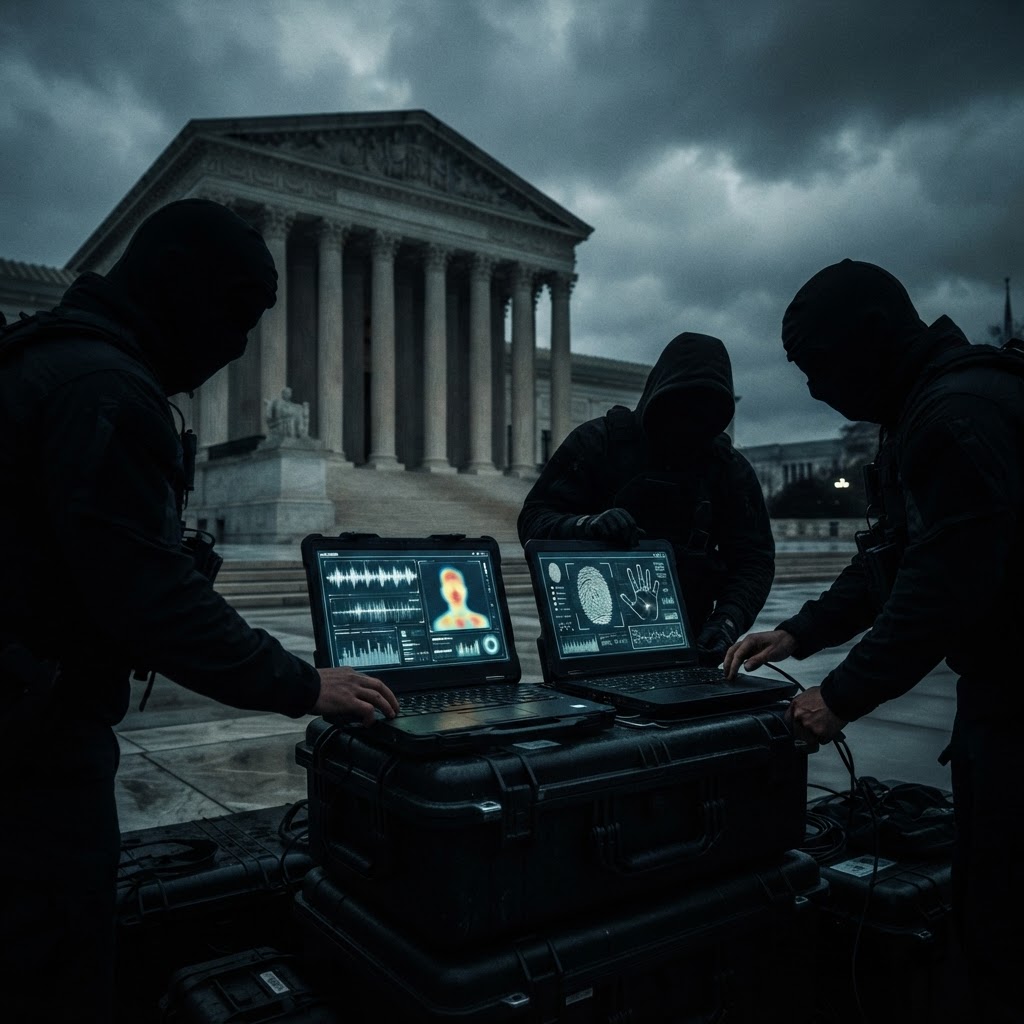
In a move that has caught many off guard, the U.S. Supreme Court has delivered what some might call a bipartisan gift to the Orwellian machinery of surveillance. It’s a ruling that allows federal agencies to collect and store biometric data without warrants. A decision rooted in labyrinthine legal nuances and court arguments—steeped in dollars spent by technology behemoths weaving their interests into the very fabric of democratic governance.
What We Know
The Supreme Court’s recent ruling reflects a stark 5-4 split, strictly along party lines—at least, that’s the narrative unskeptical of deeper currents. Behind the scenes, a complex array of amicus briefs sculpted by tech giants laid the groundwork for this outcome. Biometric data — fingerprints, voice patterns, facial recognition — are now accessible to federal agencies sans warrants. The ruling stretches the interpretation of the Fourth Amendment to its breaking point.
What's Being Claimed
Proponents argue this is about national security, painting it as a necessary measure to counter ever-evolving threats. Leaders exalt its virtues in keeping America safe, suggesting that the efficiency and accuracy provided by biometric databases outweigh privacy concerns. Yet, it’s the same old tune — technological advancement camouflaged as an unyielding necessity, not as a choice made under the influence of power and profit.
What's Missing
Conspicuously absent from mainstream narratives is any deep inquiry into technological lobbying that quietly shaped this decision. Also left untouched by headline hunters is the degree to which the democratic fabric is being rewoven — not by open, public dialogue, but in private chambers with corporate interest wielding the needle. And where are the safeguards against misuse? Silent, like unwritten rules guiding the hand of unchecked surveillance.
What's Actually Happening
The biometric gold rush is in full swing, and federal agencies now have carte blanche to build extensive citizen dossiers. The ruling effectively enshrines a digital panopticon, nullifying hard-won privacy rights in the process. Here, bipartisanship isn't a political pipe dream but a shared complicity in constructing a pervasive surveillance architecture — an undeniable victory for those with leverage.
Why It Matters
This ruling matters because it creates a precedent where privacy becomes an illusion rather than a right. With biometric databases expanding, the individual becomes a data point subjected to unchecked governmental scrutiny. The ruling weakens the constitutional shield once deemed ironclad — a bitter testament to how easily rights can be overwritten by mutual political indifference and commercial influence.
Conclusion
The real betrayal here is not tied to ideological divisions but to ethical decay spread across the aisles — a testament to how bipartisan compromise has become synonymous with bending individual freedoms to match institutional demands. The decision is clear: in the digital age, the state views its citizens through a lens of suspicion rather than trust. For now, the Fourth Amendment joins the ranks of relics overshadowed by convenience framed as necessity. A rather chilling evolution, wouldn't you say?
FAQ
Q: What is the main outcome of the Supreme Court's ruling on biometric data?
A: The ruling permits federal agencies to collect and store biometric data such as fingerprints, voice patterns, and facial recognition without requiring warrants.
Q: How did the Supreme Court justices vote on this decision?
A: The decision was made with a 5-4 split, reportedly along party lines.
Q: What are the primary arguments in favor of this ruling?
A: Proponents argue that it enhances national security by providing more efficient and accurate means to counter threats, suggesting these benefits outweigh privacy concerns.
Q: Why is this ruling viewed as a 'bipartisan victory for the surveillance state'?
A: The ruling reflects complicity across political lines in expanding surveillance capabilities, prioritizing governmental control and corporate interests over individual privacy rights.
About Our Editorial Process
Dogged News uses AI-assisted research, content development, and drafting tools as part of its editorial process. Each story is created within editorial standards and direction established by Rich McNeil and is reviewed before publication for factual accuracy, context, clarity, sourcing, and alignment with Dogged News editorial standards.
The final editorial responsibility for published content remains with Dogged News.
Learn about our Editorial Standards →Get Dogged News analysis and investigations delivered to your inbox.
Discussion (0)
0/2000 · Comments are reviewed before publishing.
Have an account? to comment with a verified identity.
No comments yet. Be the first to share your perspective.