

Beyond 'Freedom Cities': The Legal and Economic Reality of the Federal Land Order
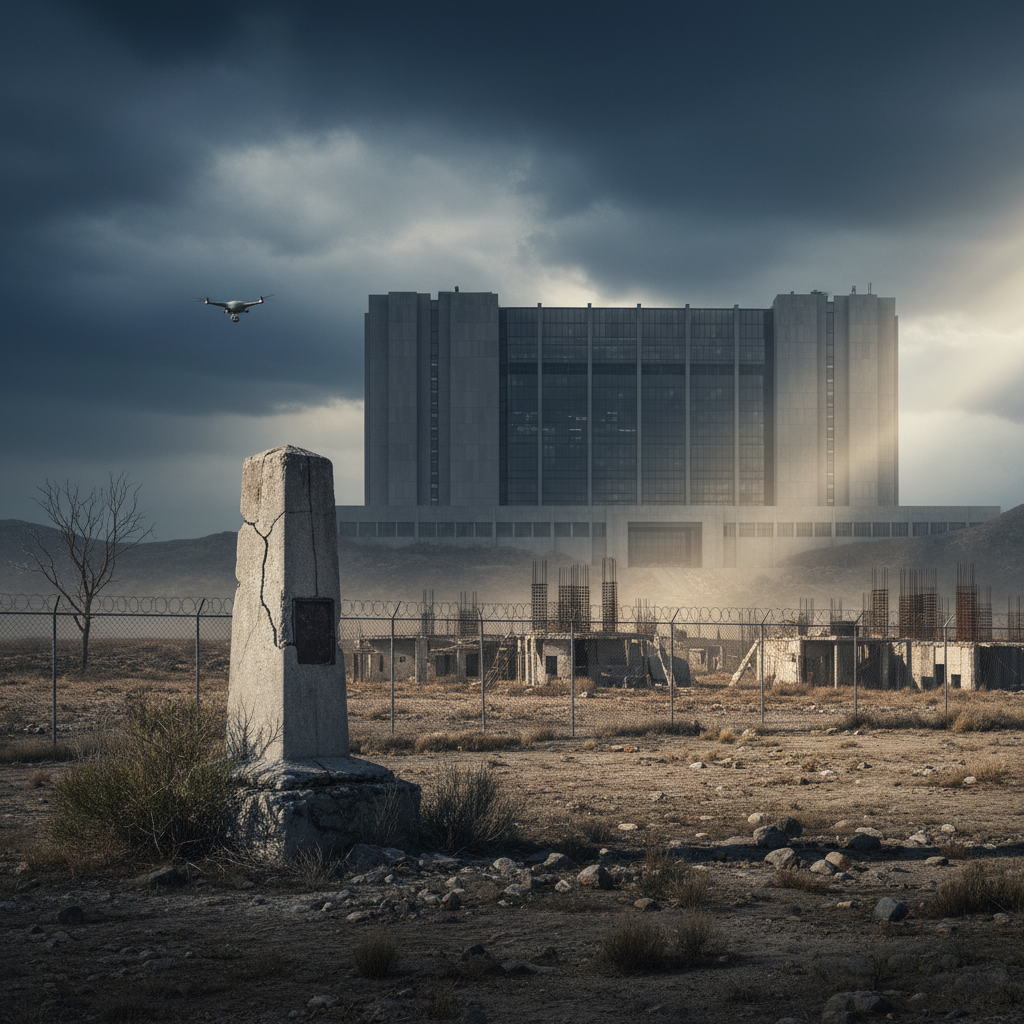
In the wake of the White House announcement regarding 'Freedom Cities,' mainstream reporting has largely functioned as a megaphone for executive branding. Outlets like The Guardian have opted to parrot terms like the 'great reopening' and 'Freedom Cities' without scrutinizing the massive legal, environmental, and financial hurdles that make such a project nearly impossible under current law. This is a classic example of access journalism: by adopting the administration's futuristic framing, the press allows a speculative policy proposal to be treated as an imminent reality. Missing from the coverage is any mention of the Federal Land Policy and Management Act (FLPMA) or the National Environmental Policy Act (NEPA), both of which place strict limits on how the Department of the Interior can dispose of or develop federal acreage. Rather than a 'reopening' of the frontier, we are looking at a potential multi-decade legal stalemate that the media has ignored in favor of headlines about flying cars.
What's Being Claimed
Under the Federal Land Policy and Management Act of 1976, the Bureau of Land Management is mandated to manage public lands for 'multiple use' and 'sustained yield.' Converting hundreds of thousands of acres into residential and industrial urban centers is not a unilateral presidential power. Significant changes in land use typically require Congressional approval or, at the very least, an exhaustive administrative process that includes public comment and environmental impact statements. By framing this as a simple 'executive order,' the administration—and the press—are bypassing the constitutional reality that Congress, not the President, holds the primary power over the 'Territory or other Property belonging to the United States.'
The White House claims these cities will 'lower housing costs.' However, basic economic logic suggests otherwise. Housing demand is driven by proximity to existing job markets, infrastructure, and social networks. Building brand-new cities on remote federal land—likely in the Intermountain West—does nothing to alleviate the supply shortage in coastal hubs or established metropolitan areas where prices are highest. Furthermore, the cost of building foundational infrastructure (sewage, water, electricity, roads) from scratch in remote areas is exponentially higher than infill development. Without massive, taxpayer-funded subsidies, these 'Freedom Cities' would likely become high-cost gated communities rather than affordable housing solutions for the average American.
The mention of vertical takeoff and landing (VTOL) hubs serves as a shiny object for the media to chase. Currently, VTOL technology for mass transit is in its infancy, lacking both the regulatory framework from the FAA and the energy density in battery technology required for scale. Including them in an executive order is a marketing tactic designed to make a land-deregulation play look like a leap into the future. By reporting on these hubs as a 'feature' of the plan rather than a speculative and unregulated concept, the press has abandoned its role as a fact-checker in favor of being a lifestyle columnist for the administration’s vision.
The designation of ten specific parcels of federal land creates an immediate and massive 'rent-seeking' opportunity. When the government signals it will develop previously protected or restricted land, the value of surrounding private holdings skyrockets. The press has failed to investigate which development firms or investment groups were consulted in the drafting of this order. Historically, large-scale federal land transfers have been fraught with cronyism, and without transparency regarding the selection process for these ten parcels, the public is left in the dark about who actually profits from this 'frontier' expansion.
Conclusion
This story is not about the birth of a new American utopia; it is about the administrative attempt to bypass environmental regulations and land-use laws under the guise of technological progress. When the government uses phrases like 'Freedom Cities' to describe the privatization of federal assets, and the press repeats those phrases without irony, the public loses the ability to distinguish between policy and promotion. The reality of this executive order will likely be a series of protracted lawsuits and the eventual sale of public assets to private interests, with very little impact on the national housing crisis or the future of aviation. To understand the story, one must look past the 'VTOL hubs' and focus on the transfer of power over public land.
FAQ
Q: What are 'Freedom Cities' and why are they being proposed?
A: 'Freedom Cities' are proposed urban developments on federal land, announced by the White House as a strategy to lower housing costs and stimulate futuristic city concepts. However, the feasibility of this proposal is questioned due to legal, environmental, and financial hurdles.
Q: What legal challenges do 'Freedom Cities' face under current U.S. law?
A: Under the Federal Land Policy and Management Act (FLPMA) and the National Environmental Policy Act (NEPA), converting federal land for new cities requires Congressional approval and thorough administrative processes, including public comments and environmental assessments.
Q: How could the development of 'Freedom Cities' impact current housing markets?
A: Building new cities on remote federal land does not address high housing demand in existing metropolitan areas. The development could lead to high infrastructure costs, likely resulting in these cities being high-cost gated communities rather than affordable solutions.
Q: Why is the media criticized in relation to reporting on 'Freedom Cities'?
A: The media is criticized for amplifying the administration's narrative without analyzing the underlying legal and economic challenges. This has led to a focus on speculative features like VTOL hubs rather than the practical implications of the proposal.
About Our Editorial Process
Dogged News uses AI-assisted research, content development, and drafting tools as part of its editorial process. Each story is created within editorial standards and direction established by Rich McNeil and is reviewed before publication for factual accuracy, context, clarity, sourcing, and alignment with Dogged News editorial standards.
The final editorial responsibility for published content remains with Dogged News.
Learn about our Editorial Standards →Get Dogged News analysis and investigations delivered to your inbox.
Discussion (0)
0/2000 · Comments are reviewed before publishing.
Have an account? to comment with a verified identity.
No comments yet. Be the first to share your perspective.