

Beyond the 'America First' Banner: The Unexamined Logic of a Spirit Airlines Bailout
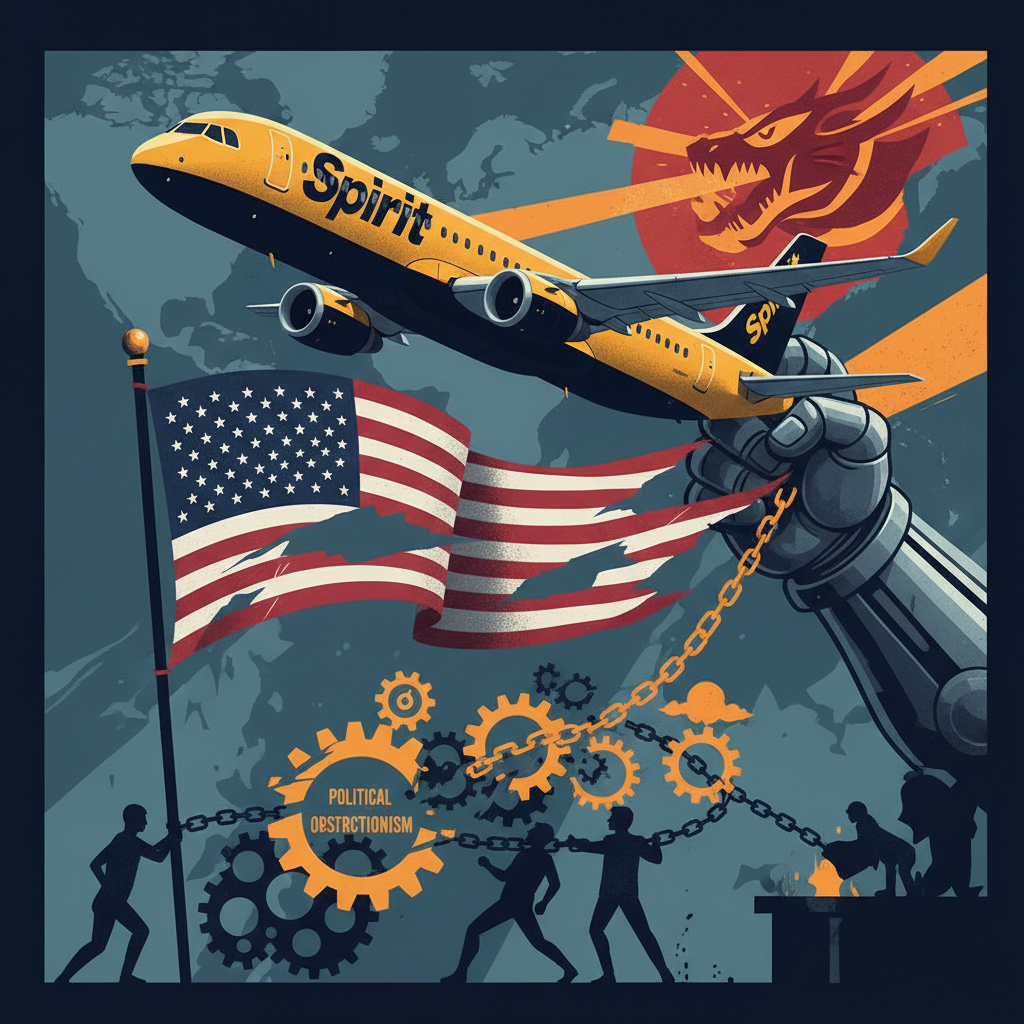
Mainstream reporting on the potential federal intervention in Spirit Airlines has largely functioned as a delivery mechanism for executive branch messaging. By adopting the administration’s “America First” branding at face value, the press has neglected the fundamental economic reality: Spirit Airlines was a sinking ship long before the first barrel of oil was impacted by conflict in Iran. The Associated Press and its peers have framed this as a reactive measure to a geopolitical crisis, ignoring years of structural insolvency, failed mergers, and a business model that has failed to turn a profit since 2019. This is not journalism; it is stenography for a political narrative that seeks to transform a corporate rescue into a patriotic necessity.
What We Know
While the administration points to rising fuel costs as the primary driver for a bailout, financial data suggests otherwise. Spirit’s struggles are systemic. Following the blocked merger with JetBlue, the carrier was left with nearly $3 billion in debt and no clear path to profitability. To attribute its collapse solely to a recent spike in fuel prices is a convenient narrative that masks a broader failure of corporate strategy. By parroting this justification, media outlets are essentially laundering a political excuse for a massive injection of taxpayer capital into a failing private entity.
What's Being Claimed
The answer is: entirely. Spirit has been under intense scrutiny from credit rating agencies for over a year. The airline’s inability to compete in a high-interest-rate environment, coupled with the grounding of dozens of its planes due to engine issues, had already placed it on the brink of Chapter 11. The Iran conflict didn't create the crisis; it provided the political cover necessary to propose a state intervention that would have been otherwise unjustifiable. The media's failure to mention the airline's long-term debt profile is a massive oversight that allows the administration to blame external factors for internal incompetence.
What's Missing
This is where the incentive structure becomes clear. A federal bailout or takeover isn’t just about “saving jobs”; it’s about making bondholders whole. Institutional investors holding Spirit’s massive debt—who would normally take a haircut in a standard bankruptcy proceeding—stand to be the primary beneficiaries of public funds. When the press fails to ask who owns the debt, they hide the fact that this is essentially a transfer of wealth from taxpayers to financial institutions under the guise of protecting travelers.
“The article functions as a megaphone for executive branch rhetoric by leading with the administration's own framing of the situation as an 'America First' necessity.”
What's Actually Happening
The administration has been vague, and the press has been deferential. Outside of the Defense Production Act—which typically requires a direct national security nexus—the legal framework for the government to simply “take over” a commercial airline without an Act of Congress is virtually non-existent. By failing to push back on the phrase “federal takeover,” reporters are allowing the expansion of executive power to go unchallenged in the public consciousness, signaling a dangerous shift toward authority deference in the newsroom.
Conclusion
What this story actually represents is a shift toward a more interventionist, state-directed form of capitalism where political loyalty and narrative-building supersede market discipline. When the government can pick winners and losers based on which company can best align its failure with a popular political slogan, the concept of a free market evaporates. The Spirit bailout isn't about aviation; it's about establishing a precedent where the executive branch can bypass traditional oversight to rescue favored corporate interests under the banner of national necessity. Without a press corps willing to look past the headline, the taxpayer remains the last to know they’re footing the bill for corporate mismanagement.
FAQ
Q: Why is Spirit Airlines being considered for a federal bailout?
A: Spirit Airlines is under financial distress due to structural insolvency, long-term debt, and failed mergers, with the recent geopolitical crisis providing the political cover for intervention.
Q: What does 'America First' have to do with the proposed bailout?
A: The administration is branding the bailout under the 'America First' slogan to frame it as a patriotic move, although this narrative overlooks the airline's long-standing financial issues.
Q: How do institutional investors benefit from the bailout?
A: A bailout would protect bondholders from losses they would otherwise face in a bankruptcy, effectively transferring the financial burden to taxpayers.
Q: Is it legal for the government to take over a private airline like Spirit?
A: The administration has not provided a clear legal framework for a federal takeover, and without an Act of Congress, such actions fall outside typical legal standards.
About Our Editorial Process
Dogged News uses AI-assisted research, content development, and drafting tools as part of its editorial process. Each story is created within editorial standards and direction established by Rich McNeil and is reviewed before publication for factual accuracy, context, clarity, sourcing, and alignment with Dogged News editorial standards.
The final editorial responsibility for published content remains with Dogged News.
Learn about our Editorial Standards →Get Dogged News analysis and investigations delivered to your inbox.
Discussion (0)
0/2000 · Comments are reviewed before publishing.
Have an account? to comment with a verified identity.
No comments yet. Be the first to share your perspective.